- Neoen secured A$1.8 billion in debt financing on 30 October 2026 from 13 lenders for a five-asset Australian portfolio totalling 1.2 GW (all figures in Australian dollars).
- The portfolio mixes operating and under-construction assets: two wind farms, two battery projects and one solar farm across South Australia, New South Wales and Western Australia.
- Neoen has now raised over A$5 billion in Australian debt financing since 2024, covering 4.7 GW across 20 assets, and targets 10 GW in Australia by 2030.
Lenders priced the package as a diversified portfolio rather than five separate project loans. Wind in two states, solar in a third and batteries of two very different durations sit under one debt facility, so a shortfall at one asset can be offset by the others. That structure explains why the syndicate includes commercial banks, export credit agencies and a government green bank in a single transaction, and why the developer describes the deal as a balance-sheet transaction as much as a project financing.
The arithmetic sets the scale. A$1.8 billion divided by 1.2 GW equals A$1,500 per kilowatt of portfolio capacity, in Joule Post arithmetic from the company figures. That figure is a debt average across a mixed portfolio, and it is not a construction cost, a project valuation or a per-asset price. Operating assets carry different debt levels from assets under construction, and batteries, wind and solar carry different capital costs per kilowatt. The average is useful as a scale marker only. The cumulative figure tells a similar story: over A$5 billion raised since 2024 across 4.7 GW equals roughly A$1,064 per kilowatt on the same arithmetic, which is lower than the new package average because earlier packages covered a different asset mix.
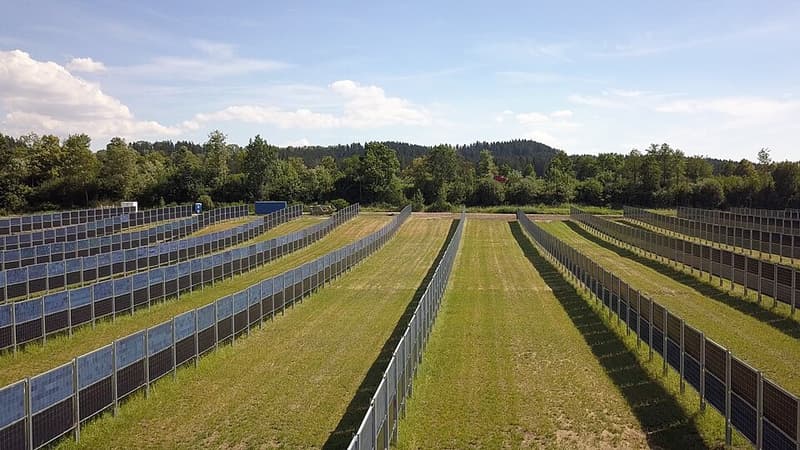
Neoen Australia financing covers 1.2 GW across five assets
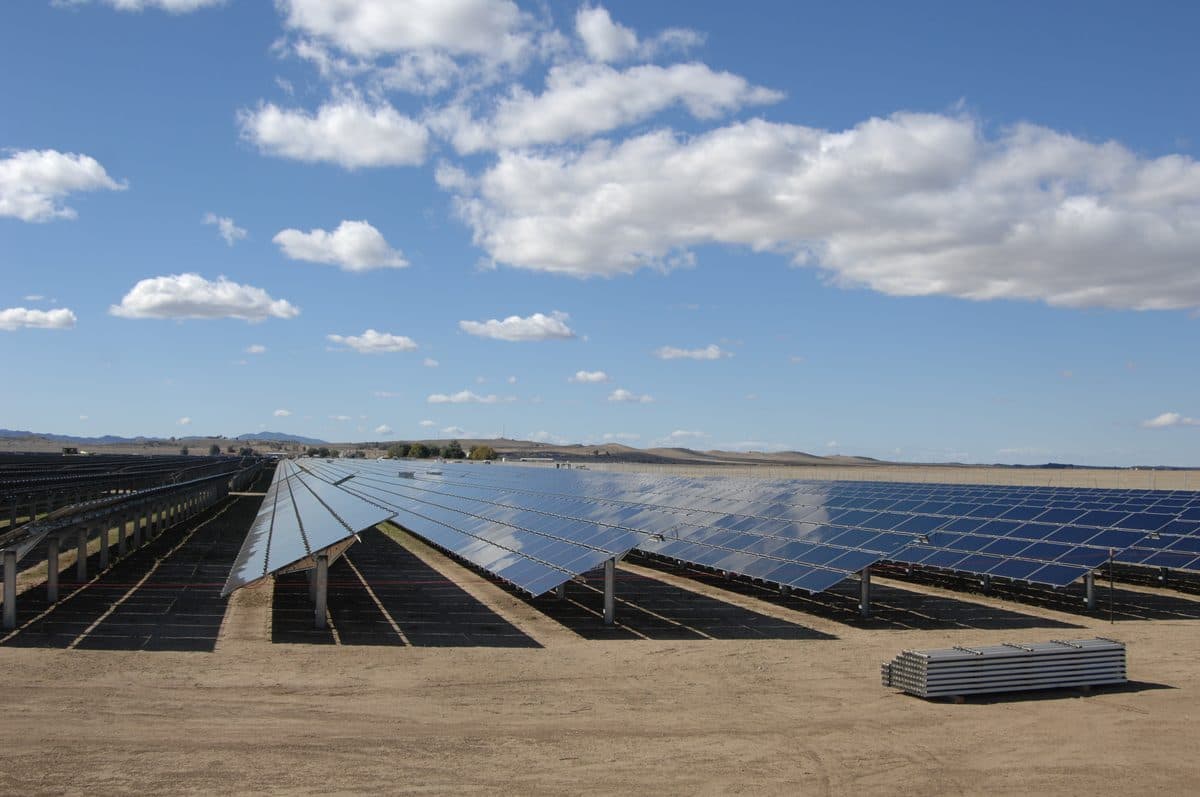
The portfolio announced on 30 October 2026 consists of the Hornsdale Power Reserve, rated at 150 MW and 193.5 MWh, and the Goyder South Wind Farm Stage 1A, rated at 209 MW, both in South Australia; the Culcairn Solar Farm, rated at 440 MWp, and the Culcairn Battery, rated at 215 MW and 963 MWh, both in New South Wales; and the Narrogin Wind Farm, rated at 179 MW, in Western Australia. Adding the five nameplate figures gives 1,193 MW, which Neoen rounds to 1.2 GW in its announcement. One reporting caveat applies to Narrogin: trade coverage noted that a Capacity Investment Scheme contract lists the project’s grid connection capacity at 168 MW, against the 179 MW nameplate figure Neoen uses. This article uses Neoen’s nameplate figures throughout, as the company stated them.
The lender list spans commercial banks, export credit agencies and a government green bank: ANZ, Bank of America, Bank of China, the Clean Energy Finance Corporation, Export Development Canada, HSBC, ING, KfW IPEX, Mizuho, NAB, UOB, Societe Generale and Westpac. The presence of the Clean Energy Finance Corporation, Australia’s government-owned green bank, alongside commercial and export lenders signals public and private capital moving together on the same portfolio. Neoen did not disclose the loan term, interest rate or debt split across assets in the announcement. Jean-Christophe Cheylus, Neoen’s regional chief executive for Australia Pacific, said: “We are delighted to announce this new portfolio financing, and we extend our thanks to all our lenders for their trust and commitment. We value the continued support of our long-term partners, and we welcome the arrival of new lenders. This landmark transaction underlines the strength, depth and growth of our portfolio in Australia.”
| Asset | Technology | State | Capacity | Storage duration, Joule Post arithmetic |
|---|---|---|---|---|
| Hornsdale Power Reserve | Battery storage | South Australia | 150 MW, 193.5 MWh | 1.29 hours |
| Goyder South Wind Farm Stage 1A | Wind | South Australia | 209 MW | Not applicable |
| Culcairn Solar Farm | Solar | New South Wales | 440 MWp | Not applicable |
| Culcairn Battery | Battery storage | New South Wales | 215 MW, 963 MWh | 4.48 hours |
| Narrogin Wind Farm | Wind | Western Australia | 179 MW | Not applicable |
The two batteries hold 1,156.5 MWh between them
Combined, the two battery projects provide 365 MW of discharge power and 1,156.5 MWh of stored energy, in Joule Post arithmetic from the company figures. The weighted average duration is 3.17 hours. The two batteries serve different roles, which their durations show. Hornsdale, at 1.29 hours, is a short-duration grid services battery, sized for fast frequency response and short bursts. Culcairn, at 4.48 hours, is a long-duration shifting battery, sized to move solar energy into evening hours. The portfolio therefore pairs a fast battery with a long battery, in the same way it pairs wind in South Australia and Western Australia with solar in New South Wales. Generation shares on nameplate figures are 440 MWp of solar, or about 37 percent of the 1,193 MW total, 388 MW of wind, or about 33 percent, and 365 MW of battery discharge power, or about 31 percent.
Hornsdale carries historical weight beyond its size. It was the world’s first big battery when first built, and it has since grown to its current 150 MW and 193.5 MWh rating. Culcairn pairs a solar farm with a battery at the same site, which lets the battery charge from the solar farm and discharge after sunset. For background on the technology, see how grid battery storage works and how wind turbines generate power. The financing structure matters because portfolio deals let a developer refinance mature assets and construction assets together, which can lower the overall cost of debt compared with financing each project alone. Lenders accept the package because a shortfall at one asset can be offset by performance at others, and because the assets sit in different states with different weather and market conditions.
What A$5 billion since 2024 means for the 10 GW target
Neoen states that it is Australia’s largest renewable energy company, having contributed over 6 GW of wind, solar and storage capacity to the country’s energy transition, with total global capacity in operation, construction or under management of 10.6 GW. The company’s ambition is to reach 10 GW in Australia by 2030, with a forward investment plan measured in billions of dollars. The new financing covers 4.7 GW of the Australian debt-financed footprint since 2024 across 20 assets, against a 6 GW-plus contribution figure that includes assets financed through other routes. The gap between those figures is a reminder that debt packages are one funding channel, and equity, retained earnings and other instruments fund the rest.
Barbaro said: “I would like to congratulate the Neoen team on the successful completion of this portfolio financing in Australia, our largest financing to date. This transaction reflects the quality and diversity of our assets and demonstrates our ability to optimise our financing structure and strengthen our balance sheet. This, in turn, reinforces our capacity to invest in new projects and to consolidate Neoen’s position as the leading player in Australia’s energy transition.” The claim to test is the last one. A larger balance sheet only becomes new capacity when projects reach construction, and the financed portfolio itself includes assets already operating. The deal proves lenders will fund Neoen’s existing and near-term Australian assets at scale. The 10 GW target will be proved by construction starts and commissioning dates in the years to 2030, starting with Narrogin, which RenewEconomy reported had just started construction in Western Australia when the financing was announced.
The deal also sits inside a wider Australian financing wave. Neoen’s announcement followed a period in which clean energy capacity reaching financial close in the first half of 2026 exceeded all of 2025, according to Clean Energy Council figures reported in trade coverage of the financing. Portfolio financing of this size suggests lenders see Australian renewables as a bankable asset class rather than a project-by-project risk. That confidence, if it holds, lowers the cost of the next portfolio as well. The risk runs the other way too: a portfolio concentrates refinancing exposure in one transaction, and a change in interest rates or power prices affects all five assets at once. The 13-lender syndicate spreads that exposure, but it does not remove it.
Sources:
- Neoen, Neoen secures AUD 1.8 billion in debt financing to support renewable energy portfolio in Australia, 30 October 2026
- RenewEconomy, Australia’s most successful renewables and storage developer seals huge debt deal, 30 October 2026
Per-kilowatt, duration, share and total figures in the text are Joule Post arithmetic from Neoen figures, as labelled. All dollar figures are Australian dollars (A$).