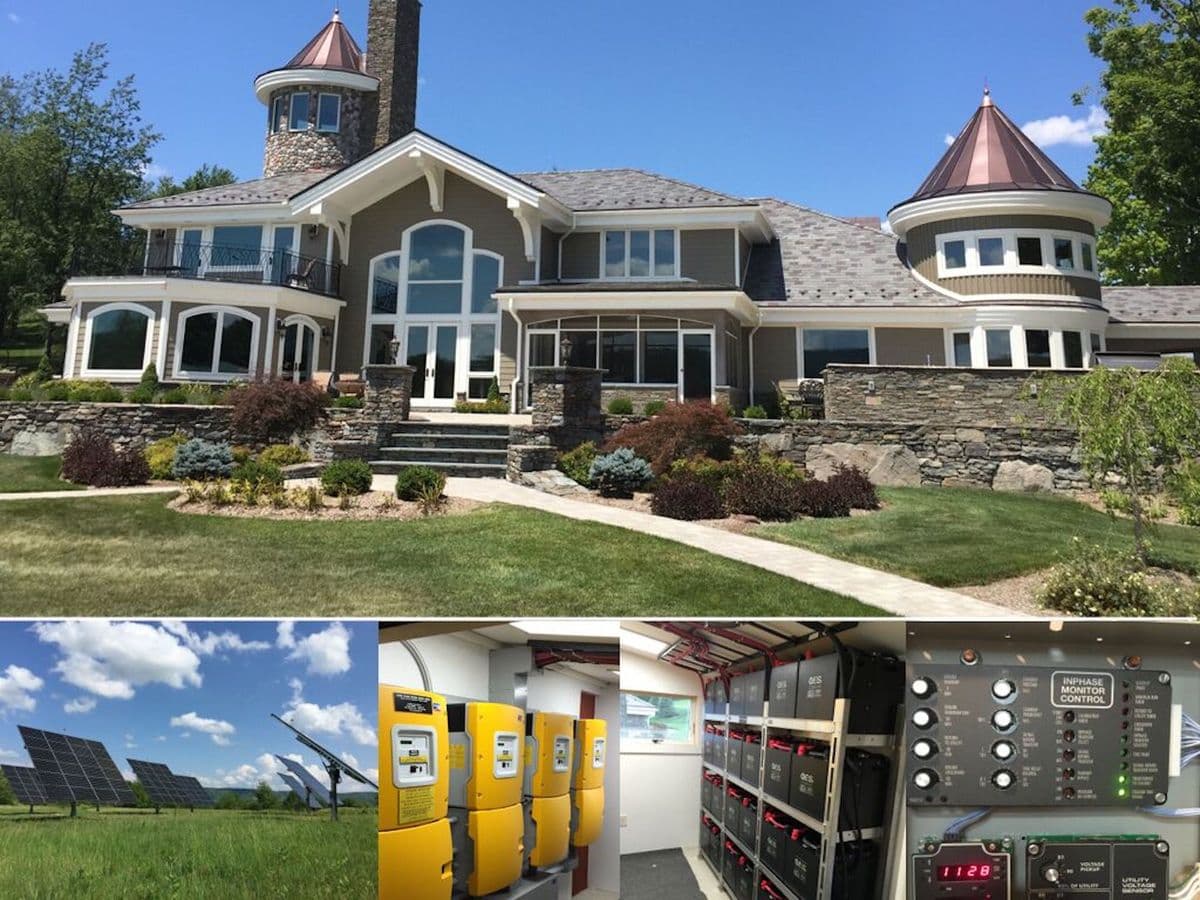
- Applications for Poland’s PLN 1 billion home battery and heat-storage scheme open October 20, 2026 and run to October 1, 2027, or until funds are exhausted.
- Grants cover up to 30% of eligible costs, capped at PLN 800 per kWh, with a maximum of PLN 16,000 for net-billing prosumers.
- Installations have grown from about 10,000 in early 2024 to roughly 150,000 in June 2026, according to ministry figures.
A new Poland home battery subsidy opens for applications in less than two weeks, and it may be the most consequential home-storage policy Europe has seen this year. The Ministry of Climate and Environment has announced a PLN 1 billion (roughly $258 million) scheme for home battery and heat storage, financed through the Modernisation Fund. Applications open on October 20, 2026, close on October 1, 2027 — or earlier, if the money runs out. That last clause matters: the previous round, Mój Prąd 6.0, was massively oversubscribed, and the ministry expects demand to be heavy again.
Notably, costs incurred from November 1, 2025 are eligible for the grant, so households that installed storage ahead of the announcement are not shut out. The retroactive window rewards early movers rather than punishing them — a detail that should encourage applications from the tens of thousands of homes that have already added batteries in the past year.
How much the Poland home battery subsidy pays
The headline grant is up to 30% of eligible costs, capped at PLN 800 (about $206) per kWh of storage capacity. From there, the rules differentiate by how the household settles with the grid. Prosumers on net-billing can receive up to PLN 16,000 (about $4,126), while those on net-metering are capped at PLN 8,000 (about $2,063) — a clear incentive to migrate toward the newer net-billing framework. For context on how the two settlement models differ, see our explainer on net metering and net billing.
Heat storage gets its own line: up to PLN 1,000 (about $258) for EU-manufactured units. There is also a PLN 2,000 (about $516) bonus available for an EU-manufactured battery or for a replacement hybrid inverter. The total cap is PLN 19,000 (about $4,900) per supply point. To qualify, batteries must have at least 10 kWh of capacity, include an energy management system, and provide backup or emergency-power capability — the ministry is explicit that subsidized systems should keep homes running during outages.
Eligibility requirements at a glance
- Individual prosumers with grid-connected renewable micro-installations.
- Battery capacity of at least 10 kWh, with an energy management system and backup/emergency-power capability.
- At least 2 kWh of storage per kWp of paired solar capacity.
- Costs incurred on or after November 1, 2025 qualify.
Why Poland is Europe’s fastest-moving home storage market
The subsidy lands on a market already moving at unusual speed. Ministry figures put the number of home storage systems at roughly 150,000 in June 2026, up from around 10,000 in the first quarter of 2024 — a fifteen-fold increase in barely two years. The ministry’s target is more than 200,000 systems by the end of 2027, and this scheme is the mechanism for getting there.
Climate Minister Paulina Hennig-Kloska framed the programme around self-consumption and resilience, saying the goal is “increasing the efficiency of renewable energy use and strengthening energy security.” Deputy Minister Sławomir Ćwik confirmed the backup-power requirement, noting that subsidized systems will let households “maintain power even during grid outages.” The message is aimed as much at the grid as at homeowners: as Poland’s solar fleet grows, absorbing more generation behind the meter reduces curtailment and takes pressure off distribution networks.
One caution on the programme’s identity: English-language outlets have not reported a distinct official brand name for this scheme, so it is best described as the ministry’s Modernisation-Fund prosumer scheme. It is distinct from the earlier Mój Prąd rounds — spelled “Mój Prąd” — which covered solar panels themselves. This one is storage-first, and that is what makes it notable: few European governments have put nine-figure sums behind residential batteries alone.
What to do before October 20
The application window opens October 20, but preparation starts now. The eligibility rules reward bigger, smarter systems: at least 10 kWh with a proper energy management system, sized at 2 kWh per kWp of solar. Households choosing a battery should understand the trade-offs between LFP, NMC and sodium-ion chemistries — the EU-manufacturing bonus also nudges buyers toward European-made units, which can affect both price and lead times.
Speed will matter. Mój Prąd 6.0 was massively oversubscribed, and a PLN 1 billion fund, while large, is finite. The application period runs to October 1, 2027, but the ministry says the scheme closes when funds are exhausted — and given the growth from 10,000 to 150,000 systems, exhaustion is a realistic scenario well before the deadline.
The broader context is global. Australia’s 30%-subsidy programme has reached more than 500,000 households and roughly 13–14 GWh of distributed capacity, showing what this policy design can achieve at scale. Poland is now the clearest European test of the same playbook: a generous, time-limited, storage-specific grant aimed at turning rooftop solar owners into resilient, grid-supporting prosumers. For comparison, California’s parallel push toward virtual power plants and community solar has moved more slowly through the regulatory process, as we reported in our coverage of Newsom’s VPP and community solar decisions.
The Poland home energy storage subsidy 2026 scheme will be watched closely across the continent. If it converts even a fraction of Poland’s solar households into battery owners, it sets a template — and a price benchmark — that other EU governments will find hard to ignore. For European homeowners comparing options, this is currently the most generous home battery subsidy Europe has on offer.
Reporting on the announcement: pv magazine’s coverage of the subsidy, CIJ World’s report on the PLN 1bn programme, and IndexBox on the home energy and heat storage scheme.