- Scatec ASA has started construction of the 900 MW Shadwan onshore wind project in Ras Shukeir, Egypt, in partnership with EDF power solutions.
- The USD 716 million project is expected to generate about 4 TWh per year and avoid roughly 1.6 million tons of CO2 annually.
- Financial close on long-term project debt is expected before the end of 2026, with the first phase reaching commercial operation at the end of 2027.
The Shadwan wind farm in Egypt moved from plan to steel in the ground this week. Scatec ASA announced on October 1, 2026 that construction has begun on the 900 MW onshore wind project in Ras Shukeir on Egypt’s Red Sea coast, developed jointly with EDF power solutions. At a total capital cost of USD 716 million, the project is set to rank among the largest onshore wind farms on the African continent.
The scale is striking by any measure. Once complete, Shadwan is expected to generate approximately 4 terawatt-hours of electricity per year and avoid about 1.6 million tons of carbon dioxide emissions annually. For context, 4 TWh represents a meaningful fraction of Egypt’s total power consumption, in a country that has been racing to add renewable capacity to curb its reliance on natural gas.
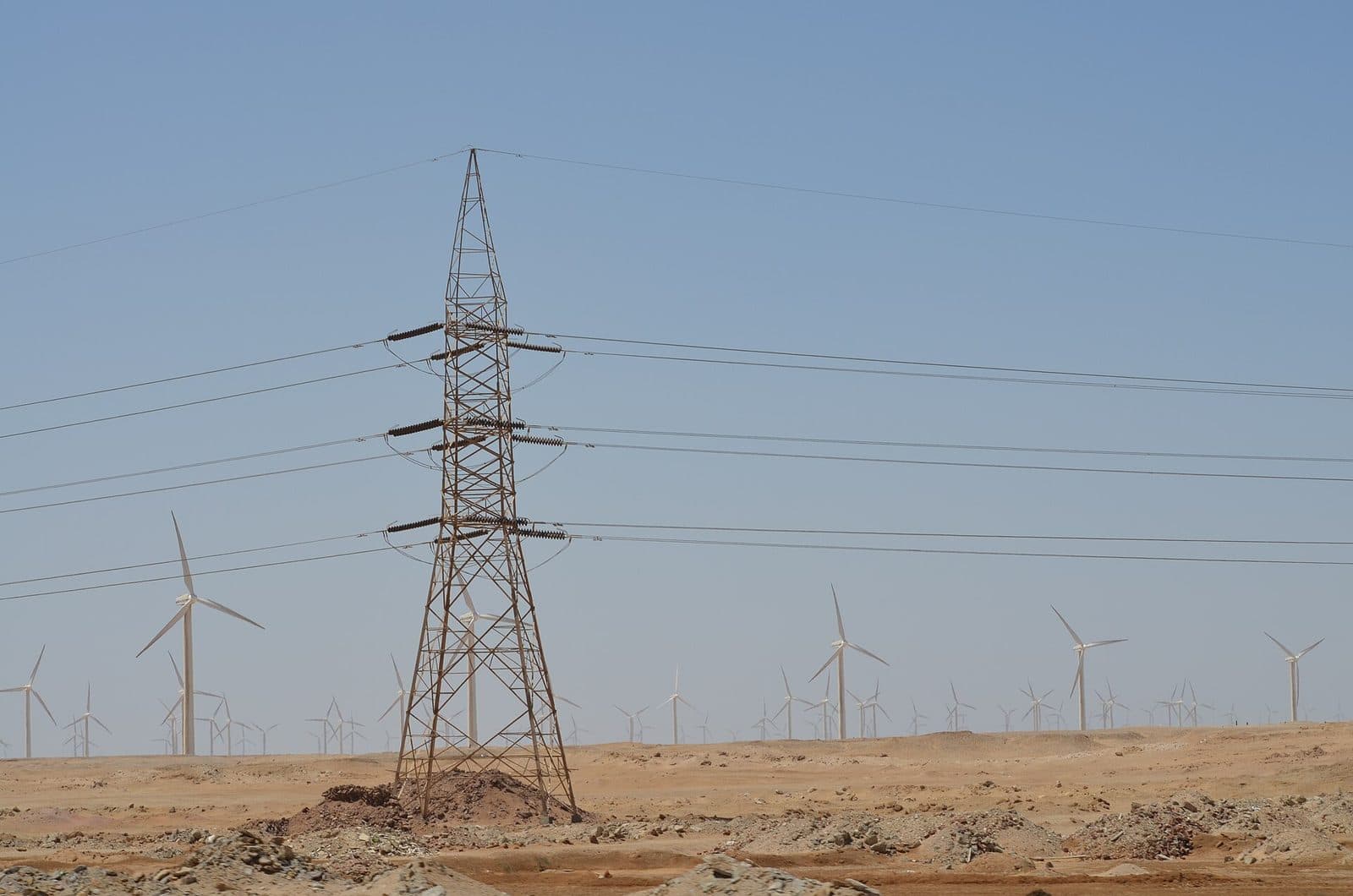
The site choice is deliberate. The Ras Shukeir area sits in one of the windiest corridors in North Africa, along the Red Sea coast where steady northwesterly winds funnel down the gulf. The Gulf of Suez region already hosts some of Egypt’s largest wind installations, and Shadwan extends that cluster further south. For readers following how wind resource quality shapes project economics, the capacity factor explainer on Joule Post breaks down why windy sites like this produce far more electricity per megawatt than average locations.
Shadwan wind farm Egypt: project structure and financing
Scatec is not developing the project alone. The Norwegian renewable power producer signed a joint development agreement with EDF power solutions that gives the French utility a targeted 29 percent equity stake in Shadwan. Scatec will serve as the builder and operator, providing engineering, procurement and construction services as well as asset management and long-term operations and maintenance.
The financing picture reflects the way large emerging-market renewables projects are assembled today. Scatec announced USD 150 million in three-year equity bridge loans from The Arab Energy Fund — USD 50 million earmarked for Shadwan and USD 100 million for the company’s separate Energy Valley project, a 1,950 MW solar and 3,935 MWh battery storage complex elsewhere in Egypt. Separately, financial close on long-term non-recourse project debt for Shadwan is expected before the end of 2026, with lenders’ due diligence and documentation now in the final stages.
The two projects together — Shadwan plus Energy Valley — illustrate how Egypt has become one of the most active renewable development markets in the Middle East and North Africa. The country has set targets for renewables to supply a major share of its electricity mix, and international developers have responded with multi-billion-dollar pipelines of wind, solar, and storage. Compare this with India’s recent offshore wind tendering activity, and a pattern emerges: large emerging economies are increasingly procuring wind at national scale.
Why this project matters for African wind
Africa’s wind industry has long been concentrated in a handful of markets — Morocco, South Africa, Kenya, and Egypt itself — with gigawatt-scale announcements remaining relatively rare. At 900 MW, Shadwan joins a short list of the continent’s largest onshore wind farms and signals that institutional capital now views Egyptian renewables as a bankable, repeatable proposition.
The employment and industrial effects matter too. Scatec’s EPC role means local contractors and supply chains will handle much of the civil works, road construction, and foundation installation. Turbine supply will almost certainly come from a major international manufacturer, but the balance-of-plant spending tends to stay in the local economy. For a region like the Red Sea coast, where tourism is the dominant industry, a nine-hundred-megawatt wind farm adds a different kind of economic anchor.
Timeline: what happens next
Construction started this month, with the first phase expected to reach commercial operation at the end of 2027. That schedule is aggressive but typical for onshore wind: turbine foundations and access roads take up most of the first year, with turbine erection and grid connection following. The financial close on permanent debt before year-end 2026 is the immediate milestone to watch — until that is signed, the bridge financing covers equity needs only.
One risk worth noting is Egypt’s foreign-exchange environment. Large projects with dollar-denominated debt and Egyptian-pound revenue depend on stable currency assumptions and power purchase agreements priced to match. Scatec’s bridge loan structure and the involvement of The Arab Energy Fund suggest the sponsor group has sized this exposure carefully, but the debt terms at financial close will reveal how lenders are pricing that risk.
The broader Gulf of Suez wind build-out
Shadwan is not an isolated bet. The Gulf of Suez corridor has become one of the world’s most concentrated onshore wind development zones, with multiple projects in construction or advanced planning. This clustering has practical benefits: shared transmission infrastructure, a growing pool of experienced local labor, and a track record of wind performance that de-risks financing for each subsequent project.
It also creates a natural experiment in how quickly emerging-market wind can scale when the resource, the grid, and the policy framework align. Globally, offshore wind has captured the headlines — from the final turbine installation at Revolution Wind off the U.S. coast to European repowering debates — but onshore projects like Shadwan remain the fastest and cheapest way to add renewable megawatts in windy regions.
The numbers tell the story: 900 MW, USD 716 million, 4 TWh a year, 1.6 million tons of CO2 avoided. If construction proceeds on schedule, the Shadwan wind farm in Egypt will begin feeding Egypt’s grid at the end of 2027 — a project that, at announcement, few African onshore developments can match for sheer size. The original Scatec announcement and Enerdata’s coverage carry the full project details.