- FERC has approved PJM’s mandatory registry for large loads of 50 MW or more at a single site, requiring data centers to report location, in-service dates, peak load, ramp schedules and backup generation. The registry took effect on 12 October.
- The commission rejected PJM’s core plan to let new large loads connect without matching capacity in exchange for being curtailed during emergencies, ruling it intrudes on state jurisdiction over retail rates.
- PJM forecasts data center demand tripling to about 29 GW by 2030 while capacity costs have risen more than 1,000% since 2024 — and analysts say the ruling keeps prices higher for longer.
In a split decision, the Federal Energy Regulatory Commission has approved the central pillar of the new FERC PJM data center rule — a mandatory registry tracking the power grid’s largest new electricity users — while striking down the plan’s most aggressive provision. In an order filed on Friday, FERC accepted PJM Interconnection’s definition of “Large Load” at 50 MW or greater at a single site, but rejected the Interim Resource Adequacy Service framework that would have let server farms connect without matching new capacity if they agreed to be cut off during grid emergencies.
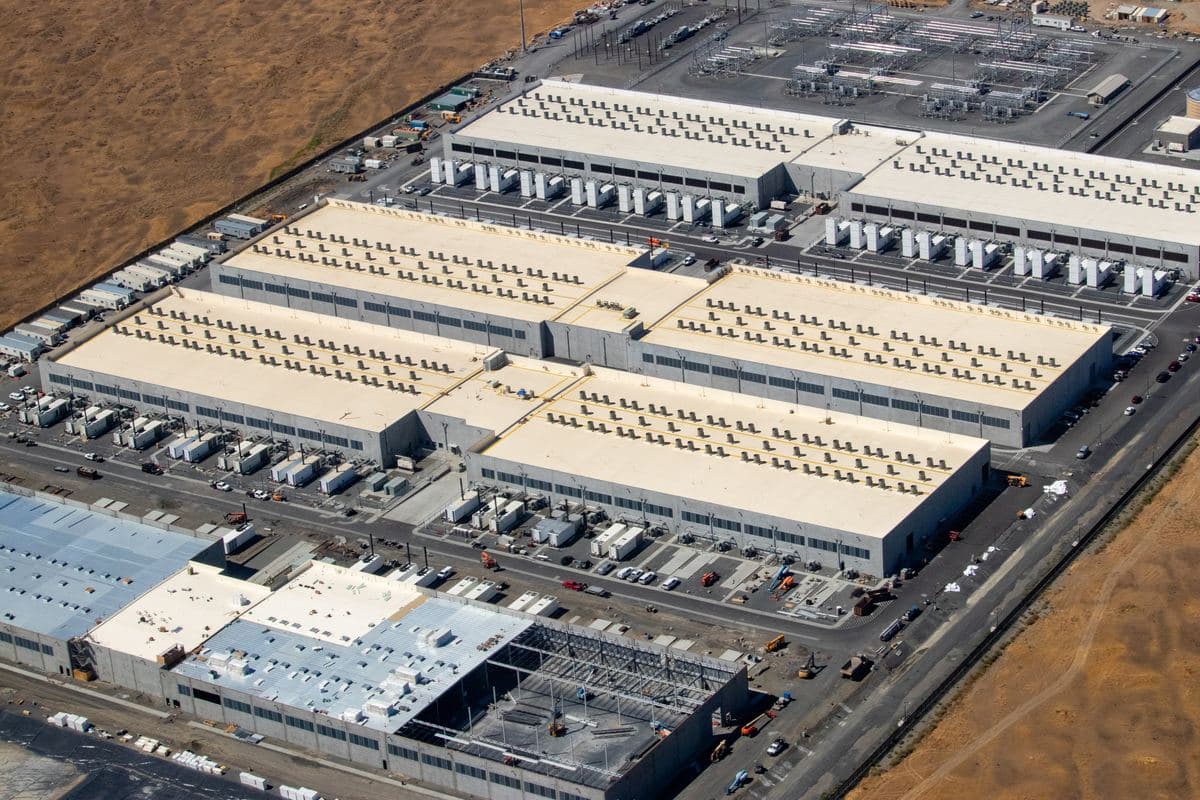
The decision, issued in Docket ER26-3515-000 and effective Monday 12 October, lands at the centre of the fiercest fight in American power markets: who pays for the electricity needed by the data center boom, and who gets cut off when there is not enough of it. PJM, the grid operator serving 67 million people across the Midwest and Mid-Atlantic, is forecasting data center demand to triple by 2030 to about 29 gigawatts of capacity in its territory, according to Reuters.
What the FERC PJM data center rule actually changes
The approved registry is broader than many headlines suggest. It applies to any end-use load of 50 MW or more at a single site — not only data centers — and affiliated facilities within one mile of each other count as a single site. Load-serving entities will be required to report details about those facilities including energy providers, in-service dates, power ramping schedules, backup generation, fuel sources and location, Utility Dive reported. Until now, PJM has had strikingly little visibility into how fast and how large its largest new customers intend to grow — the registry fixes that blind spot.
What FERC refused to approve is the part of PJM’s proposal that would have allowed large loads to connect to the grid without matching new capacity if they agreed to curtailment in the lead-up to grid emergencies. The commission found that several provisions of the Interim Resource Adequacy Service, or IRAS, “appear to place obligations directly on eligible new large loads, which are, for the most part, retail customers” and “appear to dictate which retail customers taking retail service will be curtailed.” That, FERC said, is state territory, not federal: the proposed compensation framework appeared to establish a retail rate, which lies outside the commission’s authority.
The rejected framework also included “bring your own new capacity” provisions — rules letting large users connect by bringing their own new power supplies. FERC left PJM an opening: the grid operator can submit a revised curtailment plan, but it would need to address various issues, including why data centers would be temporarily shut off from the grid before other large energy users, Reuters reported. The order follows a similar August proposal in which PJM sought to require new data center customers of 50 MW or greater to pay to add new power supplies covering their full electricity needs, or risk being shut off during emergencies.
Why it matters
The numbers explain why this fight is so bitter. Rising data center demand has collided with years of dwindling net electricity supply in the region, contributing to a more than 1,000% increase in capacity costs in PJM since 2024 and a 6.8 gigawatt shortfall in the 2028/29 delivery-year capacity auction that could lead to blackouts. Now set that 6.8 GW shortfall against the 29 GW of data center demand PJM expects by 2030: the coming wave of server-farm load is more than four times the size of the shortfall the grid is already struggling to fill. For context on how capacity markets work, see our explainer Capacity Factor Explained.
This is the second FERC rejection of a PJM load-management proposal in about five weeks. In early September the commission rejected key elements of PJM’s plan to hold a backstop procurement auction to acquire capacity for the pending shortfall — a story we covered at the time in FERC Suspends PJM Backstop Procurement for Data Centers. Taken together, the two orders send a consistent message: the grid operator cannot fix a supply shortage by reshaping how it treats demand without new federal rules — and the cost of new capacity must be allocated honestly.
The financial markets got the message instantly. Jefferies analysts told clients on Monday that “the latest development is positive for existing generation/IPPs,” naming Constellation Energy, NRG Energy, Talen Energy and Vistra as beneficiaries, Utility Dive reported. The logic is simple: by rejecting mechanisms that would have let large loads avoid paying for capacity, FERC keeps capacity prices higher for longer — a direct transfer from electricity buyers to the owners of existing power plants. The demand that is driving the boom, including hyperscale data center deals such as the Google–Constellation nuclear deal for AI data centers, is not slowing down; this order just decides who pays for the wires and watts behind it.
States get the final say on who loses power first
The most consequential part of the order may be what it says about jurisdiction. “States have a crucial role to play in this challenge by designating which retail customers must be curtailed when the system is stressed, and we strongly encourage states to continue their important work on this issue,” FERC said. Translation: in a blackout, the question of whether a data center or a hospital gets cut off is a state decision, not a grid-operator decision.
FERC Commissioner David Rosner, in a concurring statement, was sharper about the economics. “The result could be a capacity market signaling that PJM has more than enough capacity while the region sheds thousands of megawatts of demand on an involuntary basis,” Rosner said. “That’s not only economically inefficient, but also likely to prevent supply and demand from coming back into balance.”
Rosner added that non-critical data centers should be shut off before ordinary customers such as homes, hospitals and schools in a grid emergency — but that states should decide the priority order: “We need state regulators to establish clear rules for which customers should be curtailed first when circumstances require it. And we need PJM to be ready to adjust their operations to this evolving paradigm. But such measures should only be taken when necessary to keep the system reliable, after voluntary demand response resources have been exhausted.”
The order also drew support from the Trump administration’s Department of Energy, which filed a statement of position backing FERC’s call for cost-allocation reforms so that large users — not existing ratepayers — pay for new generation. “That’s why President Trump created the Ratepayer Protection Pledge, and the Energy Department supports having large electricity users pay for reliable new power generation,” said US Secretary of Energy Chris Wright, in a DOE statement urging PJM to comply promptly with the order.
What happens next
PJM said it is reviewing the order “with an eye toward how we can fulfill FERC’s requirements while recognizing the responsibilities FERC indicated belong to the states and honoring the concept that existing electricity customers should not be unfairly burdened by new, energy intensive customers in the form of higher costs or decreased reliability,” spokesman Jeffrey Shields told Utility Dive. Expect two tracks: a revised, narrower curtailment proposal from PJM, and state-level proceedings across the 13 PJM states to define curtailment priority rules — the work FERC has now explicitly handed them.
For the data center industry, the takeaway is that the data center grid curtailment policy debate has moved from the grid operator’s control room to state capitals. Building more generation and storage is the durable answer; the registry, at least, means the grid will finally know exactly how big the coming load really is.