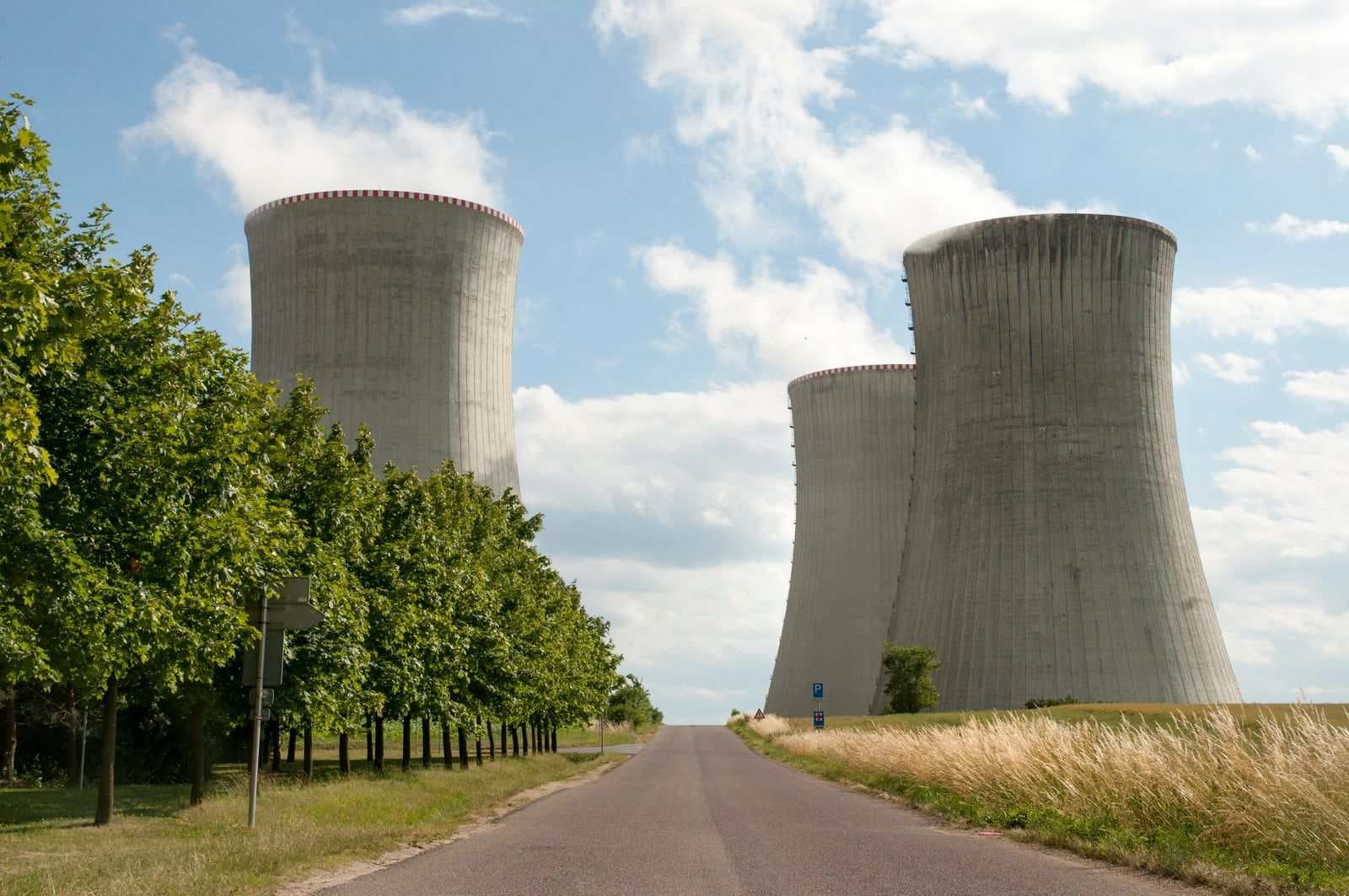
- X-energy, American Electric Power and Amazon signed a joint development agreement to study a 960 MW small modular reactor plant near the retired Breed coal site in Sullivan County, Indiana, with Amazon’s development funding tied to milestones.
- Days later, AtkinsRealis, Hoosier Energy and the State of Indiana signed a memorandum of understanding to study up to eight Enhanced Candu 6 reactors, as much as 6 gigawatts, at retired or retiring power sites across the state.
- Both proposals are feasibility-stage studies with no construction schedule, no financing and no final investment decision, yet together they turn Indiana into a live experiment in the brownfield coal-to-nuclear model.
Indiana has no operating commercial nuclear power plant. Within a single week, the state became host to two of them on paper. On October 19, X-energy and American Electric Power (AEP) signed a joint development agreement to assess a 960 MW small modular reactor plant near the former Breed Generating Station in Sullivan County, with Amazon providing development funding linked to milestones, as Modern Power Systems reported. A day later, AtkinsRealis, Hoosier Energy and the State of Indiana signed a memorandum of understanding to study deploying up to eight Enhanced Candu 6 reactors, a combined capacity of as much as 6 gigawatts, at retired or retiring power sites across Indiana, according to The Daily Energy’s account of the deal.
The Amazon-backed bid: twelve Xe-100 units at a retired coal plant
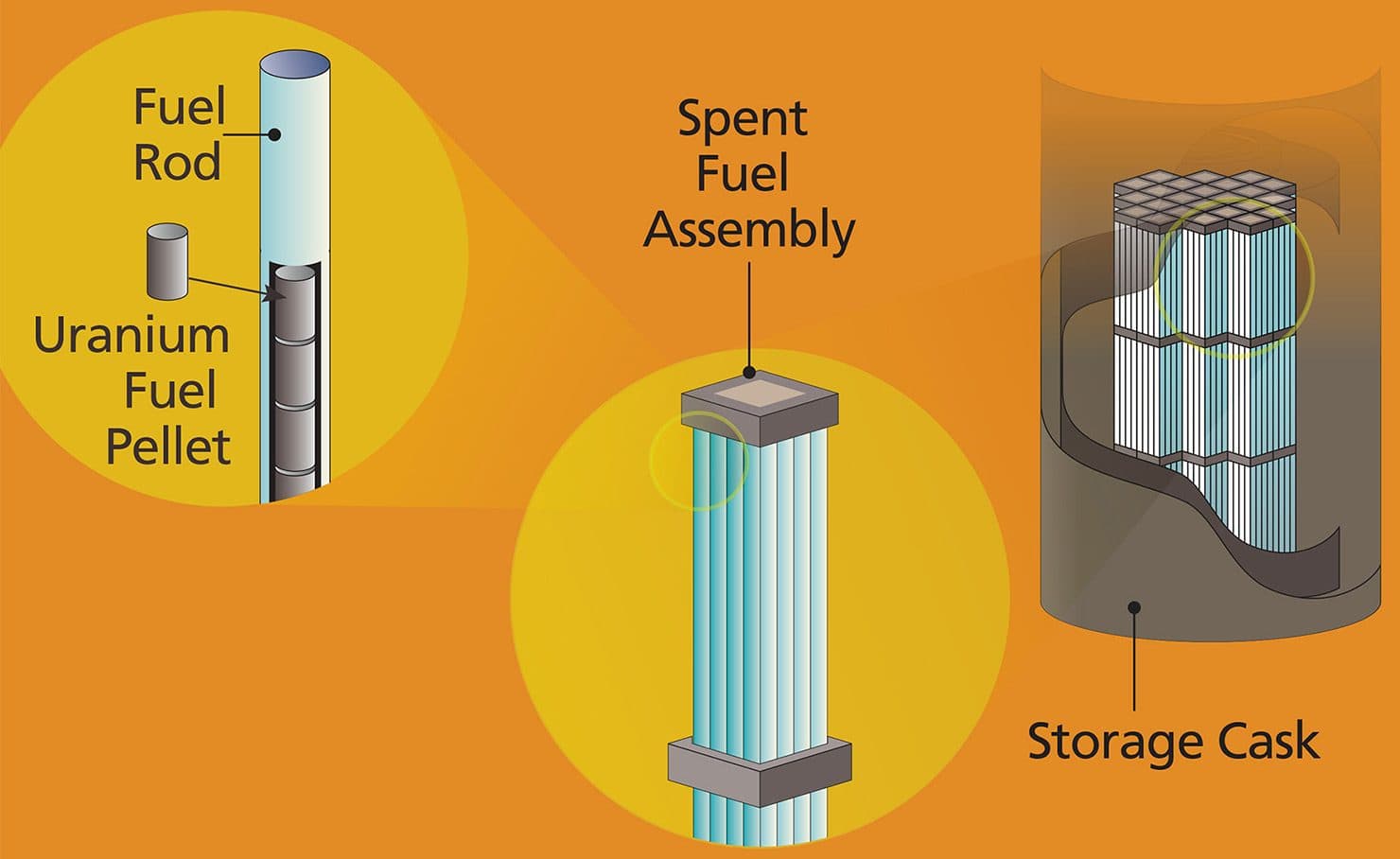
The X-energy proposal would build a 12-unit plant using the company’s Xe-100 high-temperature gas-cooled reactor, each module rated at 80 MWe and running on helium coolant and TRISO fuel. The site is AEP’s retired Breed coal station in Sullivan County, a brownfield the partners would redevelop to feed electricity into the regional grid as demand grows.
The agreement is a feasibility study, not a build order. No construction schedule or final investment decision was announced, and development depends on the feasibility work and subsequent approvals. Amazon’s money comes with strings: its funding is tied to development milestones, and the company described the project as intended to deliver nearly a gigawatt of carbon-free power while covering its full costs.
The Indiana study sits inside a larger arrangement. The agreement builds on a wider collaboration among the three companies aimed at supporting more than 5 GW of new nuclear capacity on the US grid by 2039, with the Indiana plant positioned as the second commercial deployment under that push after Energy Northwest’s Cascade Advanced Energy Facility in Washington state. X-energy’s first planned deployment, a four-unit Xe-100 project at a Dow manufacturing site on the Texas Gulf Coast intended to supply electricity and industrial steam, is already under US Nuclear Regulatory Commission review of its construction permit application. AEP chairman, president and CEO Bill Fehrman said the agreements carry the capital protections and financial safeguards the utility considers essential before any nuclear project can proceed.
The Candu counter-move: up to 6 GW of heavy-water reactors
The second proposal is a different machine from a different continent. The Enhanced Candu 6 is a Canadian pressurised heavy-water reactor in the 700-plus megawatt class that runs on natural, unenriched uranium and can be refuelled while operating, avoiding the extended outages that shut down conventional reactors for weeks. AtkinsRealis, the Montreal engineering group that holds the exclusive licence to market the Candu design (the underlying intellectual property belongs to the Canadian government, held by Atomic Energy of Canada Ltd.), would act as the original equipment manufacturer. Hoosier Energy, a not-for-profit transmission cooperative serving rural electric members across central and southern Indiana, contributes grid and siting expertise. The state government is itself a signatory.
Governor Mike Braun framed the MoU around jobs and affordability, saying the state wants to ensure “affordable electricity and high-wage opportunities” for its workforce. Like the X-energy deal, the MoU is an early-stage framework: no site chosen, no financing in place, no final investment decision. AtkinsRealis Nuclear president Joe St Julian said the goal is to “strengthen energy security, support skilled jobs and deliver lasting benefits to communities,” while Hoosier Energy president and CEO Donna Walker said the cooperative was “pleased to offer our expertise as part of early discussions.”
The licensing push is what makes this deal notable beyond Indiana. AtkinsRealis is trying to bring Candu into the US market for the first time: the company filed a notice of intent with the NRC in June 2026, held its first public NRC meeting on the design in August, and has since submitted the first of seven planned topical reports covering its quality-assurance programme.

The two Indiana designs, side by side
| Feature | X-energy Xe-100, Sullivan County | Enhanced Candu 6, statewide study |
|---|---|---|
| Unit size | 80 MWe | 700+ MW class |
| Units proposed | 12 | Up to 8 |
| Combined capacity ceiling | 960 MW | Up to 6 GW |
| Reactor type | High-temperature gas-cooled SMR | Pressurised heavy-water reactor |
| Coolant | Helium | Heavy water |
| Fuel | TRISO particle fuel | Natural, unenriched uranium |
| Refuelling | Standard outages | Refuelled while operating |
| Tech-company backing | Amazon, with milestone-linked development funding | None announced |
| Licensing stage in the US | NRC reviewing construction permit for first-of-kind units at Dow’s Texas Gulf Coast site | Notice of intent filed June 2026; first of seven topical reports submitted |
| Project maturity | Feasibility study; no schedule, no final investment decision | Early-stage MoU; no site, no financing, no final investment decision |
| Indiana’s role | Second commercial deployment under the X-energy/AEP/Amazon 5+ GW push | Potential first US deployment of the Candu design |
Why it matters: 7 gigawatts would power roughly seven hyperscale data centers
The headline number is the ceiling: 960 MW plus up to 6 GW is just under 7 gigawatts of proposed capacity. Our arithmetic: at roughly 1 gigawatt per hyperscale AI data-center campus, the two proposals together could, on paper, supply about seven such campuses. That framing is the point. Both announcements are driven by the same demand story, surging electricity appetite from data centers and AI, and both are aimed at the same customer: big, flat, around-the-clock load.
The more instructive comparison is with what is actually getting built elsewhere. Indiana’s 6.96 GW combined ceiling is more than three times the 1,800 MW committed at Poland’s six-unit BWRX-300 coal-to-nuclear commitment at the Pątnów plant, and the Polish deal is already among the largest multi-unit SMR commitments anywhere. Indiana’s two announcements are bigger in total but far earlier in development: Poland has a signed joint venture and a defined land structure, while Indiana has two studies. The gap between announced capacity and committed capital is the industry’s oldest story, and this week in Indiana is a fresh chapter.
That is also the analytical spine of the week. Indiana has never operated a commercial nuclear plant and its power mix has leaned on coal and gas. Now it hosts a live two-track experiment in the brownfield coal-to-nuclear model: one proposal reusing a retired coal site to preserve land rights, transmission connections and a local workforce, the other evaluating retired or retiring fossil sites statewide on the same logic. The question Indiana is now set up to answer is whether that brownfield reuse genuinely compresses nuclear development timelines, or whether the licensing, financing and construction hurdles look the same wherever the reactors sit.
Readers new to the technology should start with how small modular reactors differ from traditional gigawatt plants before weighing which of Indiana’s two bets has the shorter path to first concrete.
What to watch next
Three milestones will tell whether either proposal hardens into something real. First, the NRC construction-permit review for X-energy’s four-unit Dow project in Texas: a licensed Xe-100 makes the Indiana study far easier to finance. Second, the remaining six Candu topical reports: AtkinsRealis has submitted only the first, and the design’s US licensing path is barely begun. Third, whether either the feasibility agreement or the MoU converts into site selection and financing, the two missing ingredients both announcements were careful not to claim. Until then, Indiana has seven gigawatts of nuclear ambition and zero gigawatts of nuclear steel in the ground.