- Thorizon and Urenco have signed a memorandum of understanding to explore fuel supply for Thorizon’s molten salt reactors, including HALEU enriched to up to 20% U-235.
- Urenco’s Advanced Fuels Facility at Capenhurst, UK, is expected to produce HALEU from 2031, roughly three years before the first 100 MWe Thorizon One unit targeted for Borssele, Netherlands, in 2034.
- The agreement also investigates fuelling later Thorizon designs with depleted uranium (enrichment tails below 0.7% U-235), potentially turning a stored waste stream into reactor fuel.
The Thorizon–Urenco fuel agreement pairs a Franco-Dutch molten salt reactor developer with one of the Western world’s largest uranium enrichers, in a pact aimed at locking in fuel supply roughly eight years before the first reactor is due to switch on. Under the memorandum of understanding, the two companies will explore Urenco supplying HALEU (high-assay low-enriched uranium, enriched to up to 20% uranium-235) in molten salt form for Thorizon’s reactors, with the first 100 MWe Thorizon One unit planned for Borssele in the Netherlands and targeted for 2034.
The MoU reaches beyond first-fuel supply. It also covers investigation of whether depleted uranium, the by-product left over after natural uranium is enriched and containing less than 0.7% U-235, could fuel later generations of Thorizon reactor designs. That material is currently stored as a long-term liability. Thorizon chief executive Kiki Lauwers said: “Building the fuel supply chain is as critical as developing the reactor itself.” Urenco chief commercial officer Laurent Odeh said Thorizon’s molten salt technology “creates an opportunity to utilise HALEU in a different form.”
The Thorizon–Urenco fuel agreement targets the HALEU bottleneck
HALEU supply is the binding constraint on the advanced-reactor wave. Every molten salt design, and many small modular reactors, need uranium enriched well beyond the roughly 5% used in today’s light-water reactors, and commercial-scale Western production of that material barely exists. Urenco’s Advanced Fuels Facility at Capenhurst in the UK is expected to begin HALEU production in 2031, and the company is adding 4.6 million separative work units of enrichment capacity, according to Interesting Engineering’s reporting on the deal.
| Fuel stream | U-235 assay | Source and status |
|---|---|---|
| Conventional light-water reactor fuel | ~5% | Standard commercial enrichment |
| HALEU for Thorizon One | Up to 20% | Urenco Advanced Fuels Facility, Capenhurst; production expected 2031 |
| Centrus demonstration-scale HALEU | Up to 20% | Piketon, Ohio; about 900 kg per year, the only US commercial source today |
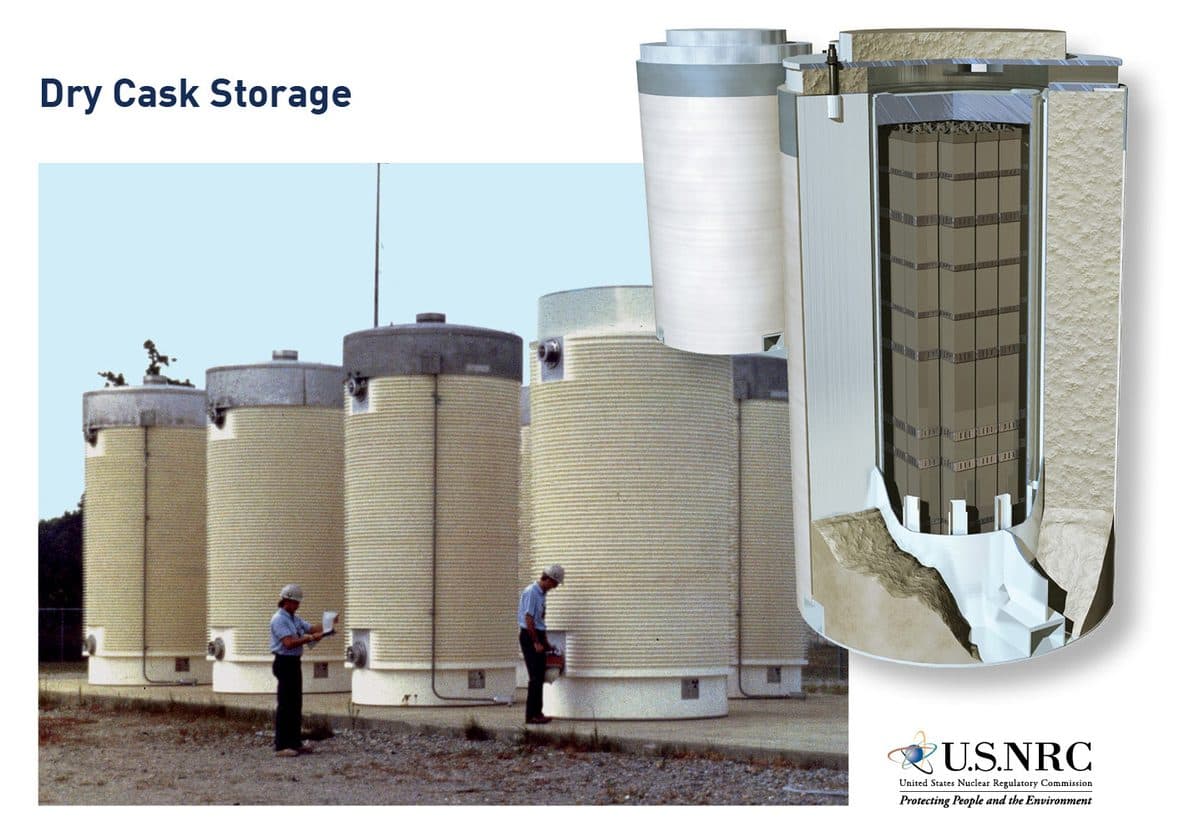
| Depleted uranium (enrichment tails) | Below 0.7% | Stockpiled at enrichment sites; under investigation for later Thorizon designs |
Against that backdrop, the only US commercial source today is Centrus’s demonstration-scale plant at Piketon, Ohio, producing on the order of 900 kg a year, per US Department of Energy HALEU supply assessments. The gap between demonstration quantities and future reactor-fleet demand is measured in tonnes, and this MoU is explicitly racing to close it. The 2031-to-2034 sequencing matters: fuel production coming online roughly three years before the first Thorizon One is an inversion of the industry’s usual order, in which fuel supply has historically lagged reactor designs by years. The same fuel question hangs over every advanced reactor now moving toward deployment, including the transportable microreactor concepts designed for remote industrial sites.
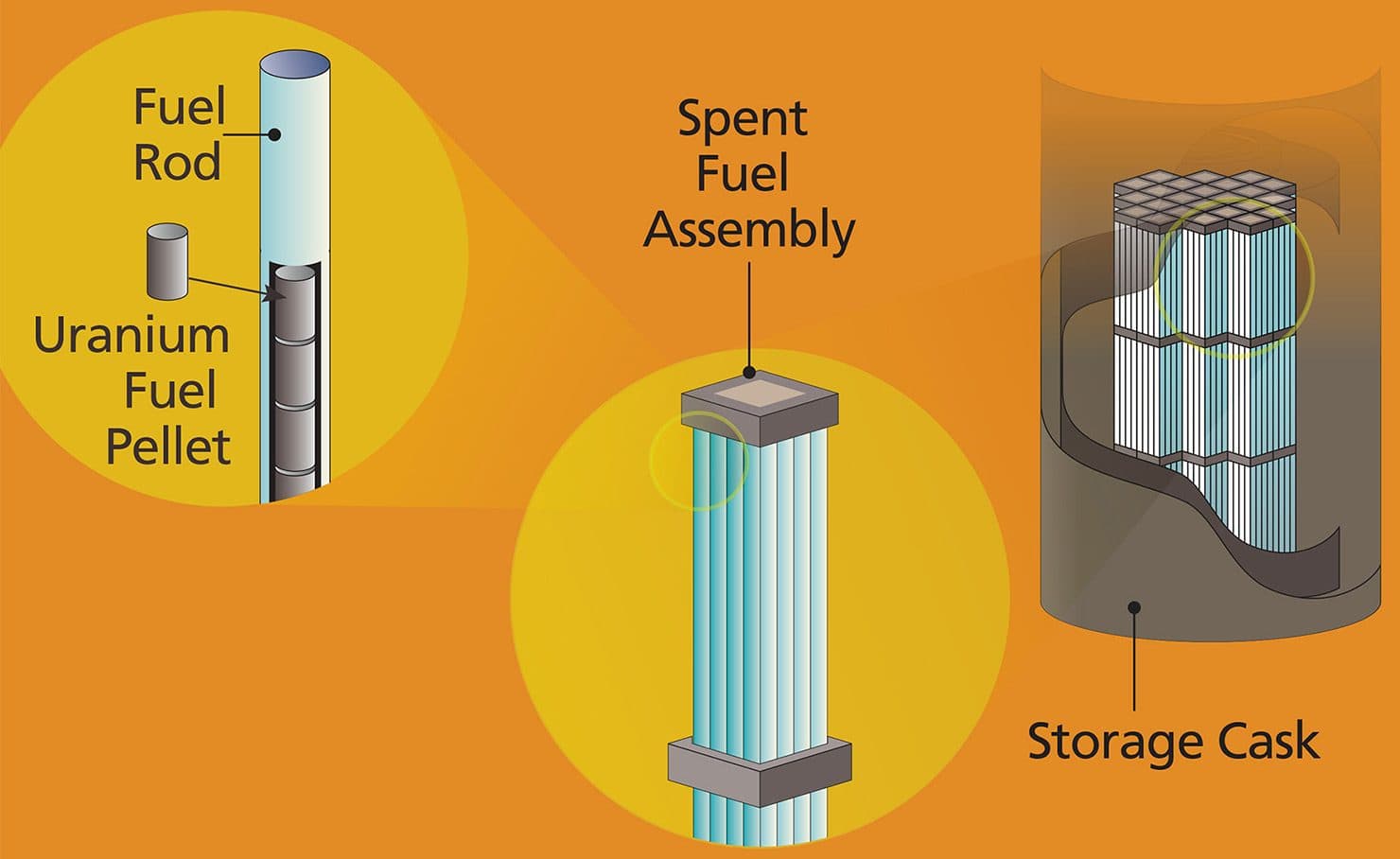
The molten salt form matters as much as the enrichment level. Unlike conventional reactors, which burn uranium as solid ceramic pellets inside metal cladding, Thorizon’s design dissolves the fuel directly into hot fluoride salt that doubles as the coolant. That is why Odeh framed the deal as a chance to use HALEU “in a different form”. That form factor is also why this supply chain cannot simply piggyback on existing light-water-reactor fuel fabrication: it has to be built, almost from scratch, alongside the reactors themselves.
Depleted uranium: from stored liability to reactor fuel
The depleted-uranium strand is the agreement’s most consequential idea. Enrichment tails, the depleted uranium left after enrichment, are stockpiled in vast quantities at enrichment sites, a long-term liability that utilities pay to store and manage. If later Thorizon designs can run on that material, the economics of the fuel cycle change shape: a waste stream becomes an asset, and fuel costs detach from fresh uranium mining and fresh enrichment demand.
The arithmetic of enrichment makes that strand legible. HALEU enriched to up to 20% U-235 carries roughly four times the enrichment assay of the ~5% fuel in today’s reactors, which is why HALEU is scarce and expensive. Depleted tails at under 0.7% sit at the opposite end of that same spectrum: material whose enrichment work was already paid for decades ago, sitting in storage at a cost. A reactor that can climb down that ladder toward tails is not just finding cheaper fuel; it is monetizing the industry’s sunk costs.
The concept is not without precedent in ambition. Fast-reactor programmes have chased similar goals for decades, but pairing it with molten salt chemistry, in which the fuel is dissolved directly in the coolant salt, gives the idea a new technical vehicle. As World Nuclear News reported, the cooperation covers the full MSR fuel cycle, not just enrichment. The industry’s stored liabilities are getting fresh attention across Europe, from enrichment tails to Studsvik’s spent-nuclear-fuel decommissioning deal in Norway.
Thorizon’s project is selected under the France 2030 investment programme, and the company signed a separate MoU with Hyundai Engineering & Construction earlier in 2026, a construction partner for the reactor fleet this fuel agreement is meant to feed. The fuel-cycle dimension also parallels other European nuclear supply-chain contests now playing out in courts and boardrooms, including the legal challenge over Rosatom-linked fuel production at Lingen.
Why early fuel deals will decide which reactors deploy
Advanced-reactor developers have spent a decade announcing reactor designs while treating fuel as an afterthought. The Thorizon–Urenco MoU inverts that sequence: a reactor developer is contracting its fuel chain eight years ahead of its first unit, before a single Thorizon One has been built. In a market where Western HALEU supply is still measured in hundreds of kilograms a year against future demand measured in tonnes, early movers lock in the scarcest input in the value chain.
Note the unit size too: Thorizon One at 100 MWe sits at the smaller end of the small-modular-reactor class (typically defined as designs under 300 MW). Smaller units mean smaller per-unit fuel loads, but also more units to fuel if the fleet scales, which is exactly why the depleted-uranium strand matters: it is the difference between a fuel supply that must be enriched fresh for every reactor and one that draws on material already sitting in storage.
There is a strategic layer as well. With Russia and China dominating enrichment capacity today, a European HALEU pipeline running from Capenhurst to Borssele is as much an energy-security play as a commercial one: a domestic fuel supply for a domestic reactor design, sequenced so the fuel arrives before the reactor does. The same energy-security logic runs through Europe’s other nuclear bets, from coal-to-nuclear SMR conversions like the BWRX-300 planned for Pątnów, Poland, to the fuel-sovereignty fights in courtrooms. And if the depleted-uranium strand works, the payoff is larger still: the nuclear industry’s biggest stored liability becomes its cheapest fuel stock. That is the outcome worth watching once the first press cycle fades.