- Batteries supplied more than 80% of the energy in Chile’s evening peak in 2026, up from 42% in 2024, with average discharges of almost 1,700 MW at 9 p.m.
- Early-morning power prices fell below US$5 per MWh in 74.7% of hours north of Charrúa in October 2026, against 2.8% a year earlier.
- Chile battery storage reached 11.3 GW across operating, testing and under-construction projects, against 84 MW three years ago.
Chile battery storage has done in three years what most power systems take a decade to attempt: it took over the evening peak. The fleet behind that shift totals 11.3 GW across projects in operation, in testing and under construction, against 84 MW three years ago. The strain shows in the economics. Cheap power has spread from midday into the early morning, the spread that pays for storage is narrowing, and the industry’s own association warns that demand is not growing as fast as supply.
The figures come from two reports published days apart. Aclai Consultores, in its October 2026 operating report published on November 5, tracked the collapse in early-morning marginal costs. The Chilean Renewable Energy and Storage Association, known as Acera, and SPEC Energy Consulting, in a study released on November 4, measured the battery share of the evening peak. Both were reported by Energía Futura, and the storage numbers were corroborated by Energy-Storage.News on October 26. Together they describe a power system that changed faster than its own planners expected.
Chile Battery Storage Reached 11.3 GW in Three Years
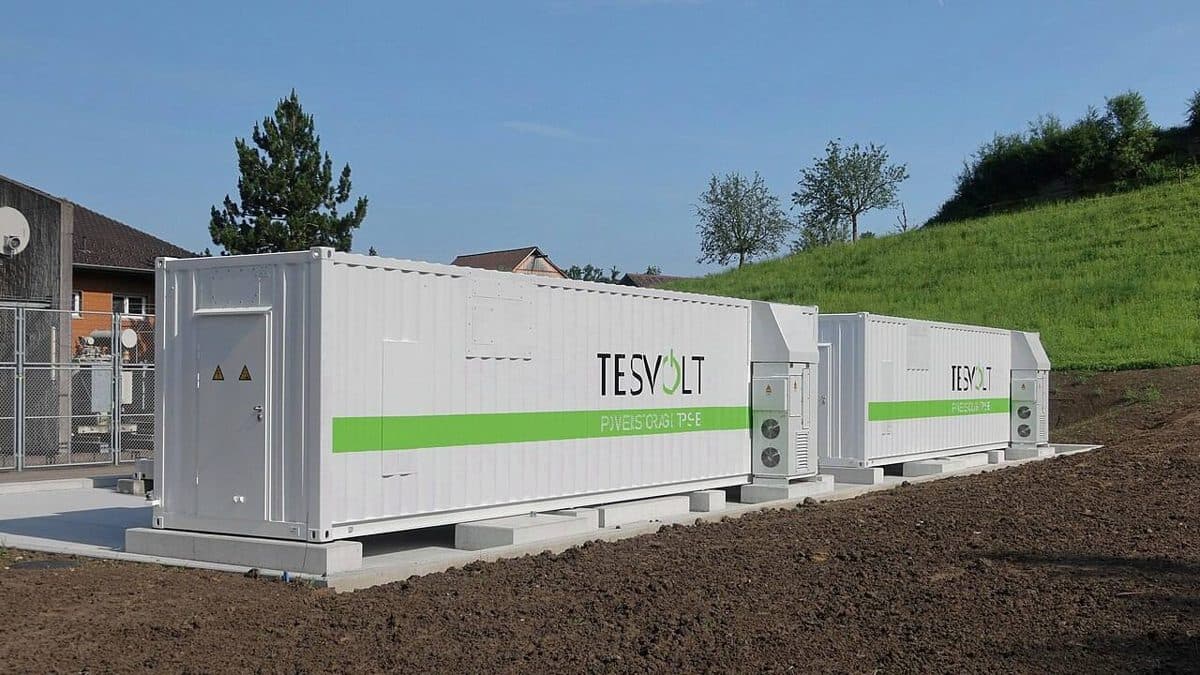
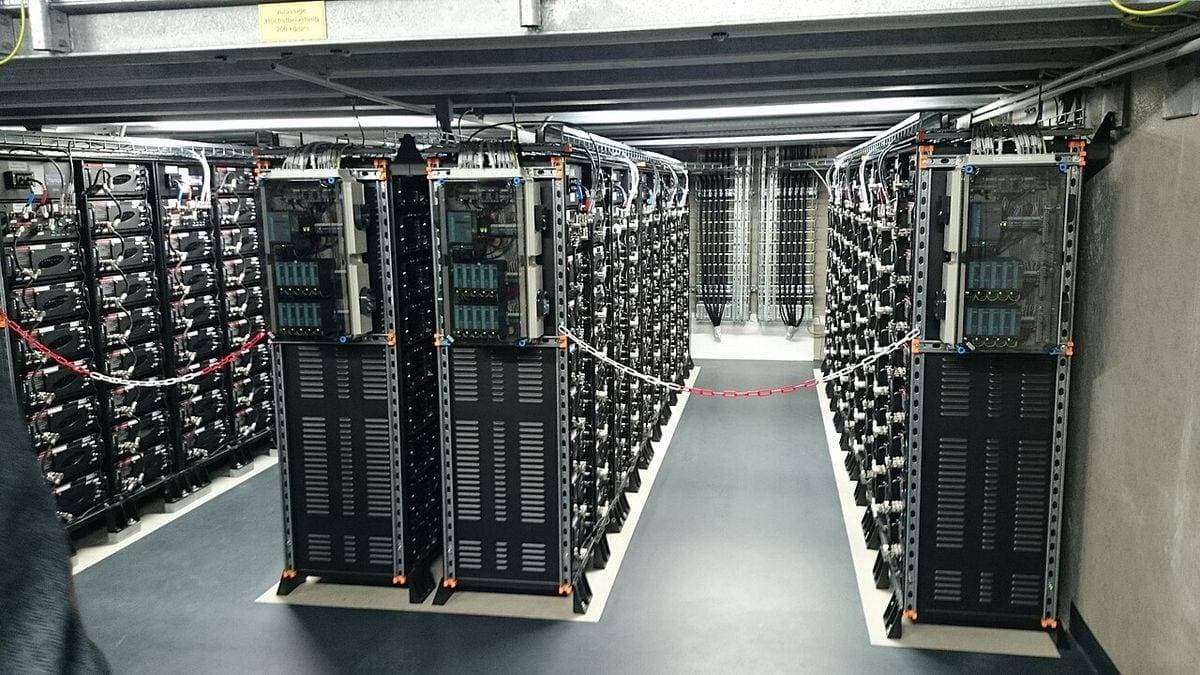
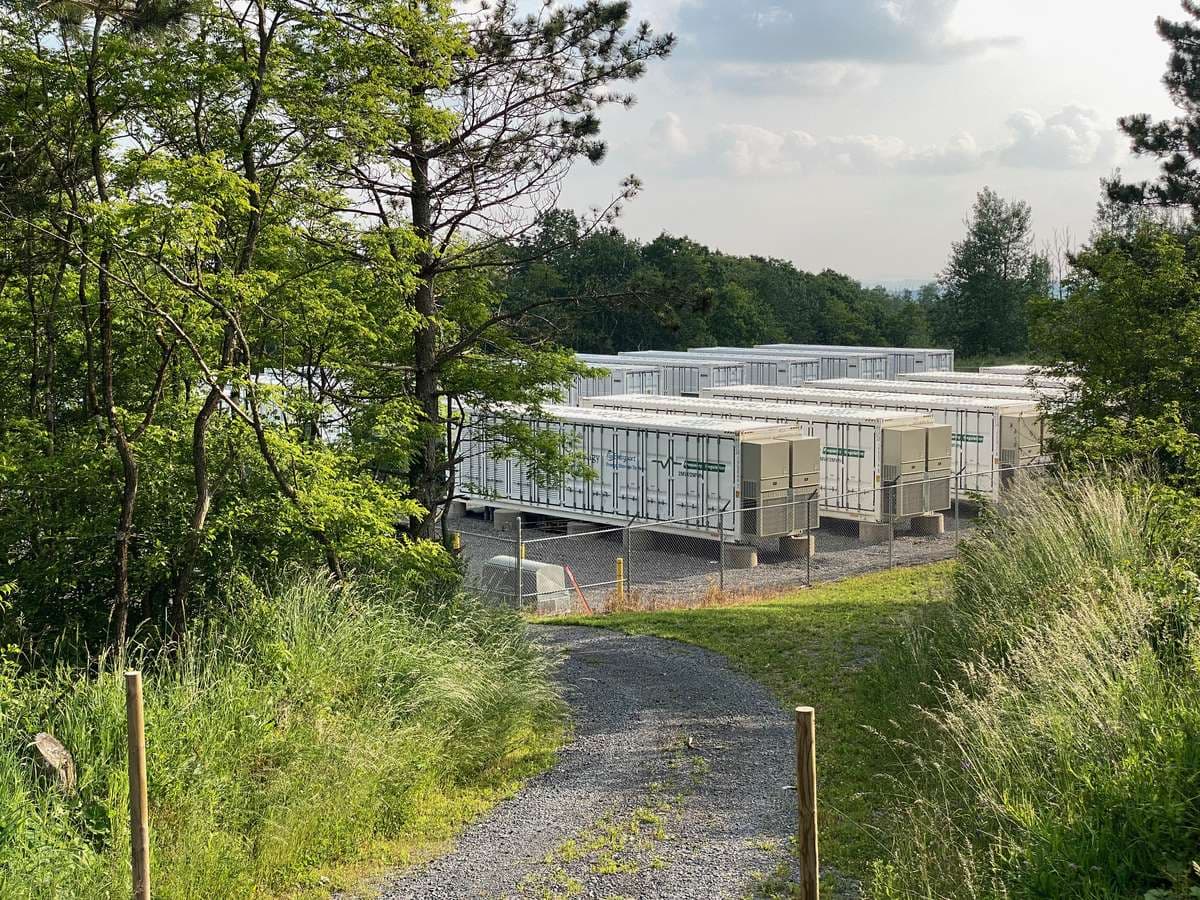
The fleet is the story. Chile has 11.3 GW of storage across projects in service, in testing and under construction: 3.2 GW operating, 3.7 GW in testing and 4.3 GW under construction. Three years ago the total was 84 MW. That is growth of about 135 times in three years, by Joule Post arithmetic from the Acera figures. The pipeline behind it is larger still. Energy-Storage.News reported on October 26 that 5.1 GW and 22 GWh were under construction, with 19.9 GW holding environmental approval and 8.7 GW under evaluation.
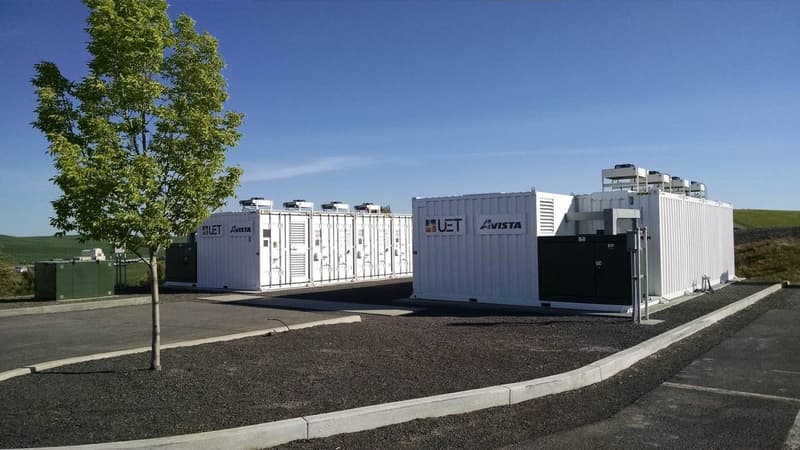
The fleet is concentrated where the sun is. About 84 percent of the capacity sits in the north, between the Arica y Parinacota and Atacama regions, where the large solar plants are. The municipality of María Elena alone hosts 2.3 GW across 14 projects. Acera’s September statistical bulletin, with data as of October 1, records 3,125 MW of installed storage holding 13,555 MWh of energy, which works out to about 4.3 hours of storage at full power, a calculation Energía Futura made from the Acera data. In September the batteries injected 584 GWh into the National Electric System, 7.9 percent of all electricity in the system that month and 216.3 percent more than in September 2025. That implies September system injections of about 7,392 GWh, by Joule Post arithmetic from the Acera bulletin figures.
The batteries do more than shift energy. Eighteen systems take part in frequency control, and in September they provided more than 50 percent of secondary control reserve and between a third and half of primary control, according to Acera and SPEC. A battery that can inject or absorb power in seconds is a grid stability asset as well as an energy arbitrage asset, and the Chilean system operator now leans on it for both.
Batteries Took Over the Evening Peak From Diesel
The evening peak, between sunset and midnight, is the hardest block in a solar-heavy system. Demand stays high and solar output disappears. In Chile that block now belongs to batteries. According to the Acera and SPEC study, carried out with the Galilei analytics platform, the battery share of energy in the evening peak rose from 42 percent in 2024 to 55 percent in 2025 and to more than 80 percent in 2026.
| Indicator | 2024 | 2025 | 2026 |
|---|---|---|---|
| Battery share of evening peak energy | 42% | 55% | Over 80% |
| Average battery discharge at 9 p.m. | Not reported | Not reported | Almost 1,700 MW |
| Energy charged by batteries | Not reported | Not reported | 4.3 TWh |
| Share of charging bought at zero marginal cost | Not reported | Not reported | Almost three quarters |
The 38-point rise in two years is the fastest storage takeover recorded in any major power system, and the discharge figures show it is not a rounding effect. At 9 p.m. the batteries discharge an average of almost 1,700 MW. Ana Lía Rojas, executive director of Acera, put it directly: “At 9pm the batteries are discharging on average nearly 1.7GW,” as reported by Energy-Storage.News. Four years ago batteries provided none of the peak energy. The study also reports that batteries charged 4.3 TWh in 2026, and almost three quarters of that energy was bought at zero marginal cost. That is about 3.2 TWh of free charging, by Joule Post arithmetic.
The storage fleet is also cutting curtailment, the wasted solar and wind output that has plagued northern Chile. Between January and August 2026, 70 percent of the 2,900 GWh of new wind and solar generation was absorbed by storage units, according to the Acera and SPEC analysis. That is about 2,030 GWh that would otherwise have been curtailed, by Joule Post arithmetic. Energy-Storage.News reported that Chile saw its first year-on-year decrease in solar and wind curtailment in four years in August 2026. For a system that once threw away a quarter of its solar output in some weeks, that is a material change.
Cheap Power Spread From Midday Into the Early Morning
The most surprising finding in the Aclai report is not the evening peak but the early morning. Near-zero marginal costs used to be a midday phenomenon, when solar output was at its highest. In October 2026 they reached the hours before dawn. North of the Charrúa node, near Cabrero in the Biobío Region, 74.7 percent of early-morning hours had a marginal cost below US$5 per MWh. A year earlier the share was 2.8 percent. South of Charrúa the indicator jumped from 26.9 percent to 88.8 percent.
| Zone | October 2025 | October 2026 | Change |
|---|---|---|---|
| North of Charrúa | 2.8% of hours | 74.7% of hours | Up 71.9 points, 26.7 times |
| South of Charrúa | 26.9% of hours | 88.8% of hours | Up 61.9 points, 3.3 times |
The marginal cost is the price at which power is traded between generators in each hour and at each node of the system: the cost of producing the last MWh needed to meet demand. When surplus solar or wind power is available, that cost approaches zero, because the fuel is free. Batteries extend the effect into the night by taking cheap midday power and delivering it after sunset, which displaces the thermal plants that set high prices. Wind generation, which often blows harder at night in several areas, and hydropower from a spring with plenty of snow add to the same effect.
The scale of the price collapse shows up in the weekly records. In the week of October 12 to 18, the marginal cost fell to US$3.4 per MWh at Polpaico, its lowest level since 2002, according to DNV. Aclai’s founding partner, Claudio Espinoza, warned that it remains to be seen whether the change is persistent or mainly reflects the spring’s supply conditions, and the consultancy called for the impact on generators and storage systems to be monitored. October 2026 combined abundant snowmelt, strong sunshine and wind in a month of moderate demand. The real test comes in summer, when hydropower output falls and demand for cooling rises.
What Chile’s Battery Surge Means for Storage Economics
The winners and losers are already clear, and they point in opposite directions. For generators selling on the spot market, a marginal cost of US$5 per MWh in the early morning means minimal revenue for every MWh injected in those hours. Solar plants without storage already knew that scenario at midday. Now wind farms producing at night and run-of-river hydro plants that cannot store water face it too.
For batteries, the business depends on the price spread between the hour they charge and the hour they discharge. If nights also get cheaper, that margin narrows, especially in the hours after the peak. Aclai’s warning is aimed at that arithmetic: the value of a storage project is calculated on the spread, and a permanent change would force a review of cash flows. Rojas flagged the same risk from the industry side, warning that the abundance of projects carries risks for new projects coming online because energy demand is not growing as fast as supply. Financing continues for now: El Pelícano Solar placed US$129.58 million in notes in October 2026 to build an 82 MW battery with four hours of duration next to its solar plant in La Higuera, the first Chilean battery storage project financed in the capital markets, according to Clifford Chance via Revista Electricidad. At 82 MW and four hours, the battery stores about 328 MWh, by Joule Post arithmetic.
For regulated customers the immediate effect is limited. Household tariffs are set by the prices of supply contracts auctioned years ago, not by the hourly marginal cost. Large free customers with contracts indexed to the spot market, such as some mines and industries, can capture part of the drop. September generation was already 83.6 percent renewable, and the retreat of thermal power behind these prices is the trend to watch.
The next year will decide whether the change is structural. The 3.7 GW of batteries in testing and the 4.3 GW under construction will push more daytime solar power into the night. Transmission is the other variable: much of the low pricing is explained by congestion, because lines cannot move power out of the north or the south, and the Kimal-Lo Aguirre line, scheduled for the end of this decade, will better connect the markets. Chile’s experiment matters beyond its borders because it is the first large-scale test of a question every solar-heavy grid will face: what happens to power prices when storage gets big enough to move the whole evening peak. The early answer is that prices fall, diesel leaves, and the storage business itself gets harder. Our explainer on how grid batteries work covers the technology behind that shift, and the 1 GW battery framework in Oman and India’s 92 GWh storage programme show how the same logic is spreading to other markets.
Sources
- Chile’s power prices below US$5 now cover 75% of early-morning hours, and batteries over 80% of the evening peak, Energía Futura, November 2026 (Aclai Consultores October 2026 operating report; Acera and SPEC Energy Consulting study, November 4, 2026)
- Energy storage in Chile reaches 11.3 GW across operating, testing and under-construction batteries, Energía Futura, November 2, 2026 (Acera presentation at Future Energy Summit Chile 2026; Acera September 2026 statistics bulletin)
- BESS already reducing curtailment in Chile, says ACERA; in-construction projects to triple capacity, Energy-Storage.News, October 26, 2026
- Chile reaches 11 GW of batteries in operation and development: how do dispatch rules impact its revenues?, Energía Estratégica, October 26, 2026