- Ontario awarded 14 supply contracts to manufacturers in the Greater Toronto and Hamilton Area for the first BWRX-300 small modular reactor at Darlington on November 6, 2026.
- The province puts the contracts’ combined effect at more than C$110 million (Canadian dollars) of provincial GDP, an estimate rather than a contract total, and says more than 100 Canadian companies have now signed agreements with OPG.
- Only one of the 14 contracts has a published value, C$3.9 million for pumps, so the headline GDP figure is a modelled estimate built on one disclosed price.
Only one of the 14 Darlington SMR contracts announced on November 6 carries a published price, and that gap is the most important fact in the announcement. Armstrong Fluid Technology of Scarborough won a C$3.9 million (Canadian dollars) contract for a pumphouse enclosure and pumps. The other 13 contracts, covering transformers, pumps, and specialized steel for Ontario Power Generation’s first BWRX-300 reactor, carry no disclosed value at all. The province’s GDP estimate for the package works out to about C$7.9 million of estimated effect per contract on average. That figure is a modelled economic effect, and treating it as spending would overstate what Ontario has actually committed to suppliers.
The announcement, made by Energy and Mines Minister Stephen Lecce at a news conference in Scarborough, names three of the 14 recipients. Armstrong Fluid Technology of Scarborough won the C$3.9 million contract for a pumphouse enclosure and pumps. Hooper Welding of Oakville is supplying steel for structural modules, and St. Mary’s Cement of Toronto is supplying concrete and operating a high-density concrete batch plant on site. The values of the Hooper and St. Mary’s contracts were not disclosed, and neither were the other 11 recipients.
What the Darlington SMR contracts cover
The three named contracts cover the physical plant that surrounds the reactor: pumps move cooling water, structural steel forms the modules that house the reactor systems, and concrete, including high-density mixes for shielding, forms the building. These are the components a local manufacturing base can supply without a nuclear reactor licence, and that is the point of the announcement. The province says about 80 percent of project spending will stay with Ontario businesses, and more than 100 Canadian companies have now signed agreements with Ontario Power Generation to deliver the project.
| Company | Location | Scope | Value disclosed |
|---|---|---|---|
| Armstrong Fluid Technology | Scarborough | Pumphouse enclosure and pumps | C$3.9 million |
| Hooper Welding | Oakville | Steel for structural modules | Not disclosed |
| St. Mary’s Cement | Toronto | Concrete and on-site high-density batch plant | Not disclosed |
| 11 further recipients | Greater Toronto and Hamilton Area | Transformers, pumps, specialized steel | Not disclosed |
“By being first in the G7 to build small modular reactors, Ontario is securing a first-mover advantage that translates into real contracts and good-paying jobs,” said Stephen Lecce, Minister of Energy and Mines. “Ontario industries are emerging at the centre of the global nuclear build-out, and this leadership is delivering wins for Canada’s economy and vital contracts for Canadian businesses.”
Ontario Power Generation’s chief executive framed the project in the same terms. “The first-of-a-kind Darlington New Nuclear Project is powering Ontario’s future,” said Nicolle Butcher, President and CEO of OPG. “By building the G7’s first small modular reactor, we are creating thousands of high-value jobs, strengthening our industrial base, supporting businesses in communities across the province, and cementing Ontario’s place as a global nuclear leader.” The province says construction, operation, and maintenance of the four planned units will sustain an estimated 3,800 jobs over 65 years and contribute C$38.5 billion to Canada’s GDP over the same period. Both figures are provincial projections. For readers new to the technology, our explainer on what a small modular reactor is sets out how the BWRX-300 differs from a conventional large reactor.
The funding stack behind the first BWRX-300
The 14 supply contracts sit inside a much larger funding picture. Ontario has committed C$1 billion through its Building Ontario Fund, and the federal government has committed C$2 billion through the Canada Growth Fund. The Canada Infrastructure Bank separately lists a C$970 million low-interest commitment dating from 2022 for phase one design, long-lead equipment, utility connections, and site preparation. Added together, the named public commitments reach C$3.97 billion, though they cover different phases and cannot be read as a single project budget.
| Source | Amount (C$) | Purpose |
|---|---|---|
| Ontario, Building Ontario Fund | 1,000 million | Provincial support for the Darlington project |
| Federal government, Canada Growth Fund | 2,000 million | Federal support for the Darlington project |
| Canada Infrastructure Bank | 970 million | Phase one design, equipment, site preparation (2022) |
| Federal budget, November 5, 2026 | 518.5 million | National nuclear strategy (no Darlington split published) |
Two figures in that table need care. The C$518.5 million in the federal budget tabled on November 5, 2026, one day before the contract announcement, is committed to a national nuclear strategy, and no split of that money to Darlington has been published. Neither Ontario nor the bank gives a total project cost, so no public share can be stated from these commitments alone. Reporting elsewhere had put the first unit at about C$7.7 billion including shared infrastructure, and all four units at about C$20.9 billion; on 10 November 2026 OPG said the first unit would exceed the C$7.7 billion estimate. Against the C$5.2 billion four-unit average, the first unit costs about 47 percent more, the premium a first-of-a-kind build carries for shared systems later units reuse.
What the licence record says about the schedule
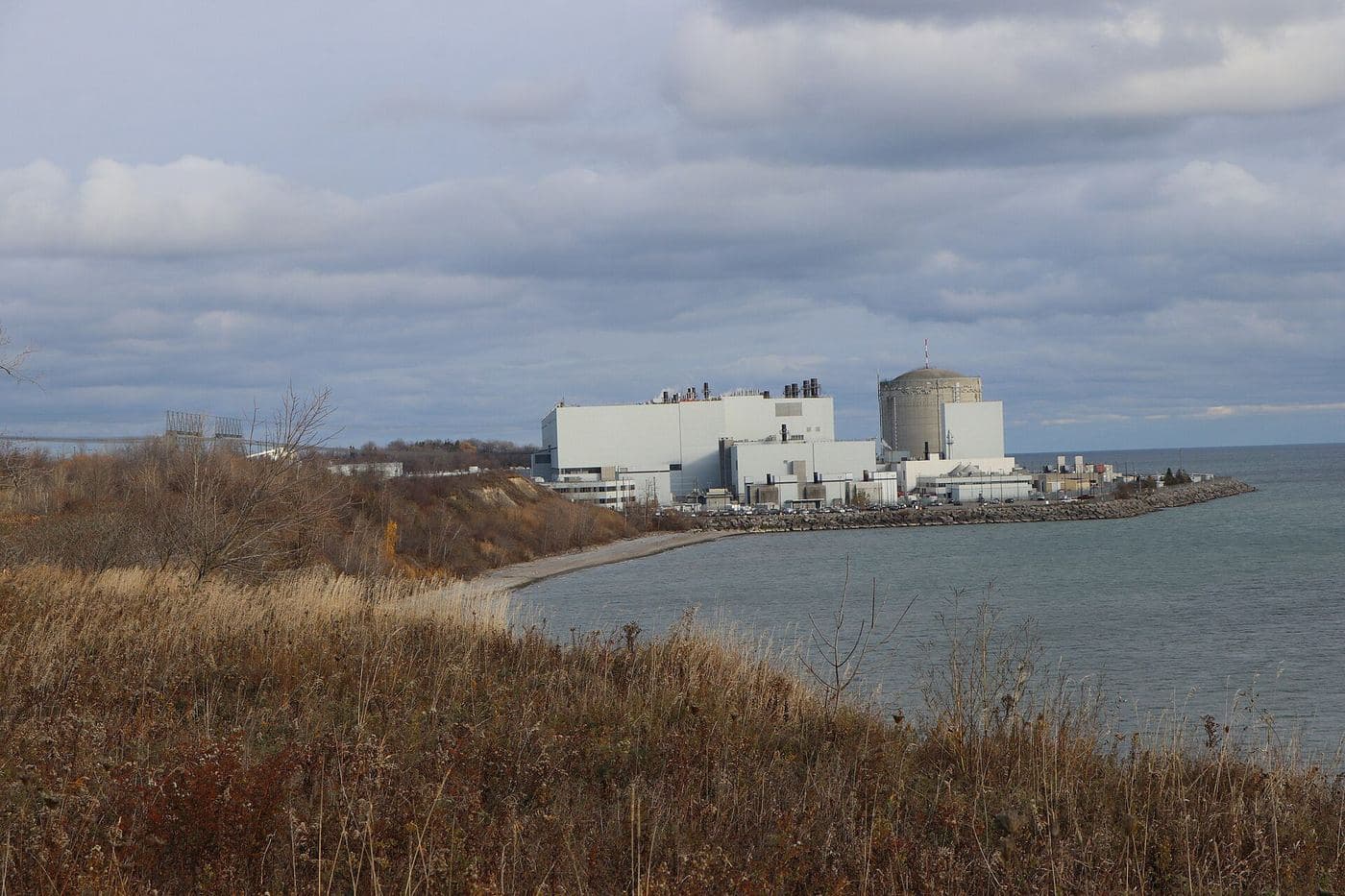
The BWRX-300 Darlington reactor is a 300 MWe water-cooled, natural-circulation design from GE Vernova Hitachi, and it is the first of its kind under construction anywhere in the world. The Canadian Nuclear Safety Commission issued OPG a licence to construct one unit in April 2025, valid until March 31, 2035, with three regulatory hold points. The first hold point, covering installation of the reactor building foundation, was lifted on March 30, 2026. Five days earlier, on March 25, 2026, OPG applied for a 20-year licence to operate the unit. The Commission will decide on that application after a public hearing whose date has not been set.
Construction and operation are licensed separately in Canada: the construction licence authorizes building the unit, and running it needs a separate licence. Each hold point requires regulators to verify OPG’s commitments before work continues. The next hold point covers installation of the reactor pressure vessel, which OPG has already procured. GE Vernova Hitachi had targeted completion of the first unit by the end of 2029 and commercial operation by the end of 2030. On 10 November 2026, OPG said the first unit would miss the October 2030 target and cost more than C$7.7 billion, with a revised timeline and cost assessment due by mid-2027.
Darlington against Patnow and Clinch River
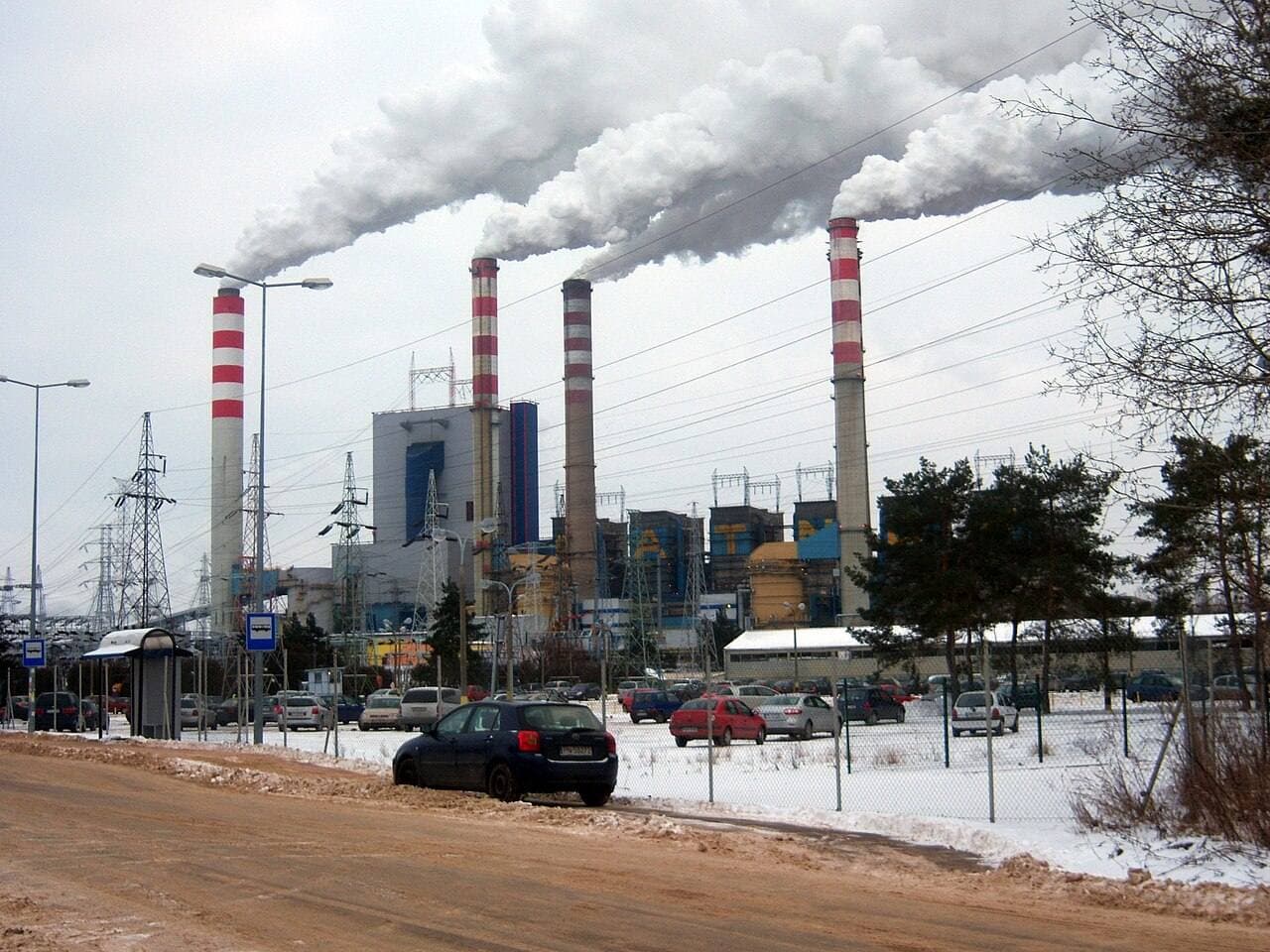
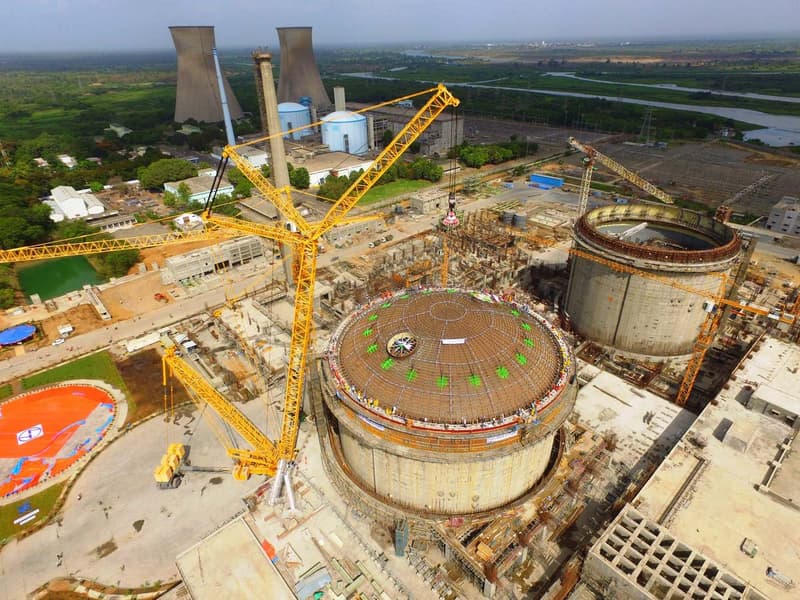
Darlington’s value as a reference project is the reason the 14 contracts matter beyond Ontario. The GE Vernova Hitachi BWRX-300 is now moving in two other markets, and both are watching Darlington’s cost and schedule. In Poland, SGE and ZE PAK agreed on October 13, 2026 to form a joint venture to build up to six BWRX-300 reactors at Patnow, on the site of an existing coal plant, for a combined 1,800 MWe. In the United States, the Tennessee Valley Authority received the first US construction permit for a BWRX-300 at Clinch River on September 29, 2026. Darlington is the only one of the three under construction, which makes its supply chain, its hold-point record, and its eventual cost the benchmark the others will be judged against.
| Project | Units | Capacity | Status, November 2026 |
|---|---|---|---|
| Darlington, Ontario | 4 planned | 1,200 MW | Unit 1 under construction; foundation hold point cleared March 30, 2026 |
| Patnow, Poland | Up to 6 | 1,800 MWe | Joint venture agreed October 13, 2026; no construction date disclosed |
| Clinch River, Tennessee | 1 | 300 MW | Construction permit issued September 29, 2026 |
The comparison also shows how much of Darlington’s story is still ahead of it. Patnow’s six units would total 1,800 MWe, half as much again as Darlington’s 1,200 MW, but the Polish venture has disclosed no construction timeline, first-power date, or cost figure. Clinch River has a permit but no operating licence, the same gap Darlington faces. None of the three projects has a BWRX-300 in commercial operation anywhere in the world. Ontario’s export case rests on that gap closing on schedule: Velan is planning a Durham Region facility to make safety valves for European SMR projects, and BWXT Canada has agreed to manufacture nuclear components in Ontario for Poland.
The demand case is Ontario’s own. The province’s Independent Electricity System Operator forecasts that provincial electricity demand could rise by as much as 90 percent by 2050, driven by population growth, housing, transport electrification, and advanced manufacturing. Nuclear generation currently supplies about half of Ontario’s electricity. The four Darlington units would add 1,200 MW, enough for about 1.2 million homes on the province’s estimate, or 300,000 homes per unit. That is a small share of a grid facing near-doubling demand, which is why the SMR programme runs alongside life-extension of Ontario’s existing large reactors. The 14 contracts are a small step, and their significance is in what they signal: the Ontario SMR supply chain for the first BWRX-300 is now placing real orders, and the next test is whether the reactor pressure vessel hold point clears as cleanly as the foundation did. For the Polish side of the same design, see our report on the six BWRX-300 reactors planned to replace a coal plant at Patnow.
Sources
- Canadian Manufacturing, “Ont. Government Awards Contracts To GTHA Manufacturers To Build Small Modular Reactor,” November 6, 2026 (reporting the Government of Ontario release)
- Wire Service Canada, “Ontario Awards 14 Contracts to GTHA Manufacturers for G7’s First Small Modular Reactor,” November 7, 2026
- VoltGrid News, “Darlington SMR: Ontario Awards 14 Supply Contracts for BWRX-300,” November 8, 2026
- Canadian Nuclear Safety Commission, “Decision by the Commission to authorize Ontario Power Generation Inc. to construct 1 BWRX-300 reactor at the Darlington New Nuclear Project site,” April 2025
- World Nuclear News, “OPG applies for operating licence for BWRX-300 SMR,” March 2026
- World Nuclear News, “Joint venture formed for six-unit SMR plant in Poland,” October 15, 2026