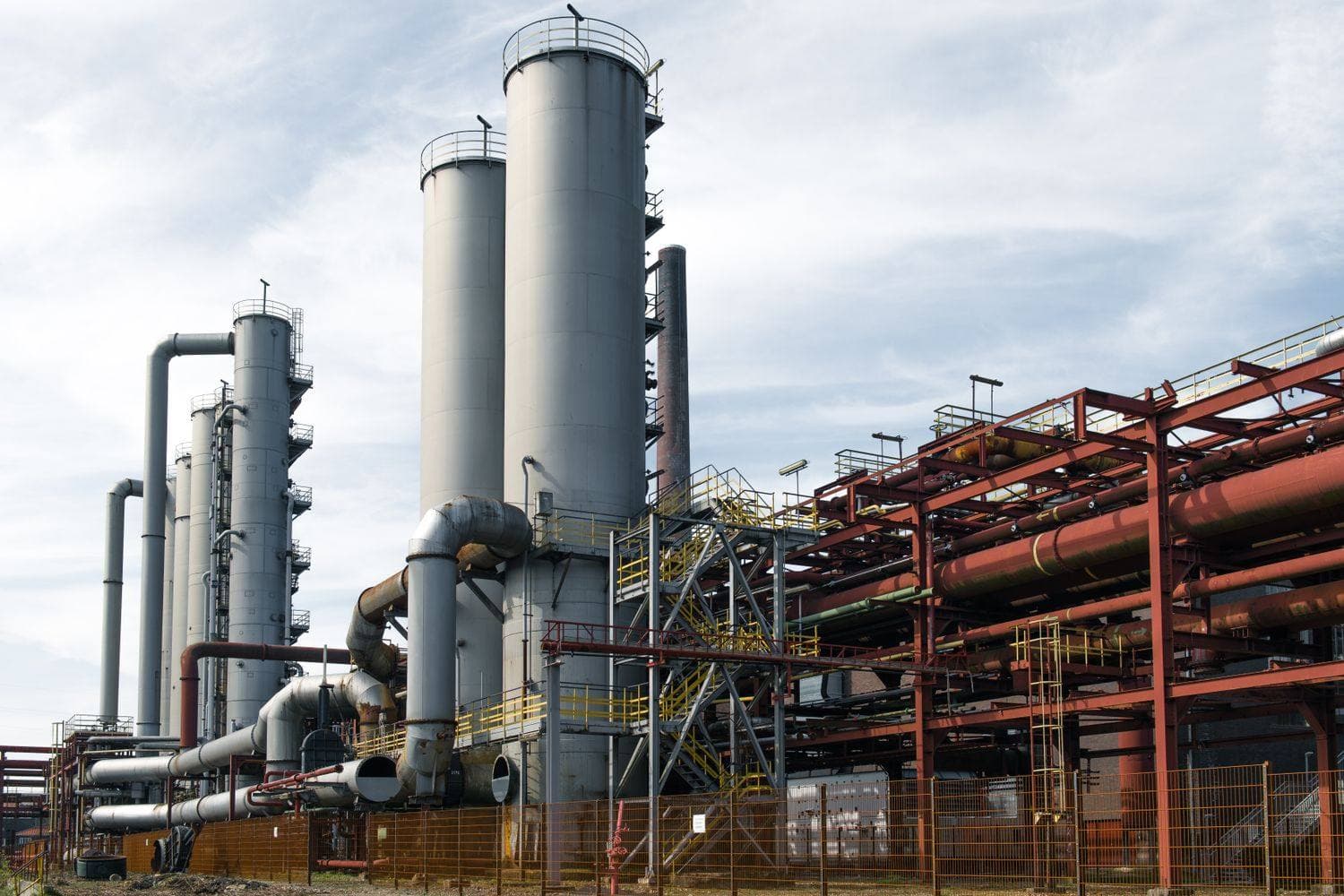
- EWE and Verbund announced on 9 October 2026 that their joint venture will develop CHC Electrolysis JadeWeser, a 500MW electrolyser in Nordenham, Lower Saxony, targeting about 50,000 tonnes of green hydrogen a year by 2032.
- The site sits beside Germany’s planned 9,000km hydrogen backbone and planned underground cavern storage, on a former nuclear power plant site with a 380-kV grid connection expandable into the gigawatt range.
- No final investment decision has been taken. The partners called EU RFNBO power-procurement rules an “additional burden” and urged “further regulatory adjustments”.
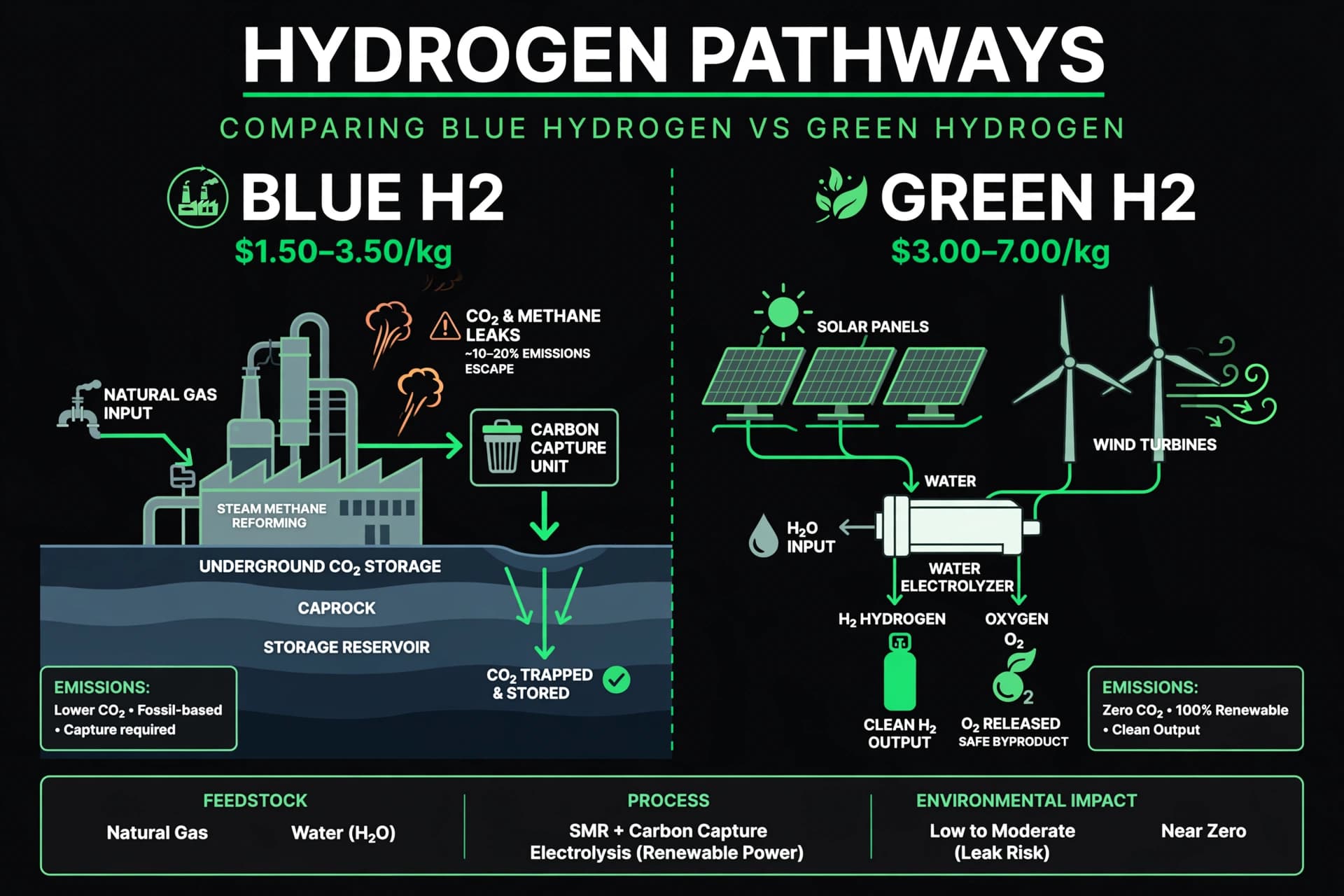
Two of Europe’s established utilities are betting that the way to make green hydrogen work is to build it next to the infrastructure that makes it affordable. On 9 October 2026, Germany’s EWE and Austria’s Verbund announced, according to gasworld’s report on the launch, that their jointly owned hydrogen company will develop CHC Electrolysis JadeWeser — a 500-megawatt electrolyser in Nordenham, Lower Saxony, designed to produce roughly 50,000 tonnes of green hydrogen a year by 2032. The EWE Verbund hydrogen project is that rarest of things in 2026: a large new green hydrogen announcement arriving in a year when most such projects are being cancelled.
The project will be developed through a joint venture between EWE Hydrogen GmbH and Verbund Green Hydrogen GmbH, which received European Commission merger clearance on 9 July 2026. Verbund initially took a 50.1% stake, with the arrangement structured to move toward full parity over time, and the new company will act as a standalone project vehicle. No specific offtakers have been named — the companies say output will serve industrial, transport and energy customers — and a final investment decision has not yet been taken.
Why the EWE-Verbund hydrogen project is built around storage
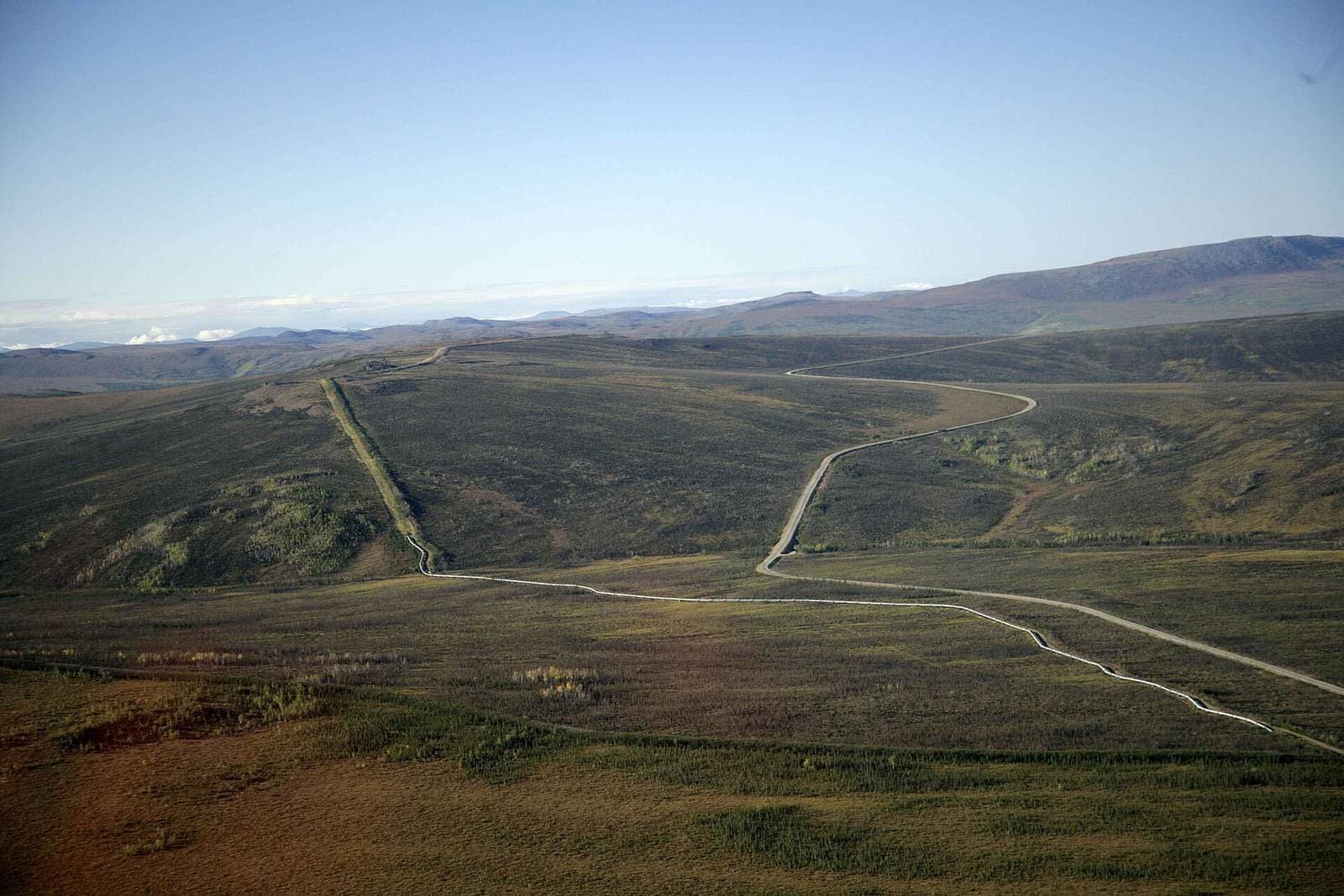
What distinguishes JadeWeser from the dozens of announcements that never survive to construction is the engineering logic of its site. The Nordenham location, in the Wesermarsch district between Oldenburg and Bremerhaven, sits adjacent to two pieces of infrastructure that determine whether a project of this scale can be economically viable under current EU rules: Germany’s forthcoming national hydrogen pipeline backbone — the Wasserstoff-Kernnetz, a 9,000-kilometre network under development — and planned underground hydrogen cavern storage facilities.
The site itself, next to a former nuclear power plant, connects to a 380-kilovolt electricity grid with stated capacity for expansion into the gigawatt range, and has confirmed water supply and existing industrial port infrastructure. EWE’s broader Clean Hydrogen Coastline programme already includes a 500,000-cubic-metre underground salt cavern at Huntorf, in the same district, being converted from natural gas to hydrogen storage with commissioning planned for 2027 — one of the most advanced examples of hydrogen cavern storage in Germany. If built as announced, the JadeWeser green hydrogen facility would rank among Europe’s largest electrolysis plants. JadeWeser is designed to feed into that storage capability once it comes online — the cavern is already under conversion, not a future aspiration.
That adjacency is a direct response to the cost driver strangling European green hydrogen: the EU’s Renewable Fuels of Non-Biological Origin (RFNBO) rules. Delegated Regulation 2023/1184 requires hydrogen claiming renewable status to be produced with additional, geographically correlated renewable electricity — and from 2030, matched to renewable generation hour by hour. The University of Cologne’s Energy Institute found that applying the full RFNBO criteria can raise German green hydrogen production costs by up to 20% compared with unrestricted grid access, while traders estimate that relaxing the temporal rules could cut costs by €1–2 per kilogram. Cited research, summarised in TechTimes’ reporting on the project, shows collocated cavern storage cuts that penalty to around 7–8%, because stored hydrogen can be dispatched during high-demand periods while the electrolyser runs hardest when renewable generation peaks. EWE’s 320MW Emden electrolyser, now under construction, uses PEM technology supplied by Siemens Energy — the kind of fast-ramping kit that can follow offshore wind output second by second.
A year of cancelled megaprojects
JadeWeser lands in a bleak landscape. Roland Berger’s Clean Hydrogen Radar, updated in July 2026, found 440 gigawatts of green hydrogen capacity announced globally for 2030 — but its probabilistic model, accounting for failure rates, cancellations and delays, puts realistic capacity at just 40GW. A ten-to-one attrition ratio.
Germany has supplied some of the starkest examples. HyScale 100 in Schleswig-Holstein — a 500MW-to-2.1GW initiative backed by Raffinerie Heide, Ørsted, Holcim and EDF’s Hynamics arm, with nearly €900 million in federal and state funding committed — collapsed for the second time in August 2026. EWE itself cancelled its smaller 50MW Bremen electrolyser after ArcelorMittal withdrew from its green steel programme. Sweden’s Stegra, building a 740MW hydrogen-based steel plant in Boden, has faced capital shortfalls clouding its timeline. The proximate driver across almost every failure is the same: project economics that do not survive contact with EU regulation.
Why it matters
Against that backdrop, JadeWeser reads as a case study in infrastructure-first project design — and a live test of whether Brussels reforms the rules before developers have to commit capital. Most cancelled projects were announced first and engineered later; this one has EU merger clearance already in hand, a secured site, documented grid, water, storage and pipeline adjacencies, and a partner in Verbund whose generation portfolio is 95% renewable — mostly Alpine hydropower — which directly eases the RFNBO compliance burden for sourcing certified renewable electricity at scale.
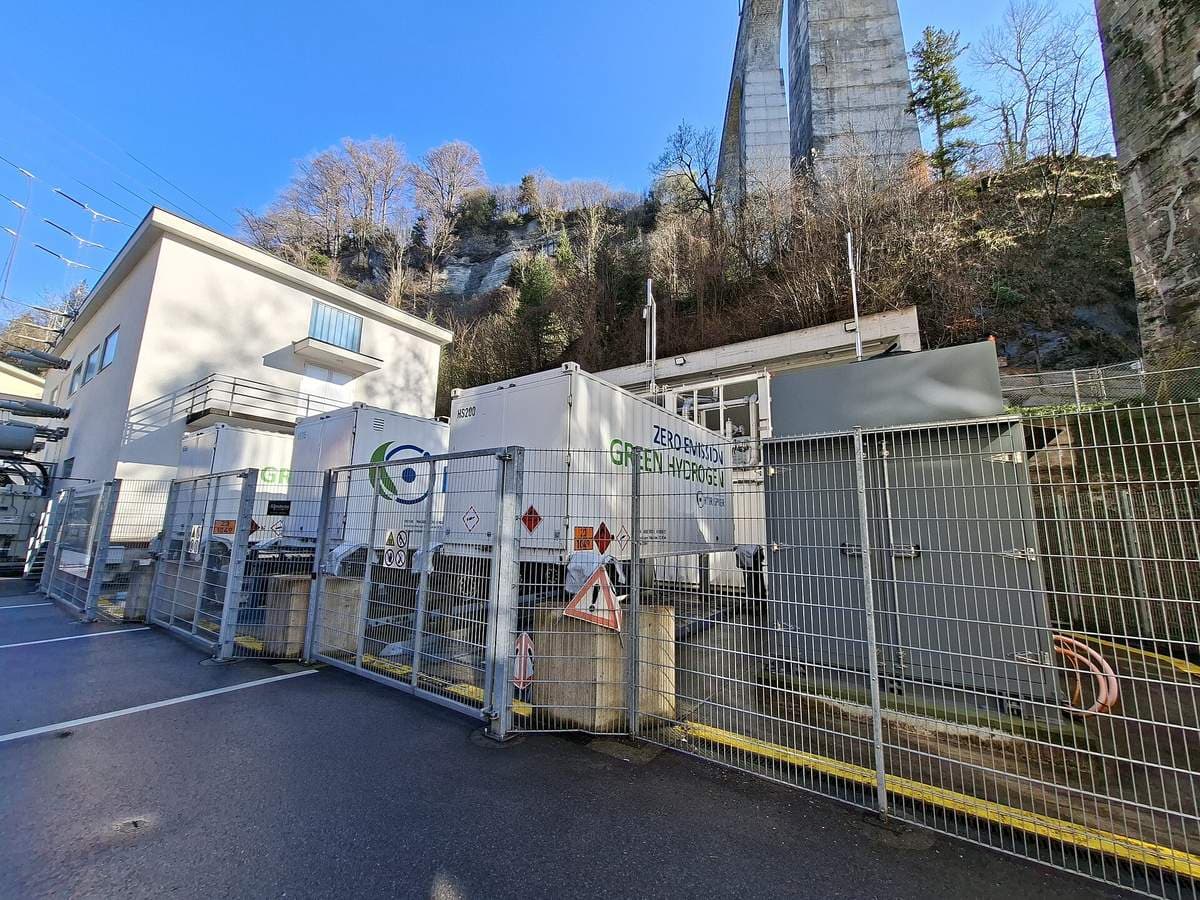
The numbers give the project real weight in Germany’s hydrogen arithmetic. Together, EWE and Verbund already hold about 400MW of green hydrogen capacity in operation or development, including EWE’s 320MW Emden plant — targeting 26,000 tonnes a year from autumn 2027 — and Verbund’s 20MW Salzburg plant. If JadeWeser proceeds, the combined portfolio passes 800MW: a meaningful fraction of the 5.5GW of electrolysis capacity Germany’s energy agency DENA now targets for 2030. For comparison, JadeWeser’s planned 50,000 tonnes a year is nearly double Emden’s 26,000 tonnes from roughly 1.6 times the electrolyser capacity — while HyScale 100, at a similar or larger scale and backed by €900 million in committed public funding, still could not reach construction.
There are demand signals to set against the gloom. Germany’s Bundesrat has approved a binding RFNBO transport quota of 10% for road and rail by 2040, with a 1.5% interim target for 2030. The European Commission has confirmed a fourth European Hydrogen Bank auction before the end of 2026 and signalled a broader hydrogen strategy revision is under way. Germany is also lining up imports alongside domestic production, including the planned South Hydrogen Corridor to bring North African hydrogen into Europe — which makes domestically produced, storage-backed hydrogen a competitive as well as a strategic question.
The partners are not hiding their conditions. They described RFNBO compliance as an “additional burden” on power procurement and called for “further regulatory adjustments” — unusually blunt language that frames JadeWeser’s final investment decision as contingent on what the Commission does with the hourly-matching rule in the next 12 to 18 months. If Brussels holds the line, projects without collocated storage face structural cost disadvantages subsidies may not cover; if it relaxes the rule, JadeWeser’s cavern hedge becomes a bonus rather than a necessity.
What has to go right before construction
Commercial viability, the partners say, depends on regulatory certainty around electricity procurement costs, network fees and indirect emissions costs. “The development of a hydrogen economy is capital-intensive, long-term, and associated with different risks, especially in the market ramp-up phase,” said Tobias Moldenhauer, managing director of EWE Hydrogen. “That makes reliable strategic partnerships all the more important.”
Early commercial traction around the programme is already visible. Salzgitter AG has contracted 10,000 tonnes a year of Emden’s output from 2030 for its SALCOS low-CO₂ steelmaking programme, and tesa’s deal to take 500 tonnes a year from the Emden plant from January 2028 shows industrial offtakers signing even before the larger projects reach final investment decisions.
“With the JadeWeser project, one of the most infrastructurally well-positioned hydrogen projects in Europe is taking shape,” said Jost Ahrens, managing director of Verbund Green Hydrogen, in the joint announcement — “creating excellent conditions for an economical and secure hydrogen supply.” Whether that positioning is enough will be decided in Brussels as much as in Nordenham. For a sector that has spent 2026 learning how projects die, JadeWeser is the clearest attempt yet at designing one to survive.