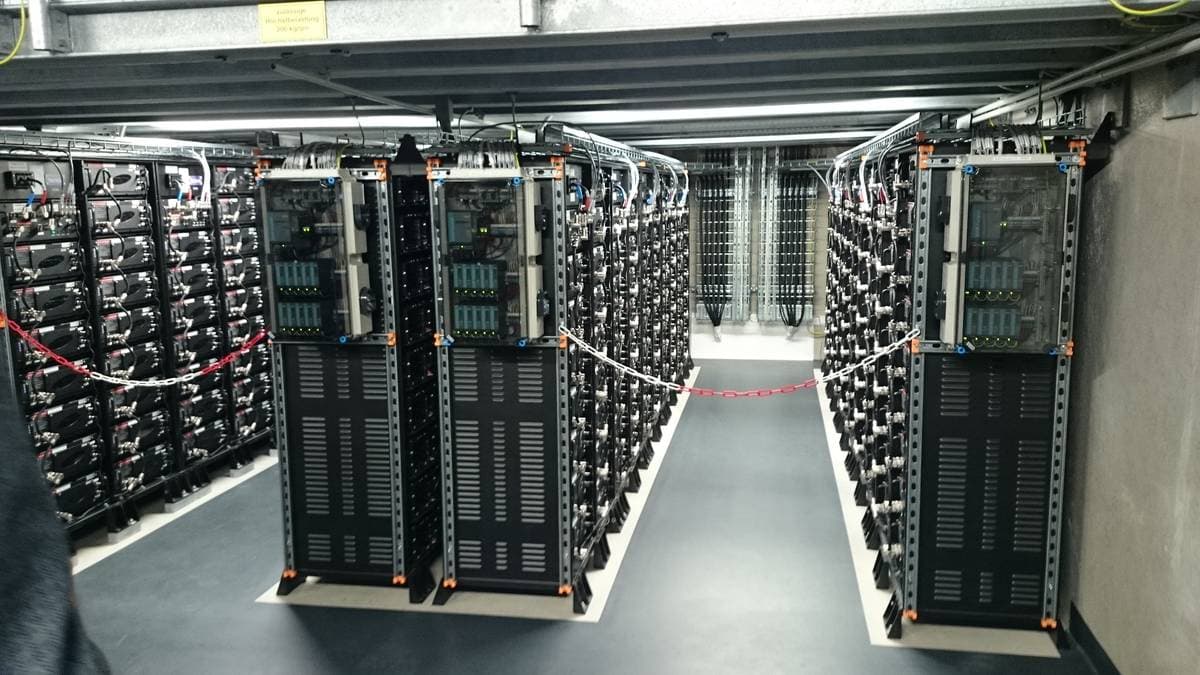
- Tamil Nadu unveiled its Battery Energy Storage Systems Policy, 2026 on 3 November, targeting at least 2.5 GW and 10 GWh of storage over three years.
- New solar and solar-hybrid projects of 1 MW and above must install battery storage equal to at least 10 percent of installed capacity, with four hours of discharge, for projects applying on or after notification or commissioned from 1 April 2027.
- Eligible projects can receive a 100 percent waiver of transmission and wheeling charges for 10 years, subject to regulator approval and a 10 GWh cumulative cap.
The mandate reaches beyond the solar array itself. Pooling substations must add standalone storage, existing substations face staged percentages across two financial years, and the charge relief that softens the cost is capped and conditional on regulator approval. Developers who read only the headline target will miss the application-date trigger that decides whether a project already in the pipeline falls inside the new rules at all.
The mandate is the strictest element. It applies to new solar and solar-hybrid projects of 1 MW and above. Those projects must install battery storage with discharge power equal to at least 10 percent of installed capacity and a four-hour discharge duration. The requirement covers projects that apply for approval on or after the policy notification date or are commissioned from 1 April 2027. A 100 MW solar project therefore needs at least 10 MW of battery discharge power and 40 MWh of stored energy, in Joule Post arithmetic from the policy percentages. A 1 GW pipeline of new solar needs 100 MW and 400 MWh on the same arithmetic. Pooling substations face a parallel rule: new renewable energy pooling substations must provide standalone storage equal to at least 10 percent of sanctioned capacity, while existing substations must install 5 percent by the 2027-28 financial year and a further 5 percent by 2028-29.

Tamil Nadu battery storage policy sets a 2.5 GW target in three years
The target is at least 2.5 GW of power capacity and 10 GWh of energy capacity during the policy validity period of three years, which BusinessLine described as the first phase. The policy document is dated 28 October 2026, and press coverage on 29 and 30 October reported its contents before the formal unveiling on 3 November. The two numbers describe different things. Power capacity, in gigawatts, is the rate at which the system can charge or discharge. Energy capacity, in gigawatt-hours, is the quantity of energy it can store. Dividing 10 GWh by 2.5 GW gives an average duration of four hours, which matches the four-hour discharge requirement in the mandate. The policy remains in force for three years from notification or until 10 GWh of storage is commissioned under it, whichever comes first.
Tamil Nadu Power Distribution Corporation Limited will procure 2,500 MW and 10,000 MWh of battery capacity through competitive bidding in a first phase, with the discovered price subject to approval by the Tamil Nadu Electricity Regulatory Commission. The distribution company will provide charging energy for the projects it procures, preferably during solar hours including 10 am to 2 pm, subject to scheduling directions from the State Load Despatch Centre. The state load despatch centre may direct storage projects to charge during surplus renewable periods and discharge during peak demand, within scheduling, dispatch, metering and grid-security requirements.
| Policy element | Requirement | Applies from |
|---|---|---|
| New solar and solar-hybrid projects, 1 MW and above | Battery storage of at least 10 percent of installed capacity, four-hour discharge | Applications on or after notification, or commissioning from 1 April 2027 |
| New renewable pooling substations | Standalone storage of at least 10 percent of sanctioned capacity, four hours | Policy period |
| Existing pooling substations | 5 percent by 2027-28, plus 5 percent by 2028-29, four hours | Financial years 2027-28 and 2028-29 |
| Charge waiver | 100 percent waiver of transmission and wheeling charges for 10 years, subject to regulator approval | Eligible projects approved and commissioned during the policy period |
| Deployment target | At least 2.5 GW and 10 GWh | Three years from notification, or until 10 GWh commissioned |
The 100 percent charge waiver has conditions attached
Eligible battery projects approved and commissioned during the policy period will be considered for a 100 percent waiver of applicable transmission and wheeling charges for 10 years from commissioning, subject to approval by the Tamil Nadu Electricity Regulatory Commission and the policy conditions. The incentive is subject to a cumulative cap of 10 GWh of eligible capacity, or the capacity installed during the policy period, whichever is lower. Energy discharged during non-solar hours must be consumed within Tamil Nadu to qualify. Standalone projects of 1 MW and above are also eligible for the waiver, subject to the applicable regulatory provisions.
Co-located storage carries additional conditions. The battery must charge from the associated renewable generation, discharge must not exceed the sanctioned renewable capacity, and discharge must take place through the same point of interconnection. Co-located battery power capacity is limited to 100 percent of the sanctioned renewable capacity. Those conditions keep co-located storage tied to the project it supports, rather than operating as an independent merchant battery behind a solar connection. Existing solar and wind projects of 1 MW and above are encouraged, rather than required, to add storage for renewable integration, peak management and grid support.
Arulkumar Shanmugasundaram, chief executive officer and managing director of Swelect Energy Systems, said at the launch event that until now there was no clear policy framework for implementing battery storage systems, and that the new policy addresses various aspects, including transmission and wheeling charges. He added that the government consulted industry associations and held multiple rounds of discussions while formulating the policy. The consultation point matters because the mandate adds upfront cost to every new solar project, and developers will test whether the waiver and procurement route offset that cost in practice.
Four projects already under development test the counting question
The policy preamble identifies four battery projects already under development with combined capacity of 905 MW and 2,590 MWh, according to BusinessLine reporting on 29 October. Joule Post arithmetic puts that pipeline at 36 percent of the 2.5 GW power target and 26 percent of the 10 GWh energy target. The projects comprise a 500 MW and 1,000 MWh project under the central viability gap funding scheme for battery storage, a 375 MW and 1,500 MWh project under a viability gap funding scheme supported through the Power System Development Fund, and two solar-plus-storage projects of 15 MW and 45 MWh each. BusinessLine noted that the policy does not clearly establish whether those projects count toward the target or the 10 GWh incentive cap if commissioned on or after 1 April 2027. That ambiguity should be resolved in writing before developers rely on the target as a measure of new capacity.
The policy also leaves open how projects outside the distribution company’s procurement programme participate in electricity markets, including exchanges, according to the same reporting. Merchant storage projects therefore face a commercial question that the policy document does not fully answer. The treatment of incentives is another open point. The policy states that incentives shall be available to eligible projects, without expressly stating whether that refers exclusively to the charge waiver or envisages other financial incentives, and without specifying their nature or funding source if others are contemplated. Developers and lenders will need implementation guidelines and regulator orders to price those gaps.
Why a 10 percent mandate with four hours changes project economics
The mandate is stricter than the central advisory it builds on. The Central Electricity Authority has advised utilities and renewable energy implementing agencies to include co-located storage equivalent to at least 10 percent of installed solar capacity, with a minimum two-hour duration, according to BusinessLine. Tamil Nadu doubled the duration to four hours and turned an advisory into a requirement for new projects above 1 MW. A four-hour battery stores twice the energy of a two-hour battery at the same power rating, which doubles the storage capital cost for the mandated component while extending the discharge window through the evening peak.
That cost lands on solar developers first and on electricity buyers eventually, unless the charge waiver, avoided curtailment and peak value cover it. The policy rationale is that storage absorbs surplus renewable generation, manages peak demand, reduces curtailment and improves grid stability. Tamil Nadu already has over 25,000 MW of installed renewable capacity, according to the energy minister’s statement at the launch event reported by BusinessLine on 3 November. Storage is the mechanism for turning midday surplus into evening supply. The test of the policy will be whether projects keep getting built at the same pace with the mandate attached, and whether the four-hour batteries discharge when the grid needs them. Ravichandran Purushothaman, chairman of the Confederation of Indian Industry Southern Region, said storage alone cannot bridge the medium-term demand gap, and called for faster distribution company reforms, aggressive repowering of legacy wind assets, and scaled-up transmission spending for power evacuation alongside the storage target.
For context on why storage changes solar economics, see how grid battery storage works and the 350 MW Hams Hall battery that began operations in England on 2 November. The Tamil Nadu policy is a demand-side version of the same shift: storage is no longer an add-on to solar, but a condition of connecting new solar at scale. The next evidence will come from implementation orders, the first procurement auction, and the first projects commissioned under the mandate after 1 April 2027.
Sources:
- The Hindu BusinessLine, Tamil Nadu government unveils Battery Energy Storage System policy, 3 November 2026
- The Hindu BusinessLine, Tamil Nadu BESS policy targets 2.5 GW/10 GWh, 29 October 2026
- Saur Energy, Tamil Nadu Targets 10 GWh Standalone and Co-Located BESS Over Next Three Years, 30 October 2026 (breakdown of the four projects already under development)
Duration, project-size and pipeline-share figures in the text are Joule Post arithmetic from the reported policy figures, as labelled. No currency figures are stated in this article because the policy reporting cited here sets no project prices.