- The Energy Department announced it will deploy up to $50 million in Defense Production Act funding for a grid project in Virginia and West Virginia led by Virginia Energy with Appalachian Power and Potomac Edison.
- The 48-month project uses advanced reconductoring and dynamic line rating on existing corridors to add an estimated 290 MW of transmission capacity to Appalachian Power’s Virginia system.
- That capacity arrives 1–4 years faster than conventional transmission upgrades, a timeline built for load growth that cannot wait for new lines.
- Up to $1 billion in federal DPA funding has been appropriated for energy projects deemed critical to national security under Presidential Determination No. 2026-10.
DOE grid funding for Virginia took a concrete shape this week, as the Energy Department announced its intent to deploy up to $50 million in Defense Production Act money for the “Grid Enhancing Technologies for Virginia & West Virginia Large Load Growth” project, a 48-month effort to squeeze more capacity out of power lines that already exist, according to the department’s announcement.
The project, led by Virginia Energy with Appalachian Power and Potomac Edison, will deploy advanced reconductoring (replacing existing wires with higher-capacity conductors) and dynamic line rating, which uses real-time monitoring to operate lines closer to their true thermal limits. Together, the technologies are expected to add an estimated 290 MW of transmission capacity across Appalachian Power’s Virginia system, arriving 1–4 years faster than conventional upgrades. Energy Secretary Chris Wright announced the investment in Lynchburg, Virginia, on October 16.

DOE grid funding for Virginia: “making better use of the ones we already have”
“Sometimes it means making better use of the ones we already have,” said Office of Electricity Assistant Secretary Katie Jereza, framing the strategy as unlocking more power with advanced conductors and real-time monitoring rather than building new lines. The logic is straightforward: permitting and building new transmission takes the better part of a decade in the United States, while reconductoring an existing corridor can be done on a timeline measured in years.
The funding comes from a much larger pot. Up to $1 billion in federal Defense Production Act funding has been appropriated for energy-related projects deemed critical to national security under Presidential Determination No. 2026-10, making the $50 million Virginia commitment a first installment rather than a one-off grant.
Reconductoring and dynamic line rating: how the 290 MW appears
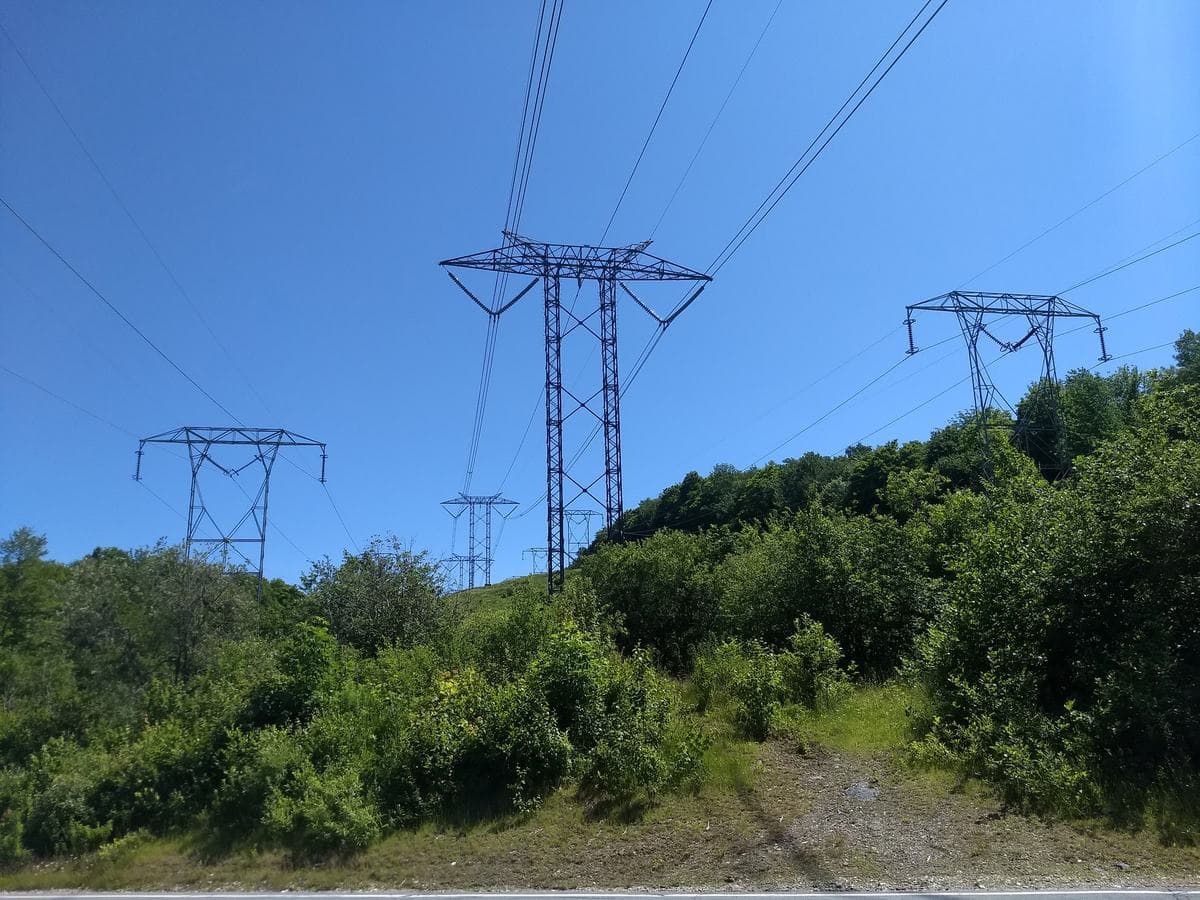
The two technologies in the project are among the least glamorous and most cost-effective tools in grid planning. Advanced reconductoring swaps the steel-reinforced aluminum conductors on existing towers for composite-core conductors that carry substantially more current at the same or lower sag: more power through the same right-of-way, with no new towers and no new land acquisition. Dynamic line rating goes further by replacing the conservative static assumptions about wind cooling and ambient temperature with live sensor data, so operators can safely run a line closer to its real thermal limit on cool, windy days, exactly when demand often peaks.
The Virginia-West Virginia corridor is a natural test bed. Northern Virginia’s data-center alley is one of the fastest-growing load centers in the country, and the utilities involved, Appalachian Power and Potomac Edison, sit inside the PJM footprint, where capacity auctions and emergency orders have made the cost of scarce transmission visible to everyone. If 290 MW can be unlocked here on existing corridors, the playbook transfers to every other constrained corridor in the region.
$172,000 per megawatt: the cost case for reconductoring
The timing is the story. The same week Secretary Wright was announcing reconductoring money in Lynchburg, the department was separately dealing with an acute grid emergency: DOE issued an emergency order for October 13–16 as PJM spot prices spiked to $1,021/MWh during a heat wave, as we reported. The PJM incident came within roughly 900 MW of a reserve-margin violation, the grid equivalent of a near miss. Set against that, the 290 MW this project unlocks is not a rounding error: it is about a third of the margin that separated PJM from real trouble during the heat wave.
That comparison exposes the two-speed nature of America’s grid problem. The emergency tools, emergency orders and rejected curtailment requests like FERC’s rejection of PJM’s data-center registry plan, buy hours and days. The 290 MW from reconductoring and dynamic line rating buys years: 1–4 years faster than a conventional upgrade means capacity that could be online before the next wave of data-center and manufacturing load arrives, rather than after it. And longer-term, the cheapest capacity of all is the load that never needs serving, which is why storage and flexible demand matter too, as our battery energy storage explainer details.
On a dollar-per-megawatt basis, the math is striking: up to $50 million to unlock an estimated 290 MW works out to roughly $172,000 per megawatt, far below the cost of permitting and building new transmission lines, where years of regulatory process come before construction even begins.
| Item | Detail |
|---|---|
| Federal funding | Up to $50 million, Defense Production Act |
| Duration | 48 months |
| Lead / utilities | Virginia Energy; Appalachian Power and Potomac Edison |
| Technologies | Advanced reconductoring; dynamic line rating |
| Estimated new capacity | 290 MW on Appalachian Power’s Virginia system |
| Cost per megawatt | ~$172,000 (article calculation) |
| Speed advantage | 1–4 years faster than conventional transmission upgrades |
| DPA funding context | Up to $1 billion appropriated for energy projects under Presidential Determination No. 2026-10 |
There is also a legal precedent being set. Defense Production Act authority has been used for energy projects before, but deploying it specifically for transmission reconductoring treats grid hardware as defense-critical infrastructure, a framing that could open the door to similar funding in other load-growth corridors if the Virginia project delivers its 290 MW on schedule. The experiment is whether the United States can build its way out of a capacity crunch without building new lines. This $50 million is the first real test.