- Energy Secretary Miatta Fahnbulleh granted development consent orders for two mega-solar projects on consecutive days: Island Green Power’s 500 MW Green Hill Solar Farm on 8 October and RES’s 450 MW Steeple Renewables Project on 9 October 2026.
- Together the pair authorise 950 MW of solar and 650 MW of battery storage — enough, on the developers’ own ratios, for an estimated 380,000 UK homes a year.
- Steeple sits beside the decommissioned West Burton coal station, where 14 solar plants totalling 1,586 MWp are now clustered around one retired fossil connection point.
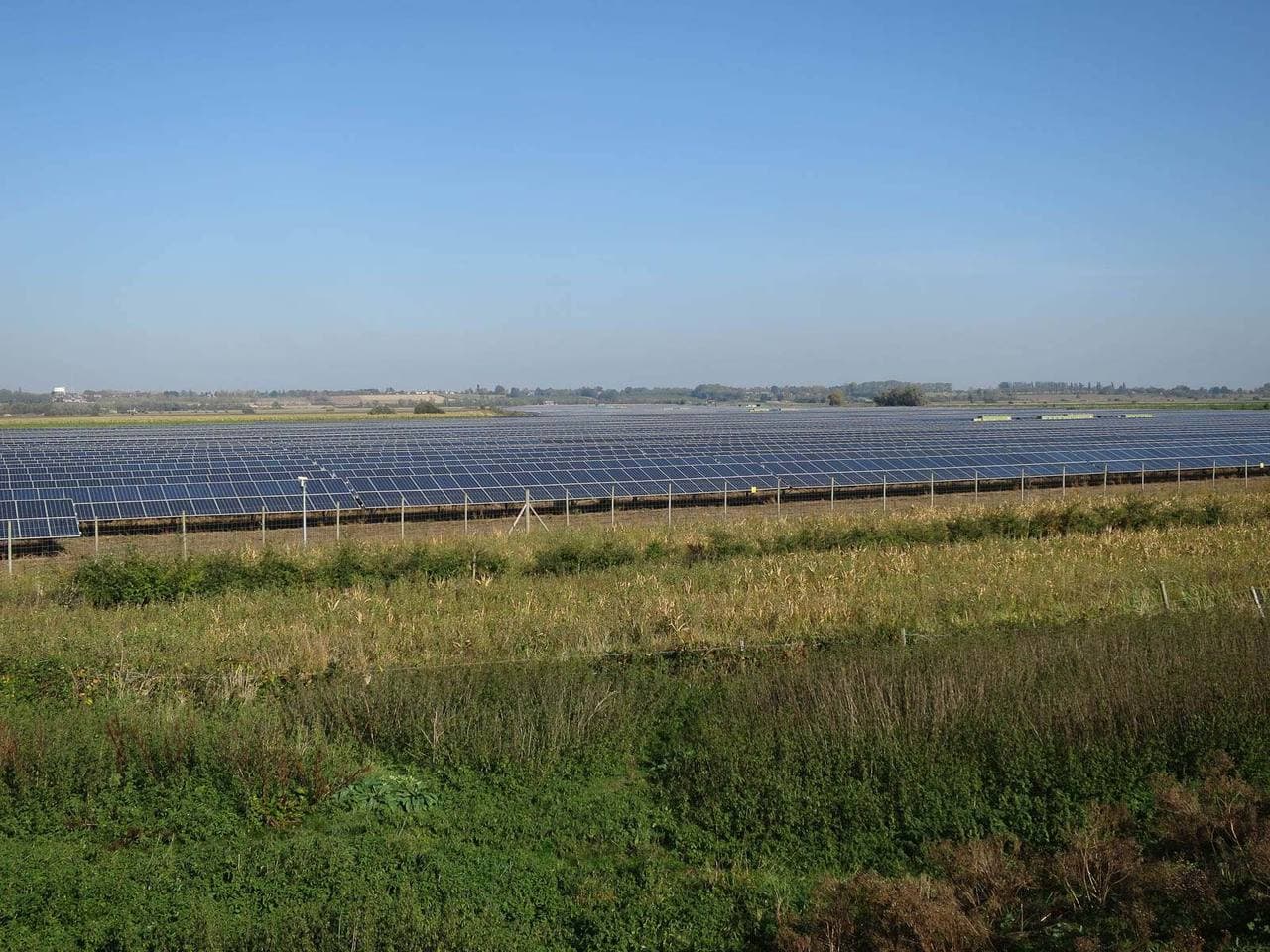
Two UK solar farm approval decisions in about 48 hours have authorised nearly a gigawatt of new solar generation and more than half a gigawatt of co-located battery storage. On 8 October 2026, Energy Secretary Miatta Fahnbulleh granted a development consent order for the 500 MW Green Hill Solar Farm across Northamptonshire and Milton Keynes; a day later, she consented the 450 MW Steeple Renewables Project in Nottinghamshire. The back-to-back consents mark the sharpest two-day burst of mega-solar approvals the UK planning system has produced this year.
Green Hill, developed by Island Green Power, is the larger of the two: up to 500 MW of ground-mounted solar panels across nine PV areas, paired with a battery energy storage system of equivalent capacity (500 MW), connecting into the grid at the Grendon substation. The developer estimates the project will generate enough electricity for roughly 200,000 UK homes a year. The consent caps a planning journey that began with the application on 23 May 2025, acceptance on 19 June 2025, a six-month examination, and recommendations forwarded on 8 July 2026 — the decision landed almost exactly three months later, on the statutory timetable. Green Hill also carries a minimum 47% biodiversity net gain, 14.4 hectares of green corridors, 50.7 kilometres of new hedgerows, 18 kilometres of permissive paths and a community benefit fund.
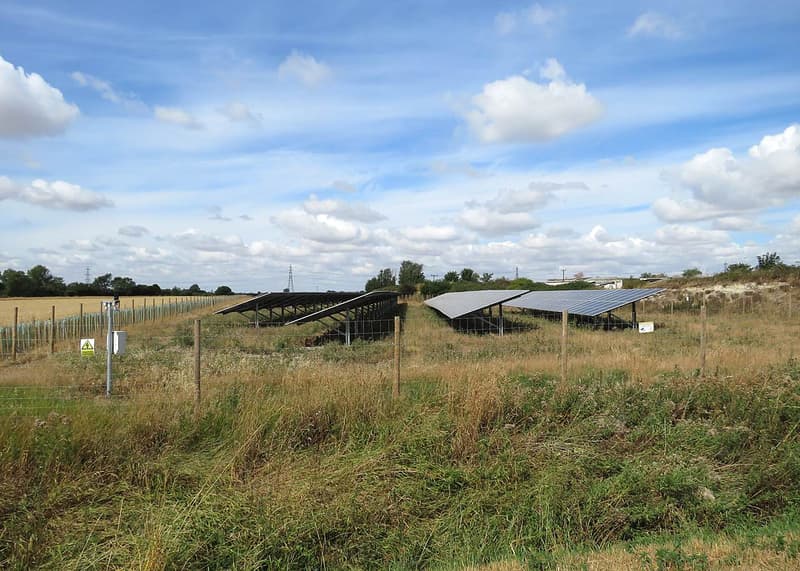
Steeple, developed by RES, pairs 450 MW of solar with a 150 MW battery. Its significance is as much about location as scale: the project sits near the decommissioned West Burton Power Station and is designed to reuse existing grid capacity and infrastructure left behind by the retired coal plant. The consent is Fahnbulleh’s third solar nationally significant infrastructure project approval since she took office, and Steeple’s application had been accepted for examination in summer 2025. Coverage of both decisions is gathered in Solar Power Portal’s report on the week’s double approval.
What the two UK solar farm approvals add up to
The arithmetic of the pair is worth setting out plainly. Green Hill contributes 500 MW of solar plus a 500 MW battery; Steeple contributes 450 MW of solar plus a 150 MW battery. Combined: 950 MW of solar and 650 MW of storage consented in roughly 48 hours. For the homes figure, Island Green Power’s stated ratio for Green Hill — 200,000 homes from 500 MW, or 400 homes per MW — applied to Steeple’s 450 MW implies roughly 180,000 homes. That is a derived estimate, not a published figure; the combined 380,000-home number simply extends the developer’s own ratio to the second project, both being large English ground-mounted schemes.
There is a second, subtler pattern in the numbers: the storage. Of the 650 MW of batteries consented, 500 MW sits alongside Green Hill and 150 MW alongside Steeple. Mega-solar in Britain is no longer being consented as panels alone — batteries are now standard equipment in the development consent order, sized to firm the daytime output for the evening peak. Understanding why that pairing matters starts with how grid-scale battery storage works alongside generation assets.
Coal wires, solar electrons: the West Burton grid-reuse story
Steeple’s most instructive feature may be its address. The area around the retired West Burton coal station now hosts 14 solar plants at various stages of development, with a combined 1,586 MWp of capacity recorded in the Solar Media Market Research database. A grid connection built for a coal-fired giant is becoming, plant by plant, the spine of a solar hub.
This is the grid-reuse logic that could shape the next decade of British solar siting. A coal station’s substation, switchgear and transmission corridor represent sunk investment and — crucially — existing capacity on a grid where connection queues are the binding constraint on new generation. Reusing that capacity sidesteps years of queue waiting. Green Hill follows the same logic in miniature, plugging into the existing Grendon substation rather than demanding new transmission. For context on the generation side of that equation, see how solar panels convert sunlight into electricity at utility scale. The parallel with projects like DTE Energy’s Cold Creek solar project in Michigan — another utility-scale scheme anchored to existing grid infrastructure — shows the same siting calculus operating across the Atlantic.
Island Green Power’s pipeline and the consent pace
For Island Green Power, Green Hill is the company’s fourth consent of 2026 and its third consented nationally significant infrastructure project, according to industry coverage — a strike rate that makes the developer one of the fastest-moving mega-solar builders in the country. The company frames the project as the foundation of a longer-term generation portfolio rather than a one-off build.
“As the company moves into our new era as an independent power producer, projects such as Green Hill will form the basis of a strong portfolio of solar generation and battery energy storage,” said Bob Psaradellis, chief executive of Island Green Power. “And the benefits will be shared with communities, through a local benefit fund, and the wider country, through the increase in secure, clean and cheap homegrown power.” The comment, reported by Power Technology, is the only on-record executive statement across the two consents.
Why it matters
The headline number — 950 MW in 48 hours — is less important than what the two decisions reveal about how the UK now treats mega-solar. Three nationally significant solar consents from a single energy secretary, a fourth 2026 consent for one developer, and examination-to-decision timelines hitting the statutory three months: the planning system is no longer the bottleneck it was for large English solar. The friction has moved elsewhere — to grid connection, which is exactly why both projects plug into existing substations, and to local politics, where projects of this scale face organised opposition over farmland and landscape.
The concrete comparison that counts is the homes figure. An estimated 380,000 homes from two decisions is the annual electricity demand of a city roughly the size of Sheffield — delivered by two planning signatures. That density of outcome is why the development consent order regime exists: projects above 50 MW bypass local planning and go straight to the Secretary of State. And the West Burton clustering — 1,586 MWp of solar converging on one retired coal connection — is the clearest evidence yet that Britain’s energy transition will be built substantially on the wires of its fossil past, not just on new cables. Two consents, 48 hours, one pattern: panels on farmland, batteries at the substation, and coal-era grid assets doing the heavy lifting in between.