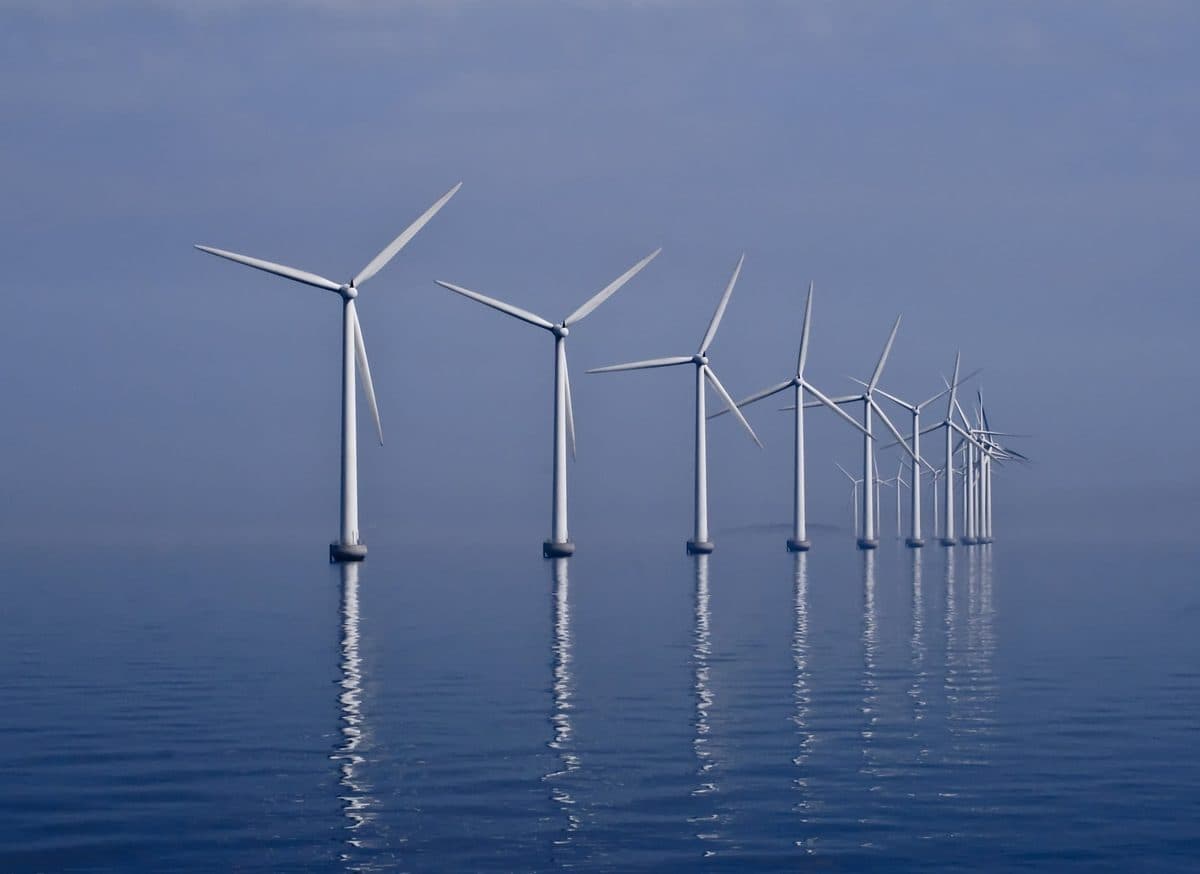
- VicGrid has selected Spanish infrastructure firm ACCIONA as preferred development partner for Victoria’s Gippsland offshore wind transmission project, the first major grid network designed to connect offshore wind to Australia’s electricity system.
- The initial phase is a ~60 km, 500 kV double-circuit line from a new Giffard terminal station to Loy Yang switchyard, carrying up to 2 GW of offshore wind capacity off Gippsland’s coast.
- ACCIONA will design, finance and operate the infrastructure under a 30-year concession, with completion targeted for 2031 pending environmental and federal approvals.
Australia offshore wind transmission took its biggest step yet this week, with Victoria’s grid-planning agency VicGrid naming Spanish infrastructure giant ACCIONA as preferred development partner for the Gippsland offshore wind transmission project. Announced on 15 October 2026 and reported by Offshore Engineer and offshoreWIND.biz, the deal launches the design phase of the first major transmission network built specifically to integrate future offshore wind into Australia’s grid.
The arrangement puts ACCIONA at the centre of the project through construction and well beyond. Working with VicGrid, the company will handle project design, procurement, and project management to prepare the shared transmission infrastructure for construction. At the end of the development phase it will submit a final project offer for the construction work itself. Under the concession model it will then finance and operate the infrastructure for 30 years. Long-lived grid assets under long concessions is a model Australia is now applying deliberately to renewable-energy zones: lock in an operator for decades, and the capital follows.
Gippsland offshore wind grid: the physical plan
The initial phase connects up to 2 GW of offshore wind capacity off Gippsland, the coastline facing Bass Strait’s famously strong and consistent winds. The physical footprint is straightforward on paper: a roughly 60-kilometre, 500 kV double-circuit overhead transmission line running from a proposed new terminal station near Giffard, on the Ninety Mile Beach coastline, to the Loy Yang Power Station switchyard in the Latrobe Valley. A new 500 kV terminal station will be built at Giffard to receive the subsea cables coming ashore from the offshore wind zone.
The destination matters as much as the route. Loy Yang is the beating heart of Victoria’s coal-fired generation in the Latrobe Valley, the same corridor where coal plants are scheduled to close over the coming decade. Running offshore wind power straight into the switchyard of a retiring coal region means reusing some of the strongest grid connection points in the state rather than building them from scratch. Expected completion is 2031, though construction still requires an Environment Effects Statement (EES) plus both Commonwealth and Victorian government approvals.
| Item | Detail |
|---|---|
| Preferred developer | ACCIONA, under a 30-year concession |
| Route | New Giffard terminal station (Ninety Mile Beach coast) to Loy Yang switchyard |
| Line | ~60 km, 500 kV double-circuit overhead |
| Capacity | Up to 2 GW, equal to Victoria’s entire 2032 offshore wind target |
| Target completion | 2031 |
| Approvals pending | Environment Effects Statement; Commonwealth and Victorian governments |
| Victoria’s longer targets | 4 GW by 2035, 9 GW by 2040 |
ACCIONA was chosen through a competitive tender launched in 2024, with three consortia shortlisted in 2025: ACCIONA itself, an Iberdrola-led group, and an AusNet Transmission Group-led group. The company is no stranger to Australian grid buildouts: it is also working on the Central West Orana Renewable Energy Zone (4.5 GW initial capacity) in New South Wales and Western Australia’s Clean Energy Link East, giving it a portfolio across three states’ energy-transition backbones.
A crowded field narrows to one
VicGrid chief Alistair Parker framed the appointment as a grid-modernisation milestone: “Connecting offshore wind to Victoria’s electricity network is an important part of preparing our grid for the future, and Acciona’s appointment brings us another step closer to making that happen.”
The timing is deliberate. Victoria launched Australia’s first offshore wind auction in August 2026, open until August 2027, with contracts expected in 2028. The state’s targets are ambitious: 2 GW of offshore wind by 2032, 4 GW by 2035, and 9 GW by 2040. Without transmission, those auctioned projects have nowhere to send their electrons; this 2 GW line is the onshore half of the first auction round’s business case. To understand what the turbines themselves look like, see our explainer on how wind turbines work.
VicGrid offshore wind 2GW line in global context
Two gigawatts of transmission for a first offshore wind phase puts Victoria in serious company internationally. The line is sized to carry the state’s entire 2032 offshore wind target on its own. Every megawatt of the 2 GW goal can flow through this single corridor. For comparison, the United Kingdom’s Hornsea 3 project, one of the world’s largest single offshore wind farms, went through a £3.5 billion offshore transmission tender to move power from sea to shore. Australia’s Gippsland project differs in that the onshore line is the headline asset, but the cost logic is the same: at multi-gigawatt scale, the wires are a project-sized investment in their own right.
Europe’s mature offshore wind markets show what comes next. In the North Sea, shared offshore grid infrastructure now serves multiple wind farms rather than one-to-one radial connections. VicGrid’s language, “shared transmission infrastructure,” suggests Victoria intends to skip a generation and build for multiple future wind farms from the start, rather than stringing individual cables for each project. Poland’s Baltic Power project, with 76 turbines planned, illustrates how quickly first-mover markets scale once the grid connection question is answered.
Wires, not turbines: the real offshore wind bottleneck
The VicGrid offshore wind 2GW project is the clearest proof yet that the bottleneck in offshore wind has moved from the turbines to the wires. Globally, turbine technology is a solved problem: 14–15 MW machines are now standard for new projects. The projects that stall are the ones that cannot get their power to shore affordably. Victoria’s answer is to socialise the transmission: build one shared line, let multiple wind farms plug in, and spread the cost across the projects that use it. That is a meaningful departure from the early offshore wind model, where each developer financed its own export cable.
Put the numbers against the policy: the initial 2 GW phase exactly matches Victoria’s 2032 target of 2 GW, meaning this single line can carry the entire first wave. Reports estimate the connected capacity could power roughly 1.5 million homes (per ESD News/Energy Monitor), a striking figure, though readers should note that offshore wind’s actual output depends on wind conditions, a nuance our capacity factor explainer covers in detail. The 30-year concession is equally significant: it tells pension funds and infrastructure investors that Australian renewable transmission is now a bankable, decades-long asset class, not a policy experiment. Between the Central West Orana zone, Clean Energy Link East, and now Gippsland, ACCIONA alone is becoming the quiet backbone-builder of Australia’s grid transition.
The open question is the approval timeline. The EES process plus dual Commonwealth–Victorian approvals is where Australian energy infrastructure has historically slowed to a crawl: several transmission projects have lost years in planning disputes. A 2031 completion target leaves only five years for approvals and construction. If Victoria wants its 2028 auction contracts to have a grid to connect to, the approvals machinery will need to move faster than it has in the past.