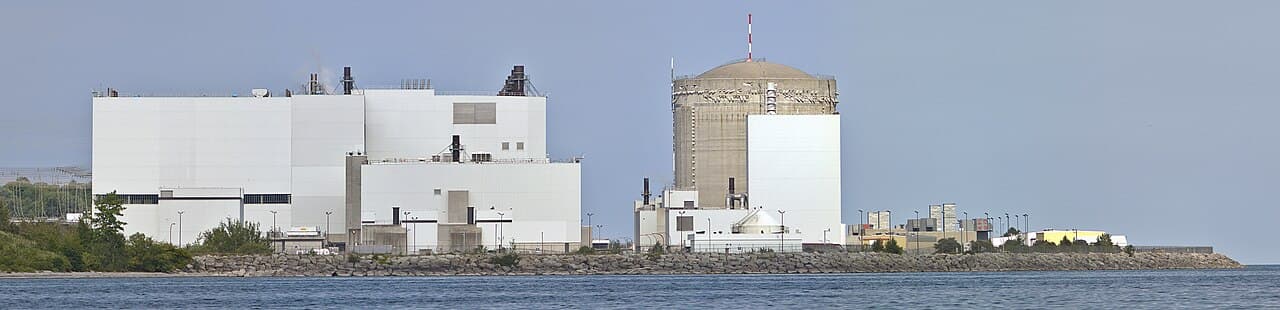
- BWXT completed a C$80 million expansion of its Cambridge, Ontario nuclear manufacturing plant on 12 November 2026, adding 55,000 square feet and enlarging the world’s largest commercial nuclear clean room by 40 percent.
- One day earlier, Ontario Power Generation said the first Darlington small modular reactor will miss its October 2030 target and its C$7.7 billion cost estimate, blaming unfinished engineering by GE Vernova Hitachi for the first-of-a-kind BWRX-300.
- The contrast is the story: the factory built to supply Canada’s nuclear build-out is ready, while the flagship reactor it supplies is late. OPG will not publish revised cost and schedule figures until a comprehensive assessment is substantially complete in mid-2027.
First-of-a-kind engineering is the bottleneck, not factory capacity. The design work for the BWRX-300 is unfinished, and unfinished drawings idle welders, delay deliveries, and push costs up while the schedule waits. That is the mechanism OPG named, and it explains how a completed plant and a late reactor can arrive in the same week.
The delay lands on the project the industry watches most closely. Darlington hosts the first BWRX-300 under construction anywhere, the reference design for a string of planned projects in Canada, the United States, and Europe. A slip there does not stay in Ontario. Saskatchewan has already pushed back the timing of its own SMR decision, and the Tennessee Valley Authority’s Clinch River project, which plans to build on Darlington’s lessons, will read the same assessment when it arrives in mid-2027.
What BWXT built in Cambridge
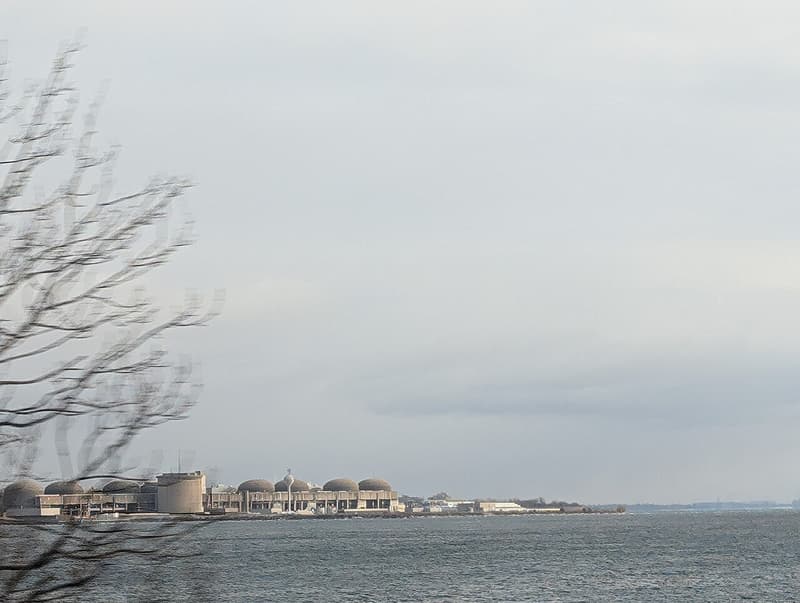
BWXT announced the completion of its expanded Cambridge, Ontario facility on 12 November 2026, after an investment of approximately C$80 million. The expansion added 55,000 square feet of manufacturing space and more advanced equipment, and increased the size of the world’s largest commercial nuclear clean room by 40 percent. The company says the added capacity significantly expands its ability to manufacture large-scale nuclear components for conventional and advanced reactors of all sizes.
The work waiting for the expanded plant is already signed. BWXT is building 48 new steam generators for the life extension and refurbishment of the Pickering Nuclear Generating Station, and fabricating the reactor pressure vessel for the Darlington small modular reactor. Ontario is extending the life of 10 reactors by decades and building the first small modular reactor in the G7, and BWXT names Ontario Power Generation and Bruce Power as the key customers whose refurbishment and new-build plans drive demand across Canada’s nuclear supply chain.
“Today’s announcement represents far more than an expansion of our facility,” said John MacQuarrie, president of BWXT Commercial Operations. “It is a major step to solidify our company’s place in the global nuclear resurgence. By increasing our manufacturing capacity in Cambridge, we are helping ensure we have the industrial capability needed to support major nuclear projects, strengthen energy security, advance climate goals and compete in a growing global market.”
The expansion has already created 200 new long-term jobs in engineering, advanced welding, metallurgy, robotics, precision machining, and digital manufacturing, and BWXT is targeting 200 more hires in Cambridge over the next year. The project was launched in 2024, when BWXT planned to grow the plant from roughly 225,000 to 280,000 square feet, and it finished close to that plan. Canada’s energy minister, Tim Hodgson, called the completion “exactly the kind of progress our Nuclear Energy Strategy is designed to catalyze,” and Ontario’s energy minister, Stephen Lecce, tied it to the province’s plan to create 150,000 new jobs.
What OPG said about Darlington Unit 1
Ontario Power Generation disclosed the delay while reporting its third-quarter 2026 results on 11 November. World Nuclear News reported that the first of four BWRX-300 small modular reactors under construction at the Darlington New Nuclear Project “will not be completed within the previously planned timeline or cost.” OPG said the unit “is no longer expected to achieve the previously disclosed commercial operation date target of October 2030 or be completed within the previously disclosed estimated cost of CAD7.7 billion (USD5.4 billion), inclusive of required systems and services that would be common to all SMRs planned as part of the project.”
OPG attributed the slip to “GE Vernova Hitachi Nuclear Energy’s ongoing engineering for its first-of-a-kind SMR, which has impacts on construction execution and supply chain performance.” The company is undertaking a comprehensive assessment of the project cost and schedule, and expects to substantially complete it by mid-2027. Until then, no revised date and no revised budget exist, which leaves the most-watched SMR project in the West without a public price or a public deadline.
The four-unit program’s total budget was approved at C$20.9 billion in May 2025, according to Nuclear Engineering International, and that figure still stands. The first unit’s C$7.7 billion estimate covered the reactor plus the systems and services common to all four units, so the cost of the shared infrastructure is loaded onto Unit 1. That structure is normal for a first-of-a-kind build, and it is also why the first unit’s overrun matters more than a single project’s accounting: the shared systems are the foundation the other three units stand on.
The published figures allow a direct reading of what the first BWRX-300 costs. Dividing the C$7.7 billion estimate by the reactor’s 300 MWe capacity gives about C$25,700 per kW, or about US$18,000 per kW at the US$5.4 billion equivalent OPG disclosed. Dividing the C$20.9 billion four-unit budget by four gives about C$5.2 billion per unit on average, so the first unit’s C$7.7 billion sits about 47 percent above the program average. Both calculations are Joule Post arithmetic from the OPG and Nuclear Engineering International figures, and both carry the same caveat: the first unit absorbs the shared infrastructure, so the premium is partly an accounting choice and partly the real cost of building something for the first time.
| Figure | Published value | Joule Post arithmetic | Result |
|---|---|---|---|
| BWXT Cambridge expansion | C$80 million, 55,000 sq ft added | C$80,000,000 / 55,000 sq ft | About C$1,455 per sq ft of new space |
| Jobs created | 200 new jobs, 200 more targeted | C$80,000,000 / 200 jobs | About C$400,000 of investment per job created |
| Darlington Unit 1 cost | C$7.7 billion (US$5.4 billion) for 300 MWe | C$7,700,000,000 / 300,000 kW | About C$25,700 per kW |
| Four-unit program average | C$20.9 billion for four units | C$20,900,000,000 / 4 | About C$5.2 billion per unit |
| First-unit premium | C$7.7 billion vs C$5.2 billion average | (7.7 – 5.2) / 5.2 | About 47 percent above the program average |
The expansion’s own numbers tell the other half of the story. At about C$1,455 per square foot, the Cambridge addition is industrial construction at nuclear-grade specification, and at about C$400,000 of investment per job created, it is capital-intensive manufacturing of the kind Ontario’s strategy aims to attract. The 200 jobs already created, plus 200 more targeted, are small beside the 150,000 jobs Ontario’s energy minister cited for the province’s wider plan, yet they are the skilled roles, welders, metallurgists, and precision machinists, that a nuclear supply chain cannot import quickly.
Why the delay matters beyond Ontario
Darlington is the reference case for the BWRX-300, and every project that follows it inherits its engineering. Saskatchewan’s government had planned a final investment decision on its own SMR project, and its minister responsible for SaskPower said in October that the multi-year delays at Darlington meant the province would not decide on the timetable first laid out. The decision, in his words, will come “when a decision is ready to be made.” The delay therefore reaches beyond one reactor: it pushes back the second customer in line.
The supply chain, meanwhile, keeps building. BWXT’s Cambridge expansion, the Pickering steam generator order, and the Darlington pressure vessel are all proceeding on signed contracts, and BWXT reported a backlog of about US$8.6 billion in its third-quarter results. The gap between a supply chain that is ready and a design that is not is the defining feature of first-of-a-kind nuclear construction, and it is also the reason OPG’s mid-2027 assessment matters so much. Until it lands, the industry knows the factory is built, the vessel is being fabricated, and the reactor’s new date and price are unknown.
Our earlier reporting covered the supply chain side of this story: Darlington SMR contracts went to 14 Ontario manufacturers, including the firms building the components BWXT now assembles in Cambridge. For the long end of the nuclear fuel cycle, see our guide to spent nuclear fuel storage in pools and dry casks, which tracks the 95,000 tons of used fuel already waiting for a permanent home.
Sources
- BWX Technologies, BWXT Completes Cambridge Facility Expansion, Prepares for Future Nuclear New Build, published 12 November 2026
- World Nuclear News, OPG set to revise timeline and cost of first SMR unit, published 11 November 2026
- Nuclear Engineering International, Delays for Darlington SMR, published 13 November 2026
- Pipeline Online, Ontario’s SMR project is over time and over budget, and what it means for Saskatchewan, published 12 November 2026