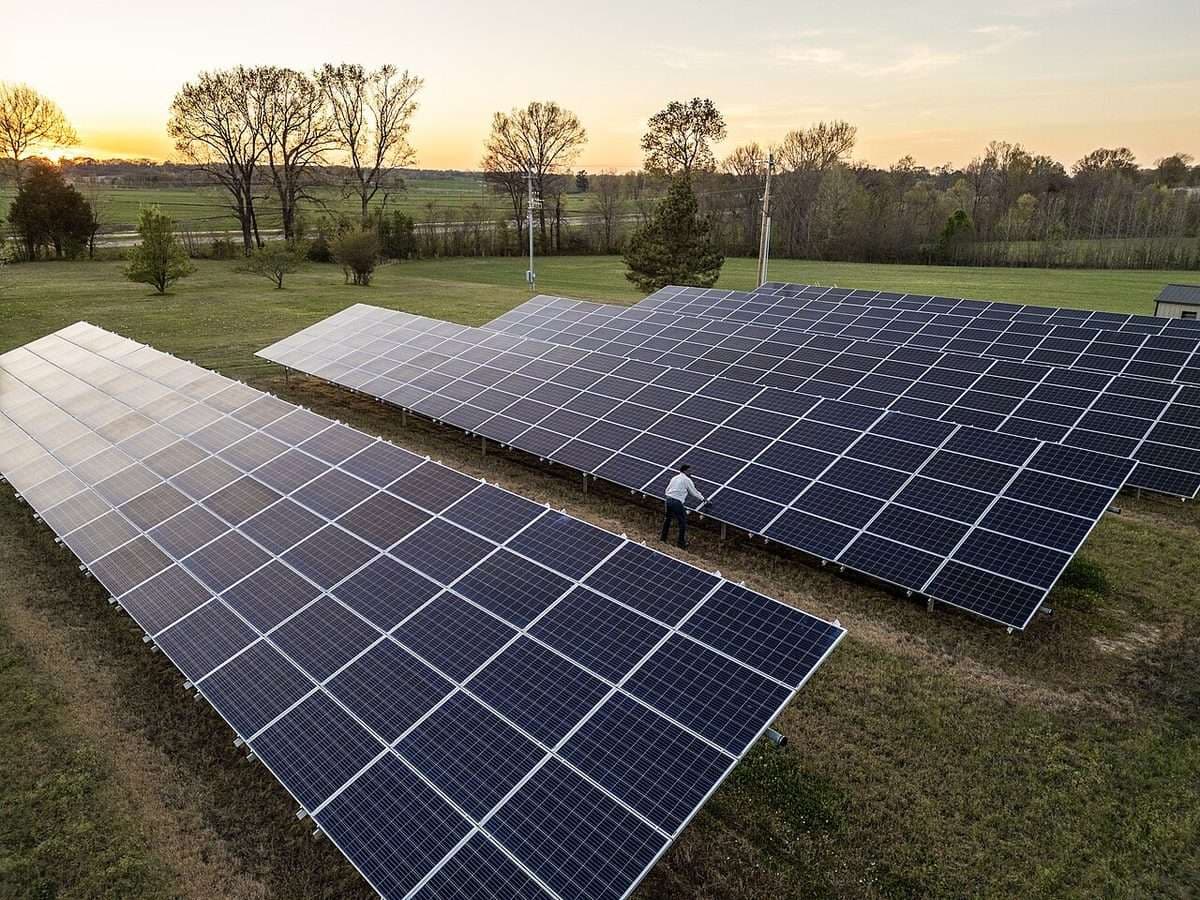
- Maryland launched “Megawatts for Maryland” on October 26, 2026, a $200 million competitive auction program for new clean energy generation and storage.
- The program draws up to $100 million a year from the Strategic Energy Investment Fund and awards grants to offset development and construction costs.
- It is explicitly designed to fill the gap left when federal investment tax credits were canceled, with stage 1 applications due November 30, 2026.
Administration sits with the Maryland Energy Administration, acting under the Utility RELIEF Act signed by Governor Wes Moore earlier in 2026. The design is a competitive two-stage process: developers first prove eligibility, then bid a price with supporting documentation, so awards go to the lowest-priced qualified bids instead of every applicant.
The auction is administered by the Maryland Energy Administration under the Utility RELIEF Act, which Governor Wes Moore signed earlier in 2026. It is the state’s most concrete attempt yet to replace federal support that disappeared when the Trump administration canceled investment tax credits from the Inflation Reduction Act, a gap that has stalled projects in several states.
What the Maryland clean energy auction funds
The program is structured as a competitive auction, not a handout with a fixed price. Developers first submit a preliminary application establishing eligibility, then eligible applicants submit a bid price with supporting documentation. The two-stage design is meant to force price competition: the state buys the cheapest qualified megawatts rather than funding every applicant.
Grants will help offset development and construction costs for grid-scale renewable generation and energy storage projects. The funding comes from the Strategic Energy Investment Fund, capped at $100 million a year, which means the $200 million total spans the program’s two-year life. Stage 1 applications close on November 30, 2026, and stage 2 bids are due January 22, 2027, a tight timetable that favors projects already well into development.
Governor Moore framed the program as a bill-relief measure first and a climate measure second. “We’re using every tool at our disposal to bring Marylanders relief as energy costs skyrocket in our region and across the country,” Moore said. “This program will tackle rising electricity demand with cleaner, cheaper, in-state energy generation that will drive down costs for the long-term.”
What $200 million buys at 300 to 500 megawatts
The administration says the program aims to add hundreds of megawatts, enough to power more than 150,000 Maryland homes a year. The announcement does not name a capacity target, so the subsidy intensity depends on how much capacity the auction actually secures. The table below works through the arithmetic at three plausible outcomes, using only the program’s own figures.
| If the auction secures | Subsidy per kilowatt | Program cost per home powered |
|---|---|---|
| 300 MW | $667 | $1,333 |
| 400 MW | $500 | $1,333 |
| 500 MW | $400 | $1,333 |
The per-home figure stays constant because it divides the same $200 million by the same 150,000 homes. The per-kilowatt figure is the more useful test of value: at 500 MW, the state is paying $400 per kW of new capacity, which is a meaningful but not dominant share of a utility-scale project’s total cost. At 300 MW, the subsidy rises to $667 per kW, which would suggest the auction attracted costlier projects or fewer bidders than hoped. The actual result, when stage 2 bids land in January, will show which outcome Maryland got.
One comparison is worth making now. The administration says the program will power more than 150,000 homes, but it does not say those homes will see lower bills by a specific amount. A grant that cuts a developer’s construction cost only reaches ratepayers if the auction’s competitive pressure passes the saving through in bid prices. That pass-through is the mechanism to watch when awards are announced.
How the auction fits Maryland’s wider affordability push
The auction does not stand alone. It is the fourth large affordability action from the Moore-Miller administration in the past two years, and the table below sets them side by side using figures from the governor’s own announcements.
| Action | Scale | What it does |
|---|---|---|
| Direct rebates, 2025 | $200 million | Immediate bill relief to households |
| Utility RELIEF Act relief | $100 million | Direct relief through the 2026 law |
| State solar power purchase agreement, August 2026 | About $300 million saved over 20 years | Doubled state-purchased renewable energy; covers nearly 15% of the state portfolio from 2028 |
| Megawatts for Maryland auction, October 2026 | $200 million over two years | Grants for new generation and storage capacity |
The pattern is a shift from one-off relief toward supply. Rebates and relief payments cut a bill once. The August power purchase agreement and the new auction add generation capacity that, in principle, holds prices down for years. Senate President Bill Ferguson made that logic explicit: “That’s why we passed Megawatts for Maryland last session, to bring more clean, renewable energy onto our grid, increase supply, and help lower utility bills.”
House Speaker Joseline A. Peña-Melnyk struck a similar note, calling the program a $100 million annual commitment to competitive procurement. “This $100 million investment puts that commitment into action, using a competitive process to bring new solar generation online while making responsible use of public dollars,” she said.
Why Maryland moved now, and what could blunt the effect
The timing reflects two pressures converging on Maryland ratepayers. Demand in the PJM region, the grid that serves Maryland and twelve other states, is rising faster than supply, partly because of data center growth. At the same time, the federal tax credits that previously closed the financing gap for new projects are gone, which raised the cost of every project in the pipeline.
Maryland Energy Administration Director Kelly Speakes-Backman argued that renewables and storage are the fastest response available. “Renewable energy and energy storage projects are the quickest, cleanest, lowest cost option to develop local energy supply,” she said. “We need more in-state power generation to meet energy demand and reduce costs.”
Three risks could blunt the program. First, the November 30 stage 1 deadline leaves little time for new entrants, so the auction may draw mainly projects that were already planned. Second, storage projects face different economics from solar projects, and a single auction pool may favor one over the other. Third, the program’s two-year window is short for grid-scale development, so some awards may fund projects that would have been built anyway. The stage 2 bid prices, due in January, will be the first real evidence on all three questions.
For homeowners, the program is also a reminder that state policy now shapes solar economics as much as federal policy does. Our comparison of state solar-access laws shows how much the rules vary once federal support steps back, and Maryland’s auction is the latest example of a state writing its own replacement.
Sources: Office of Governor Wes Moore, “Governor Moore Launches Program to Increase Energy Generation, Lower Electricity Costs“