- Saft will deliver 55 MW / 122 MWh of battery storage for two Axpo projects in France, with deliveries scheduled for early 2027.
- The Orbec site in Normandy (92 MWh / 41 MW) and the Bois Paillet site in Centre-Val de Loire (30 MWh / 14 MW) will use Saft’s LFP-based Intensium Flex containers.
- The award is the first collaboration between Saft and Axpo — and one of the largest battery contracts announced in France this year.
Saft battery storage is about to become a visible part of France’s grid flexibility market. The French manufacturer — a wholly-owned subsidiary of TotalEnergies — has signed two contracts with Axpo, Switzerland’s largest renewable energy producer, to supply a combined 55 MW / 122 MWh of battery energy storage systems (BESS) across two sites in France. The contracts were announced in Paris on 6 October 2026, and deliveries are scheduled for early 2027.
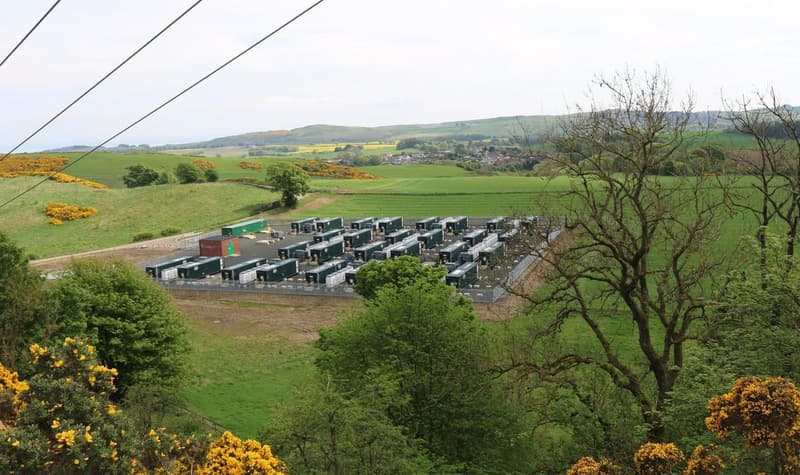
The larger of the two projects, at Orbec in Normandy, will pair 18 of Saft’s Intensium Flex containers for 41 MW of power and 92 MWh of energy capacity. The second, at Bois Paillet in Centre-Val de Loire, will use six containers for 14 MW and 30 MWh. Both systems will be designed for energy arbitrage and ancillary services on the French grid — buying electricity when prices are low, discharging when they peak, and responding in seconds to keep grid frequency stable.
The deal is the first-ever collaboration between the two companies, and both sides framed it as the start of something longer. Saft’s sales director for energy storage solutions, Vincent Le Quintrec, said the company was delighted to begin the collaboration, noting that the two projects combined demanding technical requirements with an accelerated delivery schedule. Axpo’s Head of Batteries and Hybrid Systems, Frank Amend, called the award “an important step” in expanding Axpo’s battery storage portfolio in France, according to Modern Power Systems.
What Saft’s 122 MWh battery storage win covers in France
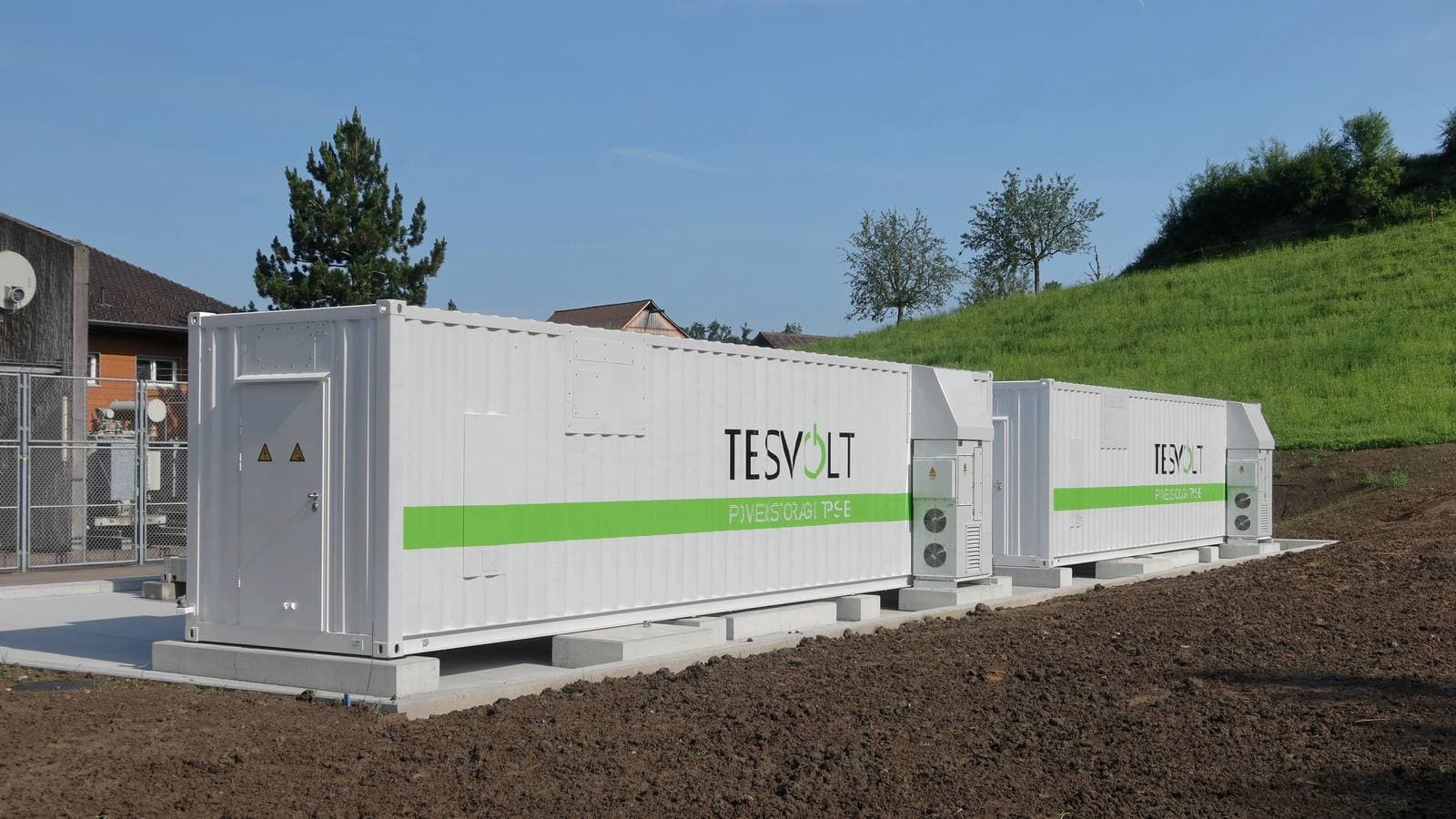
The systems are fully integrated rather than bare containers. Each Intensium Flex unit is a 20-foot container built around lithium iron phosphate (LFP) chemistry, liquid-cooled for thermal stability, with capacity of up to 5.1 MWh per container and configurable durations of two to eight hours. Saft bundles the batteries with power conversion equipment, energy management systems, and its I-Sight digital monitoring platform — the kind of software layer that is becoming the real competitive differentiator in grid-scale storage.
Noise mitigation is an explicit part of the design, which says a lot about where these projects are being built. Saft is engineering low-noise operating modes, optimised cooling, battery silencers and noise barriers so the two sites comply with local limits — a reminder that grid-scale batteries increasingly live near people, not just in remote industrial parks.
The hardware inside: Intensium Flex and LFP chemistry
The choice of lithium iron phosphate matters. LFP has become the default chemistry for stationary storage: it is cheaper per cycle than nickel-based chemistries, tolerates full charge-discharge cycling, and — crucially for community-adjacent sites — is far less prone to thermal runaway. Readers wanting the chemistry primer can find it in our explainer on how battery energy storage works and our guide to LFP, NMC and sodium-ion chemistries.
The 2.2-hour duration implied by Orbec’s 92 MWh / 41 MW ratio (about two hours and fifteen minutes at full discharge) is telling. These are not the ultra-short-duration batteries built purely for frequency response, nor the multi-hour systems that shift solar output into the evening. They sit in the flexible middle: long enough to capture meaningful arbitrage spreads in the French day-ahead market, short enough to cycle multiple times a day if prices warrant it.
Why it matters
France has been a latecomer to grid-scale battery deployment. Next to the UK, Germany and Italy — all of which have already commissioned batteries in the hundreds of megawatts — France’s flexibility market has moved slowly, partly because a nuclear-dominated grid historically provided plenty of dispatchable capacity and partly because the revenue rules for storage took longer to crystallise. This double award is evidence that the economics are now working.
The timing is structural, not cyclical. France’s nuclear fleet goes through heavy maintenance cycles, renewable generation keeps growing, and the transmission grid is being asked to do things it was not designed for. Batteries provide exactly what that combination demands: fast, dispatchable capacity that can be sited close to constraints. The fact that Axpo specified ancillary services alongside arbitrage — rather than merchant trading alone — suggests the company sees contracted grid-service revenue as part of the business case, which is precisely how a market matures from speculation to infrastructure.
For scale: the 122 MWh deal is roughly 1.6 times the energy capacity of TotalEnergies’ own 25 MW / 75 MWh Belgian battery farm, launched in May 2023 as one of the company’s flagship European storage projects, according to IN Power / Electrical News coverage of the announcement. It is also comparable to COMAX France’s 57 MW / 114 MWh portfolio across ten French sites announced in August 2026. In other words, single-site French projects are now being built at scales that, three years ago, were company-level portfolio announcements. That compression of scale is the clearest signal yet that France’s battery market has entered its buildout phase.
Axpo is assembling a European storage portfolio
The Saft award fits Axpo’s pattern of aggressive storage expansion. The Swiss utility recently commissioned a 50 MW battery at Gurtnellen in Switzerland, and the company has been steadily adding storage assets across its European footprint. France, with its large but inflexible nuclear base and growing renewables fleet, is a logical place for a storage owner to hunt for price volatility.
The structure of the award — two geographically separated sites, one in the north-west and one in the centre of the country — also reflects how battery developers now think about the French grid: as a set of regional markets with different constraints, not a single national price zone. A 92 MWh site in Normandy and a 30 MWh site in Centre-Val de Loire can serve different local needs while sharing the same technology platform and operating software.
North America is not standing still either: Alberta’s Northland Jurassic project, at 80 MW, is among Canada’s largest battery installations, as we reported in our coverage of the project. But the centre of gravity for utility-scale storage in 2026 remains Europe, and within Europe, France is the market where the growth curve is steepest from the lowest base.
What happens next
Deliveries begin in early 2027. The critical milestones to watch will be grid connection, commissioning, and — most revealing — the first revenue disclosures, if Axpo shares them. A successful, on-time deployment would validate both Saft’s integrated-system pitch and the broader bet that France’s ancillary-services market can support batteries at this scale. The companies have said they intend to build a long-term partnership on this foundation; given the size of France’s still-unbuilt flexibility pipeline, that is a statement worth taking seriously. The announcement was first detailed by Black Ridge Research, which noted the contracts were signed in Paris on 6 October.