- SEG Solar signed a land agreement on October 29, 2026 for a planned $950 million, 4 GW heterojunction solar cell plant at its Tomball campus near Houston, Texas.
- The plant is planned in two 2 GW phases targeted for 2028 and 2029, and is expected to create more than 700 jobs.
- At $950 million for 4 GW, the implied investment is $237.50 per kilowatt of annual cell capacity, before any incentives, land value or equipment scope differences.
Divide the headline investment by the headline capacity and the Texas announcement becomes a unit economics story. The SEG Solar Texas cell plant, a planned $950 million project for 4 GW of annual heterojunction cell capacity, implies $237,500 per megawatt, or $237.50 per kilowatt. That figure is the right starting point for judging the project, and it is also the figure most likely to be misread, because a cell plant, a module plant and a module finishing plant are different factories with different equipment bills.
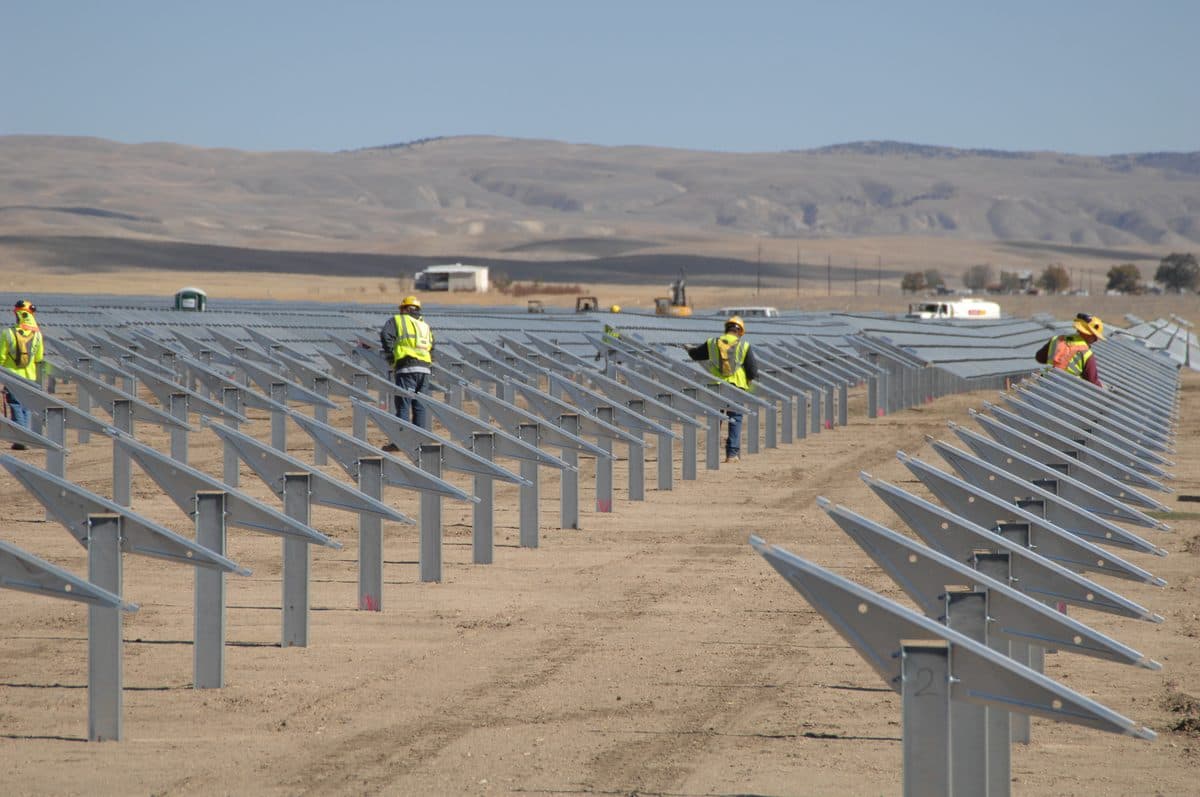
SEG Solar announced the land agreement on October 29, 2026. The plant would sit at the company’s Tomball Industrial Campus in the greater Houston area, next to its existing 4 GW Tomball module plant and a second module plant of 4.6 GW now under construction. SEG says the campus would then make heterojunction cells, modules and key components in one place, alongside warehousing, a research centre, a certified testing laboratory and planned EVA and junction box production lines. SEG chief executive Jim Wood said in the announcement that bringing heterojunction cell manufacturing to the United States would give customers a more domestic supply chain with clearer sourcing and a single company standing behind the product.
What $237.50 per kilowatt buys, and what it leaves out
Heterojunction cells layer amorphous silicon on crystalline silicon wafers, a design that typically delivers higher efficiency than standard passivated emitter cells at a higher process cost. SEG has not disclosed the equipment list, the land price, the incentive package or the construction budget split behind the $950 million figure, so the $237.50 per kilowatt figure should be read as a headline investment per unit of annual capacity, not as a verified factory cost. It is still useful as a comparison anchor, provided the comparison respects scope.
First Solar opened a module finishing plant in Gaffney, South Carolina on the same week, and the contrast is instructive. That plant cost $330 million for an initial 1.7 GW, rising to 3.4 GW by mid-2027, which implies about $97 per kilowatt at full capacity. The Gaffney plant completes thin-film modules whose production starts at First Solar’s overseas sites, so its equipment bill covers final production processes rather than full cell fabrication. SEG’s plant, by contrast, is a full cell plant. A higher per-kilowatt figure for a cell plant than for a finishing plant is expected, and the two numbers should never be quoted as if they described the same factory.
| Project, announced October 2026 | Investment | Capacity | Implied investment per kilowatt | Scope |
|---|---|---|---|---|
| SEG Solar Tomball cell plant, Texas | $950 million | 4 GW annual cell capacity | $237.50 | Full heterojunction cell plant, two phases 2028 and 2029 |
| First Solar Gaffney plant, South Carolina | $330 million | 3.4 GW at full capacity by mid-2027 | About $97 | Module finishing for thin-film modules started overseas |
How the SEG Solar Texas cell plant changes the Tomball campus
On SEG’s own figures, the completed campus would carry 4 GW of existing module capacity, 4.6 GW of module capacity under construction and 4 GW of new cell capacity, a combined nameplate of 12.6 GW across cells and modules. Cell and module capacity are not additive in the way a single production line is, since cells feed modules and the two stages must balance, but the campus total shows the scale of SEG’s bet on vertical integration. SEG reported module production capacity of 6.5 GW and shipments above 7.5 GW by the end of 2025. The new 4 GW cell plant equals about 62% of that reported module capacity, which means the plant alone would not cover every module the campus can assemble. SEG would still need cells from elsewhere or further cell expansion to match its module lines one for one.
Jobs tell a similar scale story. More than 700 jobs for 4 GW implies about 175 jobs per gigawatt of annual cell capacity. First Solar reported 500 jobs filled at Gaffney with nearly 200 more expected at full production, or about 700 jobs for 3.4 GW, which is about 206 jobs per gigawatt. The two ratios sit in the same range, which is a useful sanity check on SEG’s headline. Neither figure proves productivity, since job counts mix production, warehouse, laboratory and office roles, but neither figure looks out of line with the other.
Why domestic cells matter more than domestic modules alone
The United States built a large module assembly industry faster than it built a cell industry, and that gap shapes the domestic content question for developers. A module assembled in the United States from imported cells carries a different supply chain and a different domestic content profile than a module built from American-made cells. SEG says its Texas-made modules, built with US-produced heterojunction cells, will help developers and asset owners meet domestic content requirements while improving project economics. That claim will be tested against the actual domestic content rules that apply to each project, which turn on component origin and cost shares rather than on assembly location alone.
Timing is the second test. The cell plant is planned in two 2 GW phases targeted for 2028 and 2029, while the second Tomball module plant is expected to reach commercial production in May 2027 under its current plan. That sequence means the campus will assemble modules from cells sourced elsewhere for at least a year before its own cell lines arrive, assuming the 2028 and 2029 targets hold. Land agreements are also not construction starts. SEG has signed for land, not announced a groundbreaking, an equipment order or a financing close, so the 2028 and 2029 dates should be read as targets rather than commitments.
Readers tracking US solar manufacturing should place this announcement next to our explainer on how solar panels work, which sets out the cell-to-module chain that SEG is trying to bring under one roof, and our guide to whether solar panels are still worth it in 2026 after the tax credit ended, which covers the project economics that domestic content rules feed into.
What the SEG announcement changes for US solar supply
The announcement adds a credible cell project to a US manufacturing map that is heavy on modules and light on cells, but it does not close the cell gap on its own. Four gigawatts of cell capacity is large for a single plant and small against US module capacity, which runs into tens of gigawatts across all manufacturers. The plant’s value lies in proving that heterojunction cell production can run in the United States at a cost developers will accept, and in giving SEG a domestic cell source for its own modules. If the first 2 GW phase reaches production in 2028 on schedule, SEG will have a working answer to the domestic content question for its own campus. If it slips, the campus will keep assembling modules from imported cells while the cell gap stays open. Either outcome will be visible in SEG’s module shipments and in the campus employment figures, which are the two numbers to watch before the 2028 phase date arrives.
Sources: SEG Solar announcement via PR Newswire, October 29, 2026, for investment, capacity, phasing, jobs, campus layout and chief executive quotation; First Solar Gaffney plant details from pv magazine, October 29, 2026, for investment, capacity, phasing and jobs. Per-kilowatt, campus total, cell-to-module ratio and jobs-per-gigawatt figures are Joule Post calculations from those announced figures, with scope differences flagged in the text.