- The 30% federal residential solar tax credit (Section 25D) ended for systems completed after December 31, 2025. The buyer’s net cost rose roughly 40% overnight while equipment prices barely moved.
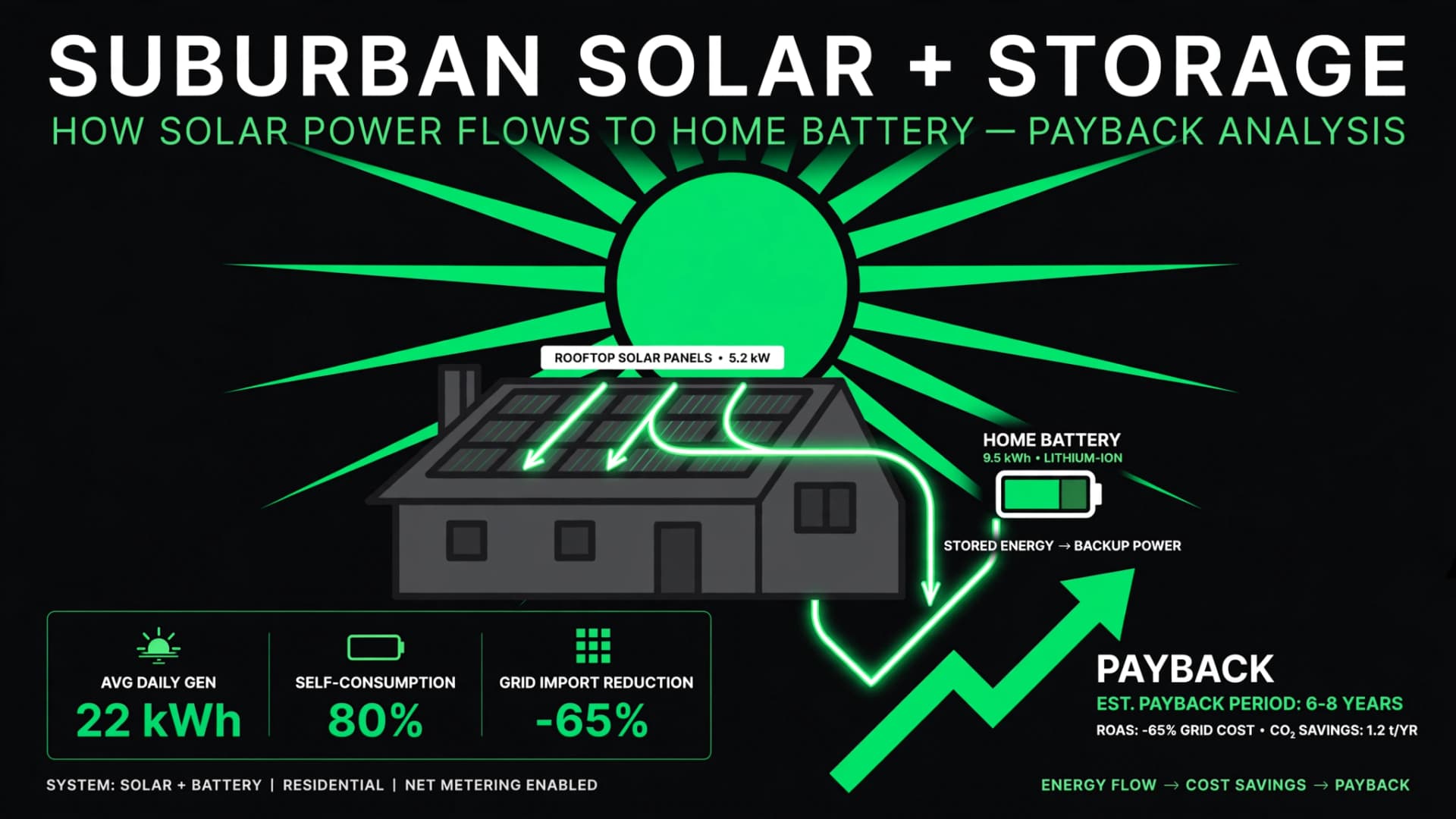
- Payback stretched 2–3 years: a typical California system now pays back in 7–10 years instead of 5–7, still well inside a 25-year panel life.
- The credit is not fully dead: companies that own leased or PPA systems can still claim the commercial credit, making 2026 a buy-versus-lease decision.
Section 25D expiration: The end of the 30% federal tax credit for homeowner-purchased residential solar, effective for any system whose installation was completed after December 31, 2025. The repeal came via the One Big Beautiful Bill Act (P.L. 119-21); leasing companies that own the system on your roof may still claim a separate commercial credit.
Are solar panels worth it in 2026 now that the 30% federal tax credit is gone? It is the question hanging over every rooftop quote in America this year, and the honest answer depends on three things: your electricity rate, your roof, and whether you buy or lease. The credit’s end did not kill rooftop solar economics. It split them: for roughly a third of US households the numbers still work on purchase alone, while for others the path now runs through leases, state programs, or a better rate environment.
This guide covers what actually changed, what payback looks like without the credit, and the decision framework that replaces the old “just claim 30%” rule of thumb.
What ended, and when: the Section 25D timeline
For two decades, Section 25D let homeowners claim 30% of a solar system’s cost (panels, inverter, racking, wiring, labor, and batteries of 3 kWh or more) against federal income tax. It was among the most-used clean energy tax breaks in the country: IRS data shows about 1.3 million returns claimed it for tax year 2023, at an average claimed system cost of $27,355, roughly an $8,200 credit per household, and more than $6 billion in total credits that year.
The One Big Beautiful Bill Act, signed July 4, 2025, ended it for systems completed after December 31, 2025. The IRS clarified that the completion date controls, not the contract or payment date. A system finished in December 2025 earns the full 30% on the 2025 return, with unused credit carried forward; one finished in January 2026 gets nothing.
The market felt it fast. US residential installs fell to 995 MWdc in Q2 2026, down 12% year over year, with SEIA and Wood Mackenzie forecasting a 23% decline for full-year 2026. The cruelest detail: equipment prices barely budged. At $3.36 per watt nationally, down just 1.4%, the same system costs the buyer about 40% more net than a year earlier: paying 100% of the price instead of 70%.
Are solar panels worth it in 2026? The new payback math without the credit
Losing the credit adds roughly $5,200–$7,000 to the net price of a typical 7.2 kW California system and two to three years to simple payback. The 2025 buyer netted $12,096–$16,380 after the credit and paid back in 5.2–7.0 years on about $2,330 of first-year bill savings; the 2026 buyer nets $17,280–$23,400 and pays back in 7.4–10.0 years. Add a Powerwall 3 and the comparison becomes 7.1–9.4 years versus 10.2–13.4 years.
| Measure | 2025 buyer (with 30% credit) | 2026 buyer (no credit) |
|---|---|---|
| Net cost | $12,096–$16,380 | $17,280–$23,400 |
| Simple payback | 5.2–7.0 years | 7.4–10.0 years |
| With Powerwall 3 | 7.1–9.4 years | 10.2–13.4 years |
| First-year bill savings | ~$2,330 | |
Those numbers look worse until you hold them against doing nothing. EIA-based estimates put the average US household’s 25-year electricity spend at about $67,000, and residential rates have risen roughly 50% on average over the past five to six years. A purchased system locks in much of that cost for the panels’ 25-year life, offsets about 75% of the electric bill on average, and keeps improving: 2026’s most powerful home panels now top 522W, squeezing more production from the same roof.
The credit isn’t fully dead: the lease and PPA workaround
The twist most 2026 guides bury: the company that owns a leased or PPA system on your roof can still claim the commercial Section 48E credit, provided the project began construction by July 4, 2026 or is placed in service by December 31, 2027. The credit goes to the system owner, not you, and nothing forces the lessor to pass it through, but it is why lease quotes in 2026 often undercut purchase quotes by more than the equipment difference explains.
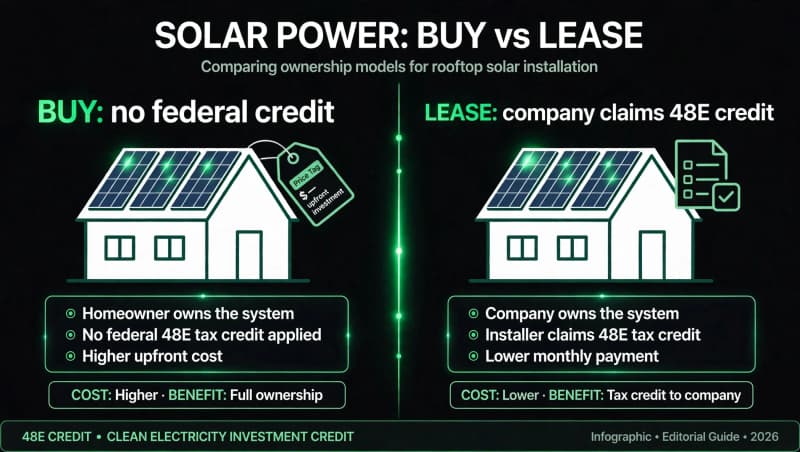
That makes 2026 a genuine fork, not a simple “buy or don’t.” Leasing? Ask whether the rate assumes the 48E credit, what the annual escalator does to year-20 costs, and get it in writing. Buying? Price the system with zero federal help and make the installer show payback on bill savings alone. Any quote still subtracting 30% from a 2026 purchase is stale or dishonest.
One in Three Homes Still Save: The Case That Survives the Credit
Strip out the policy noise and the core comparison stays favorable across much of the country. Analyses drawing on Stanford research find roughly one in three US homes would still save money adding solar today, with no federal credit, concentrated in high-rate states, where a solar-plus-battery system’s lifetime cost of about $0.26/kWh already beats the utility rate.
Three data points frame the decision. First, the rate hedge: with residential rates up ~50% in five to six years, each year of delay reprices the alternative. Second, the resale premium: owned solar adds 4.1–6.9% to a home’s sale price: $16,000–$28,000 on the $410,000 median US home. Third, the deadline stacking: California’s property-tax exclusion for solar, worth roughly $390 a year, ends for systems completed after December 31, 2026 after the extension bill AB 2389 died in committee. Since 2023 the pattern has been one-directional: NEM 3.0 cut export credits, the federal credit died, now the tax break is sunsetting. Waiting has a measurable cost.
Where Solar Still Wins, and Where It Doesn’t
Solar still wins clearly for homeowners with high rates or steep time-of-use spreads, a decade-plus horizon on the roof, a sound unshaded roof, and workable net metering or net billing rules. A battery increasingly decides the outcome: under California-style net billing, shifting midday surplus into the 4–9 PM peak is what restores the payback the credit used to provide.
It wins less clearly for renters, short-term owners, shaded roofs, and the country’s cheapest flat-rate territories. If that is you, the honest move is a watching brief: costs keep drifting down, and targeted programs keep appearing, from New Mexico’s rural solar access fund to the restored $7 billion federal Solar for All program.
The three-question test: Is your rate above ~$0.20/kWh or rising fast? Will you own the roof 10+ years? Can you use most of what you produce (directly or via battery) rather than exporting it for pennies? Three yeses, and 2026 is still a buying year.
Frequently asked questions
Is solar still worth it in 2026?
For about one in three US households, yes. Research-based analyses find solar still saves money without the federal credit, concentrated in high-rate states. A purchased system typically pays back in 7–10 years (10–13 with a battery), then produces nearly free electricity for the rest of its 25-year life, against ~$67,000 the average household would otherwise spend on electricity.
Did my home solar panels lose value when the federal tax credit expired?
No. Installed systems keep whatever credit they qualified for, and the credit’s end arguably supports their value: new buyers face higher net costs while your locked-in savings are unchanged. Owned solar also carries a documented 4.1–6.9% resale premium on the home.
Can I still get a federal credit if I lease instead of buying?
Not directly. The credit goes to the leasing company under the commercial Section 48E rules. But lessors that began construction by July 4, 2026 (or place systems in service by December 31, 2027) can claim it and may price it into lower payments. Ask the provider to state in writing how much of your rate depends on the credit.
Is solar worth it in a state with cheap electricity?
Usually not on purchase economics alone. In states like Idaho or North Dakota, lifetime solar cost per kWh can exceed the utility rate. Exceptions: steep time-of-use spreads a battery can arbitrage, strong state rebates (Duke Energy’s $9,000 storage rebate in North Carolina is one example), or frequent outages where backup power has real value.