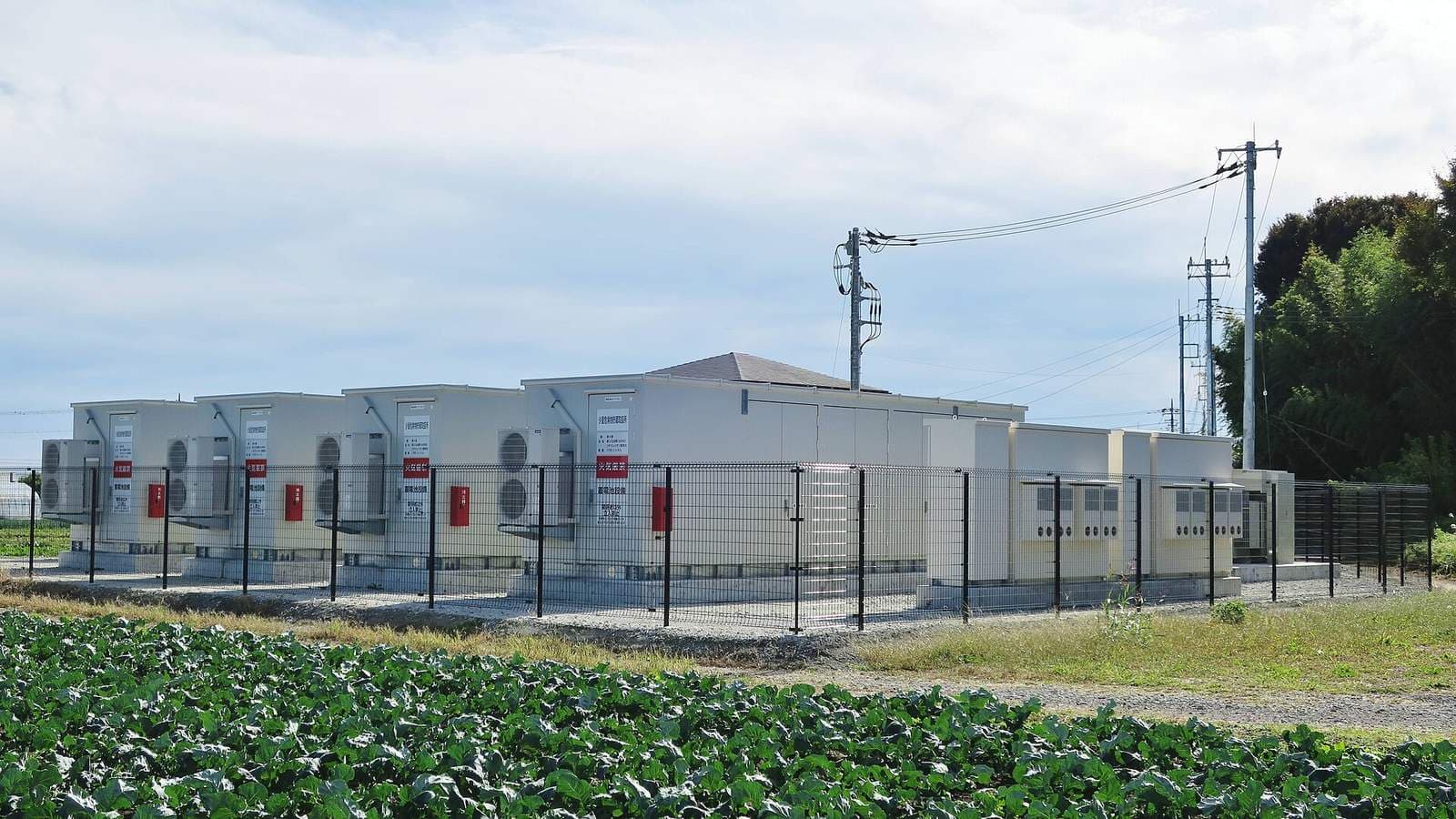
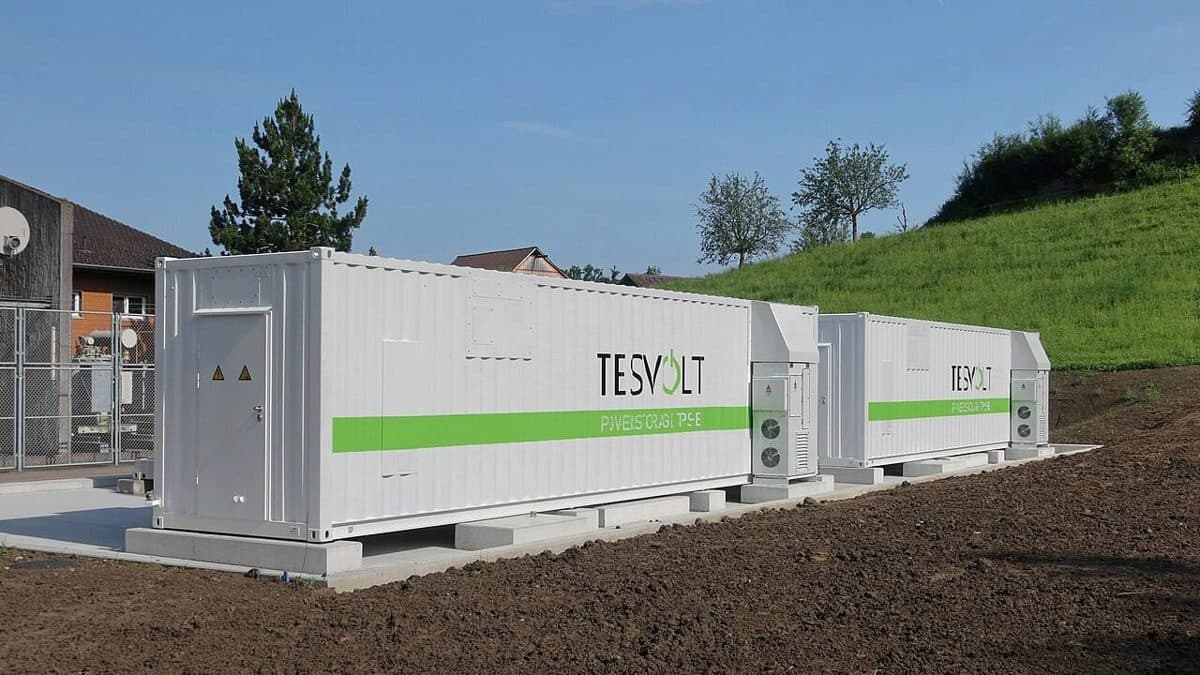
- Nine large batteries worth A$4.3 billion (Australian dollars) switched on in Australia in the first half of 2026, adding 2.3 GW / 7.1 GWh.
- That six-month total already exceeds the 2 GW / 5.1 GWh added across all of 2025, on the Clean Energy Council’s own figures.
- Wholesale prices averaged A$74/MWh in the June quarter, down 47% on a year earlier, as 141 projects worth A$32.5 billion sit at financial close or under construction.
The financing pipeline behind the headline tells the fuller story. Twelve generation projects totalling 2.6 GW reached financial close in the first half of 2026, against 2.3 GW across the whole of 2025, and 11 of the 12 were solar or solar-hybrid projects. Five generation projects totalling 1.4 GW and worth more than A$2.8 billion began operating in the same period, led by the first stage of the Golden Plains Wind Farm in Victoria, a 756 MW stage the Council says will power more than 400,000 homes. The battery numbers matter because they show the storage fleet scaling in step with the generation fleet.
Australia’s Clean Energy Council bi-annual investment report for January to June 2026 frames the result as resilience in a tough economic environment. “Australian-made clean energy will not only deliver more affordable, reliable electricity for households and businesses, but also tens of thousands of jobs and billions of dollars in investment and economic activity, particularly in regional Australia,” said Jackie Trad, the Council’s chief executive. The Council cautions that wholesale costs are only one part of a power bill and that network costs continue to rise in some regions, a caveat worth keeping attached to the price figure.
Australia battery storage 2026 beats the full-year 2025 total in six months
The comparison that anchors the report is stark. In six months, Australia switched on more large-scale battery storage than it managed in the twelve months before it, and secured financing for more new generation capacity than in the twelve months before that. The table below sets the Council’s first-half 2026 figures against its full-year 2025 benchmarks.
| Measure | First half 2026 | Full year 2025 |
|---|---|---|
| Battery capacity switched on | 2.3 GW / 7.1 GWh (9 projects, A$4.3 billion) | 2.0 GW / 5.1 GWh |
| Generation reaching financial close | 2.6 GW (12 projects) | 2.3 GW |
| Generation commissioned | 1.4 GW (5 projects, over A$2.8 billion) | Not stated in the Council summary |
| Wholesale price, June quarter | A$74/MWh, down 47% year on year | About A$140/MWh implied by the 47% fall |
Two calculations of our own put those figures in usable terms. First, the energy gain: 7.1 GWh against 5.1 GWh is a 39% increase, achieved in half the time, which means the monthly switch-on rate roughly tripled, from about 0.43 GWh per month in 2025 to about 1.18 GWh per month in the first half of 2026. Second, the cost benchmark: A$4.3 billion divided by 7.1 GWh gives about A$606 per kWh of switched-on storage at project value, a figure that covers the full project, so it should be read as an all-in project benchmark. For context, the average duration of the new fleet is about 3.1 hours (7.1 GWh divided by 2.3 GW), squarely in the 2 to 4 hour evening-peak category that our grid battery explainer identifies as the workhorse segment.
Where the A$32.5 billion pipeline concentrates
The forward pipeline is larger than the half-year result. A total of 141 generation and storage projects worth around A$32.5 billion are at financial close or under construction. Queensland leads on investment at A$9.6 billion and on generation capacity at 4.5 GW, while New South Wales holds the largest battery pipeline at 4.3 GW / 11.2 GWh. That state split matters for what comes next: Queensland’s lead is generation-led, while New South Wales is building the storage to absorb it, and the two states’ grids are interconnected, so the buildout functions as one system even though the investment is counted state by state.
The scale also reframes the single-deal news that dominates storage coverage. A 1 GWh supply agreement, like the Samsung deal with Alpha Omega Power covered by Joule Post this week, is a large contract by company standards, yet Australia switched on seven times that energy in six months across nine projects. The market story in 2026 is the aggregate build rate, and individual deals are best judged against it.
What the A$74/MWh wholesale price does and does not prove
The June quarter wholesale average of A$74/MWh, down 47% on a year earlier, is the report’s most quotable number and its easiest to over-read. Wholesale prices move with fuel costs, weather, outages and demand as well as with new supply, so a single quarter cannot isolate the effect of the new batteries and generation. What the figure does establish is that a record half-year of storage switch-ons coincided with sharply lower wholesale prices, which weakens the claim that rapid renewable buildouts mechanically push prices up. The Council itself keeps the claim modest, noting that network costs continue to rise in some regions and that wholesale costs are only one part of a bill.
The constraint the Council names for sustaining the pace is institutional: predictable approvals, timely transmission and long-term revenue certainty, with onshore wind singled out as the segment that needs more projects progressing into operation. Eleven of the twelve projects reaching financial close were solar or solar-hybrid, which leaves wind underrepresented in the new pipeline even though the largest single commissioning was a wind farm stage. If the second half of 2026 repeats the first, Australia will end the year with roughly double its 2025 battery additions, and the binding question will be whether transmission and approvals keep pace with a storage fleet that is now being switched on faster than the grid connections built to serve it.