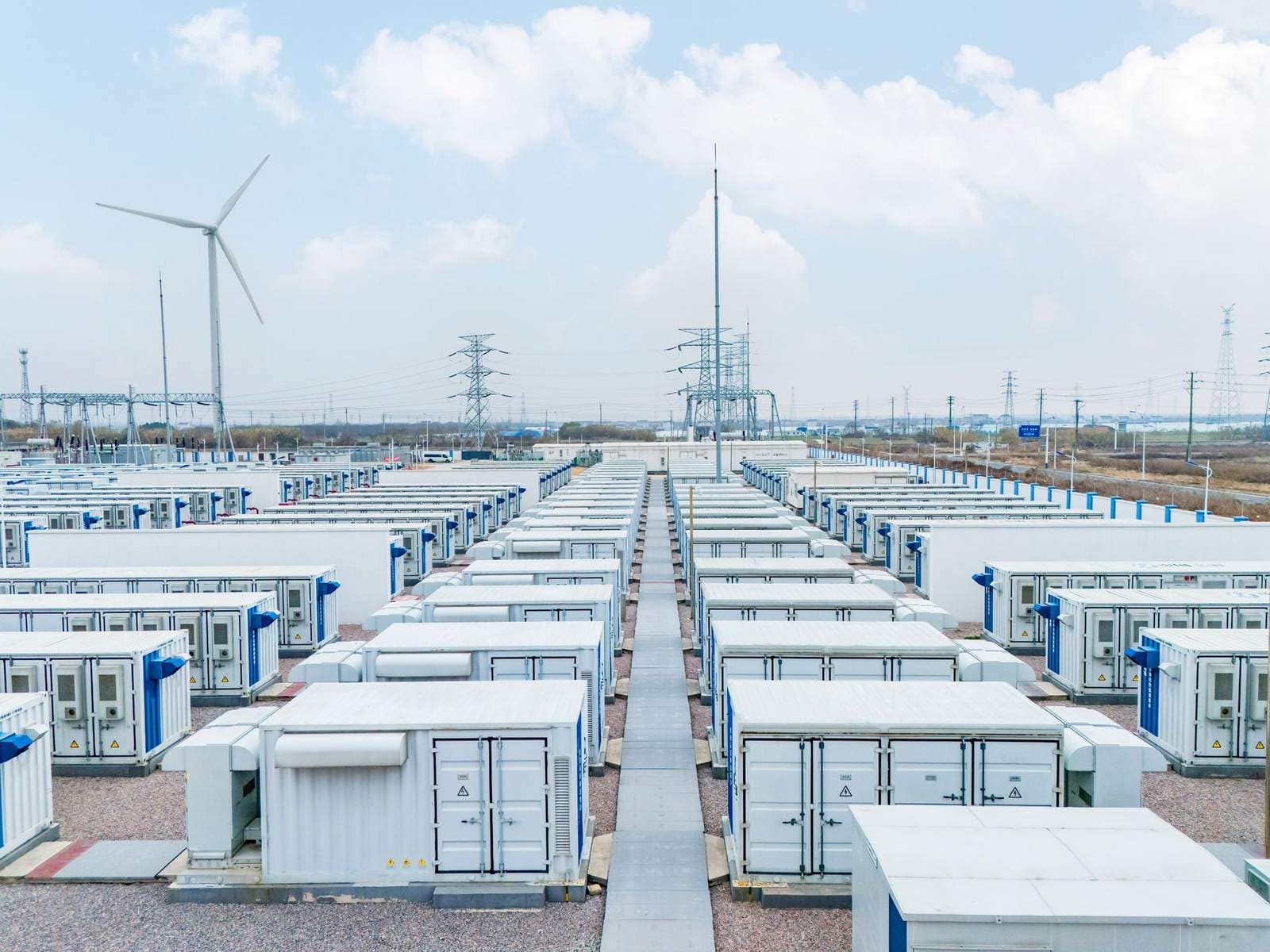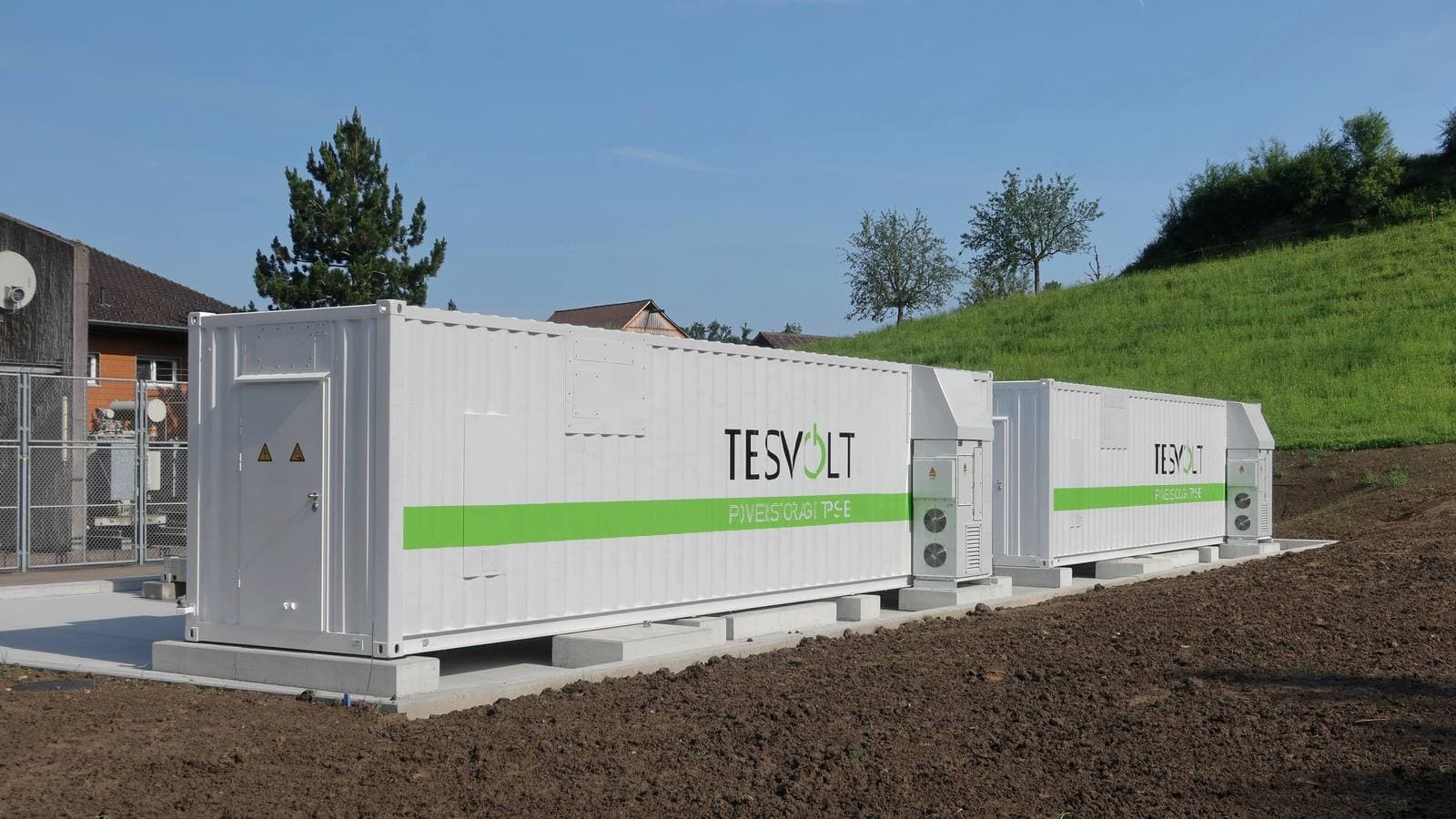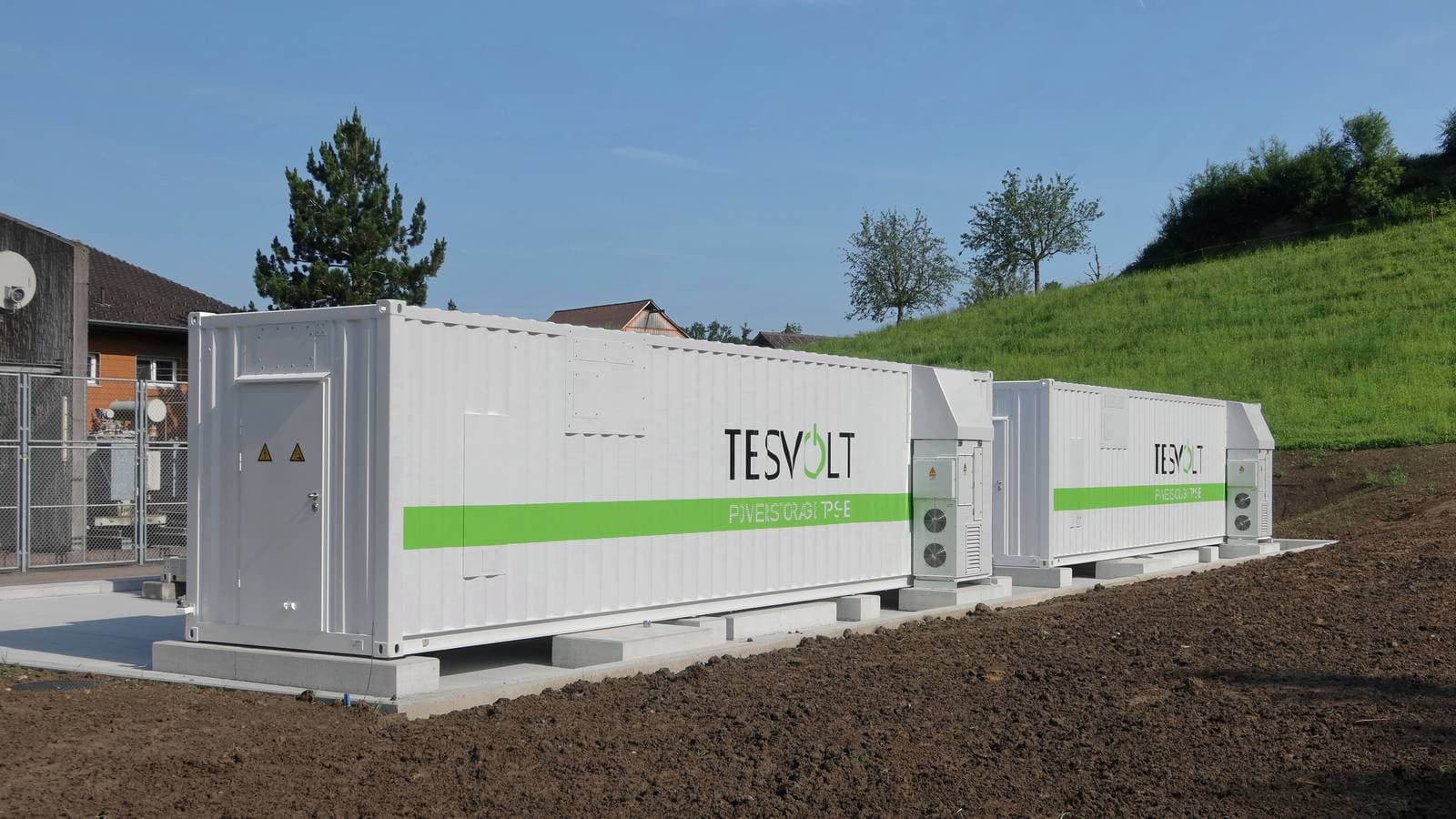
- Metlen Energy & Metals and Karatzis Group commissioned a 330 MW / 790 MWh standalone battery in Larissa, Greece, the country’s largest, at a cost of €170 million.
- The joint venture (49% Metlen, 51% Karatzis) is backed by loans from the EU’s Recovery and Resilience Facility, converting Brussels recovery money into an operating grid battery in Southern Europe.
- The inauguration came days after Helleniq Energy switched on its own 100 MW / 200 MWh battery. Greece’s storage market is suddenly moving from announcements to operating assets.
Greece has a new record holder in battery storage. Greece‘s largest standalone battery energy storage system went live this week: a 330 MW / 790 MWh facility in Larissa, Thessaly, officially commissioned by Metlen Energy & Metals and Karatzis Group of Companies, Enerdata reported on October 16, 2026, citing Metlen’s October 15 press release, with ESS News confirming the project details.
The €170 million project was delivered through a joint investment vehicle owned 49% by Metlen and 51% by Karatzis, and its financing tells a European story: the investment is backed by loans from the EU’s Recovery and Resilience Facility, NextGenerationEU, the bloc’s post-pandemic recovery fund. In other words, Brussels money is now directly underwriting grid-scale batteries in Southern Europe.
The Larissa project: 330 MW / 790 MWh with an industrial customer in mind
The headline numbers describe a roughly 2.4-hour system: divide 790 MWh of energy by 330 MW of power and you get the duration, the workhorse class that stores midday solar and discharges through the evening peak. As our battery energy storage guide explains, that 2-to-4-hour bracket is where most new grid batteries sit globally, because it matches the daily solar cycle almost exactly.
What makes Larissa unusual is the industrial customer in the picture, not the chemistry or the duration. Metlen owns Aluminium of Greece, a smelter that runs around the clock and cannot easily flex; storage paired with that kind of load turns volatile wholesale prices into a manageable input cost. The commercial logic is part merchant storage, part industrial load management: cheap midday power gets banked in the battery instead of being sold off or curtailed, then serves heavy industrial demand when prices rise.
That pairing is the project’s commercial logic in one sentence. An aluminium smelter runs around the clock and cannot easily flex; a battery next door turns volatile wholesale prices into a manageable input cost. It is the same industrial-demand playbook behind Northland Power’s Jurassic battery in Alberta, where a contracted revenue structure made the storage asset bankable. The industrial-demand version of that playbook runs on heavy load, not a grid contract.
7% of Greece’s 4.6 GW programme in a single project
Greece launched a battery storage programme in 2025 targeting 4.6 GW of utility-scale standalone projects, 3.7 GW on the transmission network and 900 MW on distribution, per Enerdata’s global energy research. Larissa’s 330 MW represents about 7% of that entire national programme in a single project. More importantly, it is operating, not announced: the inauguration followed by days the completion of Helleniq Energy’s first BESS, a 100 MW / 200 MWh installation at its Thessaloniki industrial facilities. Larissa stores nearly four times the energy of Greece’s previous largest battery.
The cost figure invites its own comparison. €170 million for 790 MWh works out to roughly €215 per kWh of installed storage (my calculation). Set that against the latest BloombergNEF turnkey averages ($177/kWh in Europe, $73/kWh in China, $219/kWh in the US for comparable systems, as tracked in our storage cost analysis), and Larissa lands above the European average. That premium is consistent with an early-stage market: Greece has no domestic BESS supply chain to speak of, limited installer competition, and projects still carry first-of-a-kind risk pricing. The gap is also a measure of how much room Greek costs have to fall as the 4.6 GW programme scales.
| Project / benchmark | Installed cost per kWh | Note |
|---|---|---|
| Larissa (Metlen/Karatzis, 790 MWh) | ~€215 | Article calculation from the €170 million project cost |
| BNEF Europe average | $177 | Larissa lands above this |
| BNEF US average | $219 | Closest benchmark |
| BNEF China average | $73 | Lowest-cost market |
And then there is the European comparison. Vattenfall and Fluence’s 254 MW / 1+ GWh battery at Brunsbüttel, Germany, announced October 14, stores about a quarter more energy than Larissa, but it will not connect to the grid until the end of 2028. The Greek project is smaller and live today. In the race to turn storage announcements into electrons, operational dates beat nameplate ratings.
The EU recovery-fund angle
The financing deserves a section of its own because it is a template, not a one-off. The EU’s Recovery and Resilience Facility was designed to rebuild economies after the pandemic, not to fund batteries. But member states were given wide latitude to channel the money into green investments, and Greece is using it to de-risk the first wave of its storage buildout. EU-backed loans lower the cost of capital for projects that commercial lenders would price cautiously, and lower financing costs flow straight through to project economics on capital-intensive assets like batteries.
That matters for the pipeline behind Larissa. Greece’s 4.6 GW target implies dozens of Larissa-scale projects over the coming years; the first ones need to prove the revenue model before the rest can attract private capital at scale. A €170 million project anchored partly by industrial demand, financed with recovery-fund loans, and commissioned on schedule is exactly the demonstration the programme needs. If Larissa performs, the financing template replicates, and Greek storage costs start their slide toward the European average.
Operations first, then the programme queue
The near-term questions are operational: how the Larissa battery actually splits its time between serving the aluminium smelter and trading on wholesale markets, and whether the EU-backed financing structure delivers the returns its sponsors expect. Longer-term, watch the rest of the 4.6 GW programme: tenders, grid connections, and whether other industrial offtakers follow Metlen’s lead. Greece has abundant midday solar and a grid that needs evening flexibility; Larissa just proved the business case works. The queue behind it is the story now.