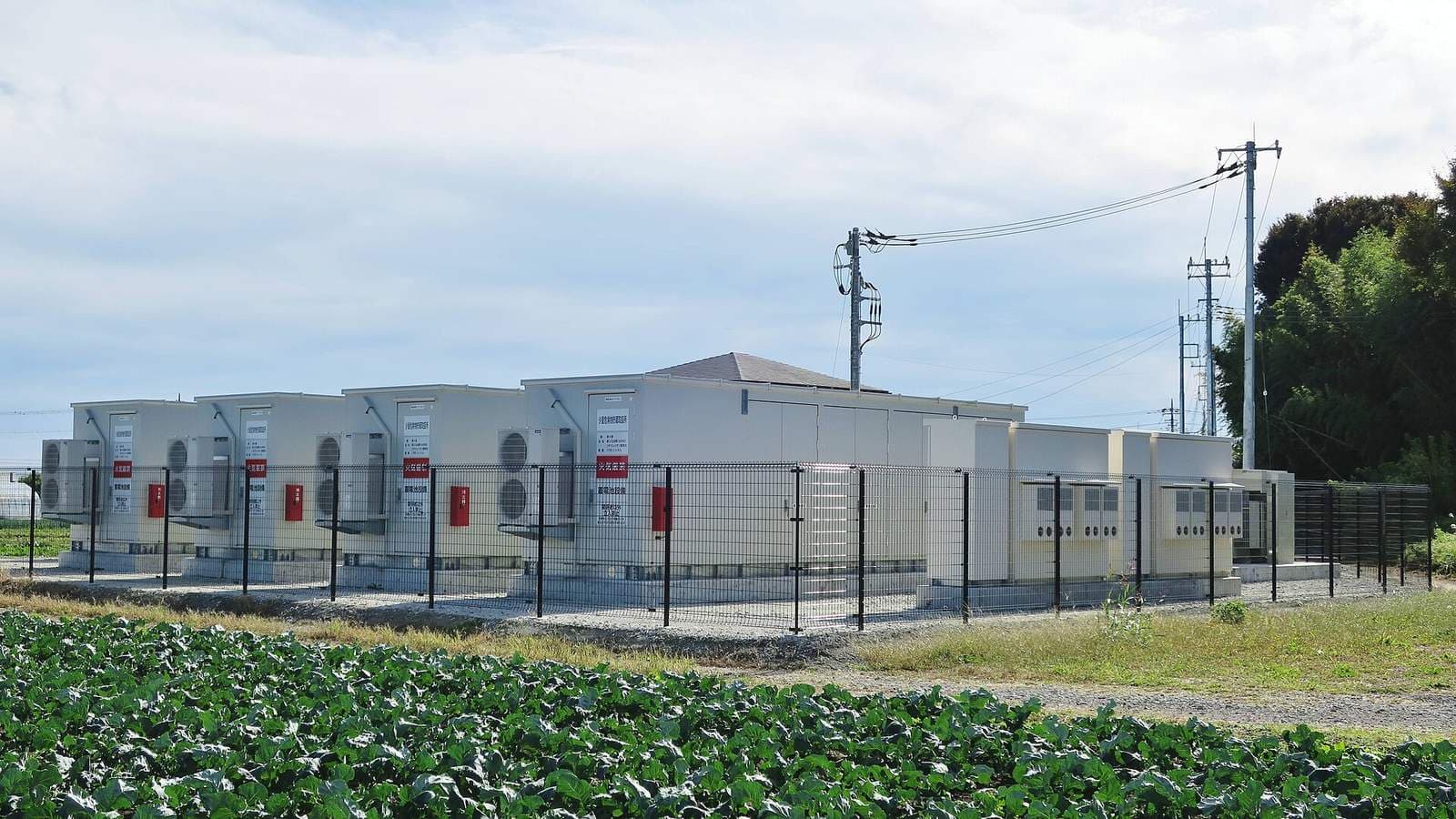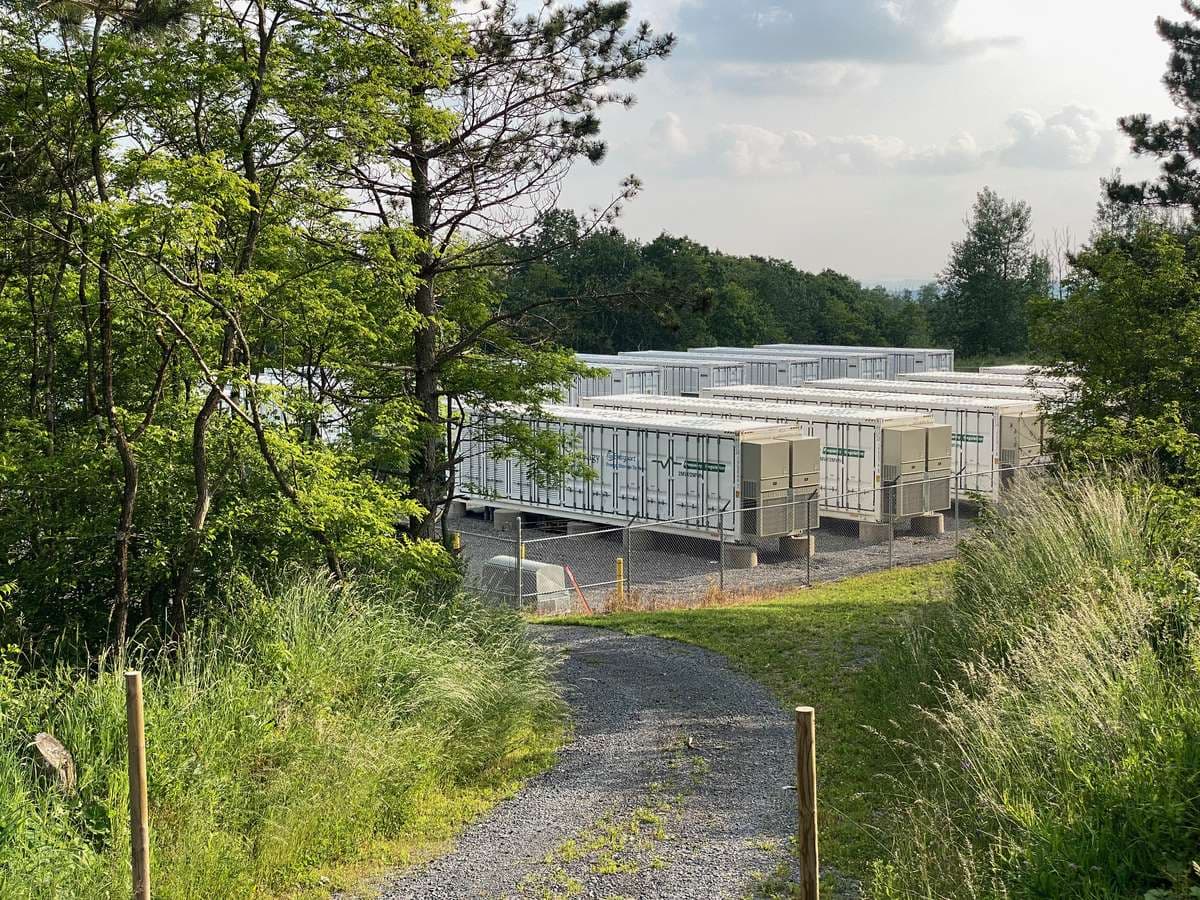
- CATL unveiled TENER+ on October 29, 2026 at All Energy Australia in Melbourne, a 9 MWh container battery system with a 25-year design life.
- CATL also showcased TENER Sodium, a sodium-ion system delivering more than 30 MWh in modular cabinets, with a claimed 95% round-trip efficiency and more than 10,000 cycles at 45 degrees Celsius.
- The launch landed a week after AEMO reported grid batteries supplied 8.0% of evening peak generation in Australia’s National Electricity Market, ahead of gas at 5.1% for the first time.
Grid-scale batteries in Australia shifted 10.9 gigawatt-hours a day into the evening peak in the September quarter, up from 3.2 gigawatt-hours a year earlier. That is a 3.4-fold increase in one year, and it reframes every product launch in the market. The CATL TENER+ 9 MWh system is not entering a niche. It is entering a grid where batteries already set prices in almost half of dispatch intervals, up from 18% a year earlier, and where the average wholesale price fell 27% year on year to $63 per megawatt-hour.
CATL unveiled TENER+ in a global launch at All Energy Australia 2026 in Melbourne on October 29, 2026, alongside TENER Sodium. The company signed memorandums of understanding with Hitachi Energy, EPEC Group and UNSW Sydney, aimed at grid connection, system validation and workforce training. CATL general manager for Australia and New Zealand Zane Zhou said a battery’s value is measured over the entire lifespan of a project rather than on the day it is commissioned, and said developers need confidence that batteries can handle the cycling required to trade in the National Electricity Market.
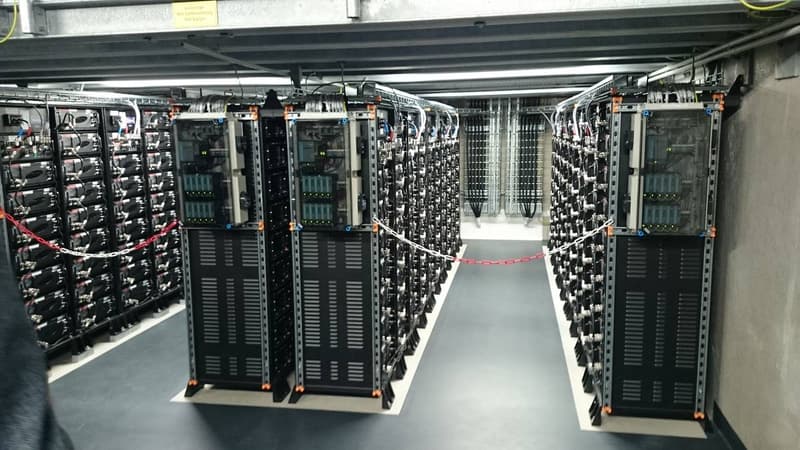
What the CATL TENER+ 9 MWh system changes for project design
TENER+ packs 9 MWh into a single system and cuts the number of containers needed by up to 40% and the project footprint by 12%, according to CATL. The company did not name the baseline for either percentage, so those figures describe a claimed improvement rather than a measured comparison. The container math itself is straightforward and does not depend on the baseline. A 1,860 MWh project needs about 207 TENER+ units at 9 MWh each, and that project, Birdwood Energy’s Baranduda Electrical Energy Reserve near Wodonga in Victoria at 400 MW and 1,860 MWh, would run for 4.65 hours at full power. CATL is the technology partner for Baranduda, although the announcement does not state that TENER+ will be used there.
Duration is where the new system sits above the Australian fleet average. AEMO reported the National Electricity Market battery fleet passed 10 GW and 23 GWh by the end of September, which implies an average duration of 2.3 hours across the fleet, including projects still in commissioning. Baranduda at 4.65 hours is about twice that average. Longer duration matters in the evening peak, because a battery that empties after two hours cannot cover a five-hour peak from 4 pm to 9 pm without help from other sources. A 9 MWh container does not by itself create duration, since duration is energy divided by power, but fewer, larger containers simplify the build for projects that are already sized for four hours or more.
| Figure | Value | Source and note |
|---|---|---|
| TENER+ capacity per system | 9 MWh | CATL announcement, October 29, 2026 |
| TENER+ design life | 25 years | CATL announcement, liquid-cooled, noise below 65 dBA at 1 metre |
| Baranduda project size | 400 MW, 1,860 MWh | CATL announcement, technology partner named, TENER+ use not stated |
| TENER+ units for Baranduda at 9 MWh each | About 207 units | Joule Post calculation, 1,860 divided by 9 |
| Baranduda duration at full power | 4.65 hours | Joule Post calculation, 1,860 divided by 400 |
| NEM fleet average duration | 2.3 hours | Joule Post calculation from AEMO 10 GW and 23 GWh |
How batteries overtook gas in the evening peak
AEMO’s Quarterly Energy Dynamics report for the third quarter of 2026, published October 23, 2026, put grid-scale batteries at 8.0% of evening peak supply between 4 pm and 9 pm, against 5.1% for gas-fired generation. Batteries supplied 1.57 times the gas share in that window. Gas-fired generation averaged 1,385 MW during the evening peak, down 50% year on year, and gas generation for the quarter fell 34% to its lowest third-quarter average since 2000. Renewables supplied a record 44.3% of National Electricity Market generation for the quarter, with grid-scale solar up 30% and hydro up 15%.
The charging side of the same report explains the evening result. Batteries charged 13.4 GWh a day on average during daylight hours and discharged 10.9 GWh in the evening peak. Dividing discharge by charge gives 81.3%, which is a system-level ratio for the whole fleet across a day, not a product efficiency figure. It blends round-trip losses, auxiliary loads, state-of-charge management and batteries that charge and discharge on different schedules. It should never be quoted as the efficiency of any single product, including TENER+ or TENER Sodium.
| AEMO Q3 2026 evening peak measure | Batteries | Gas |
|---|---|---|
| Share of evening peak supply, 4 pm to 9 pm | 8.0% | 5.1% |
| Evening peak average output | About 2.2 GW implied | 1,385 MW reported |
| Year-on-year change | Daily discharge up from 3.2 GWh to 10.9 GWh | Evening peak output down 50% |
| Price-setting share | Almost half of dispatch intervals | Not reported on the same basis |
Why sodium-ion gets a launch slot next to lithium-ion
TENER Sodium is the more interesting technical claim in the launch, because it tests whether sodium-ion chemistry can move from pilot projects to grid-scale orders. CATL describes it as the world’s first mass-produced, field-validated sodium-ion battery energy storage system, delivering more than 30 MWh through modular cabinets, operating up to 55 degrees Celsius, delivering more than 10,000 cycles at 45 degrees Celsius, and reaching 95% round-trip efficiency with a lifespan above 20 years. Those are manufacturer claims from the launch announcement, not independent test results, and they need a named project and measured field data before they can be treated as proven.
The case for sodium rests on abundance and heat tolerance rather than energy density. Sodium is far more geographically widespread than lithium, according to CATL, and a chemistry that holds up at 45 degrees Celsius suits Australian summers. The case against sodium is density and track record. Lithium-ion dominates grid storage today, and a new chemistry has to prove cycle life, degradation and bankability across years of daily cycling before financiers price it like lithium-ion. CATL’s answer is to offer both chemistries and let developers choose, which is a sensible commercial position while sodium’s field record is still being built.
For readers following storage economics, our explainer on how grid batteries work sets out the duration, cycling and price-setting mechanics behind the AEMO figures, and our coverage of Australia’s 7.1 GWh home battery surge in the first half of 2026 covers the household side of the same market, where 276,011 home batteries were installed in six months.
What the launch does not prove yet
Three gaps separate this launch from a market verdict. First, CATL gave no price, no delivery date and no named order for TENER+ itself. Second, the three memorandums carry no values and no dates, and a memorandum is a plan to cooperate rather than a purchase order. Third, the container and footprint savings carry no stated baseline, so they cannot be verified against a competing product from the announcement alone. None of those gaps makes the product uninteresting. They do mean the next evidence to watch is a named Australian project ordering TENER+ or TENER Sodium, a measured round-trip efficiency at the grid connection point, and a cycle-life result from field operation rather than from a datasheet.
The market context, by contrast, is already proven by AEMO’s own data. Batteries beat gas in the evening peak for the first time, the fleet passed 10 GW, and home battery installations reached 482,835 by the end of September under the federal Cheaper Home Batteries Program, up 62,569 in the quarter. CATL claims more than 17 GWh of installed storage in Australia, a 30.4% share of 2025 global storage battery shipments according to SNE Research, and more than 3,000 storage projects worldwide. Those shipment and installed figures describe CATL’s position in the market that TENER+ enters. They say nothing about how TENER+ itself will perform, and the distinction between market position and product proof is the one to keep in view as orders arrive.
Sources: CATL announcement via PR Newswire, October 29, 2026, for TENER+ and TENER Sodium specifications, memorandums, Baranduda project size and executive quotation; AEMO Quarterly Energy Dynamics Q3 2026, published October 23, 2026, for evening peak shares, gas output, daily charge and discharge, fleet size and wholesale prices. Ratios, unit counts and duration figures are Joule Post calculations from those reported figures, with system-level ratios flagged as fleet measures rather than product efficiency.