- A home battery answers two separate questions during an outage: whether it can start the compressor, and whether it holds enough energy to keep it running.
- The startup test is the locked-rotor amps rating on the air conditioner nameplate, checked against the battery inverter load-start rating.
- A soft starter lowers the startup surge for many compressors, and adding a second battery raises both energy and starting capacity.
Home battery air conditioner startup surge: the brief burst of current a compressor motor draws in the first second after switch-on, measured in locked-rotor amps, which can exceed the running current several times over and trip a backup system that has ample stored energy.
Energy and power describe different limits, and the air conditioning question exposes the gap between them. Energy, measured in kilowatt-hours, decides how long a load runs. Power, measured in kilowatts, decides how large a load runs at any moment. A battery can hold a full charge and still fail to start a compressor, because starting a motor is a power problem that lasts about a second, while running it is an energy problem that lasts for hours. Homeowners who buy on kilowatt-hours alone can end up with a system that powers lights, refrigeration and internet through an outage and stalls the moment the thermostat calls for cooling.
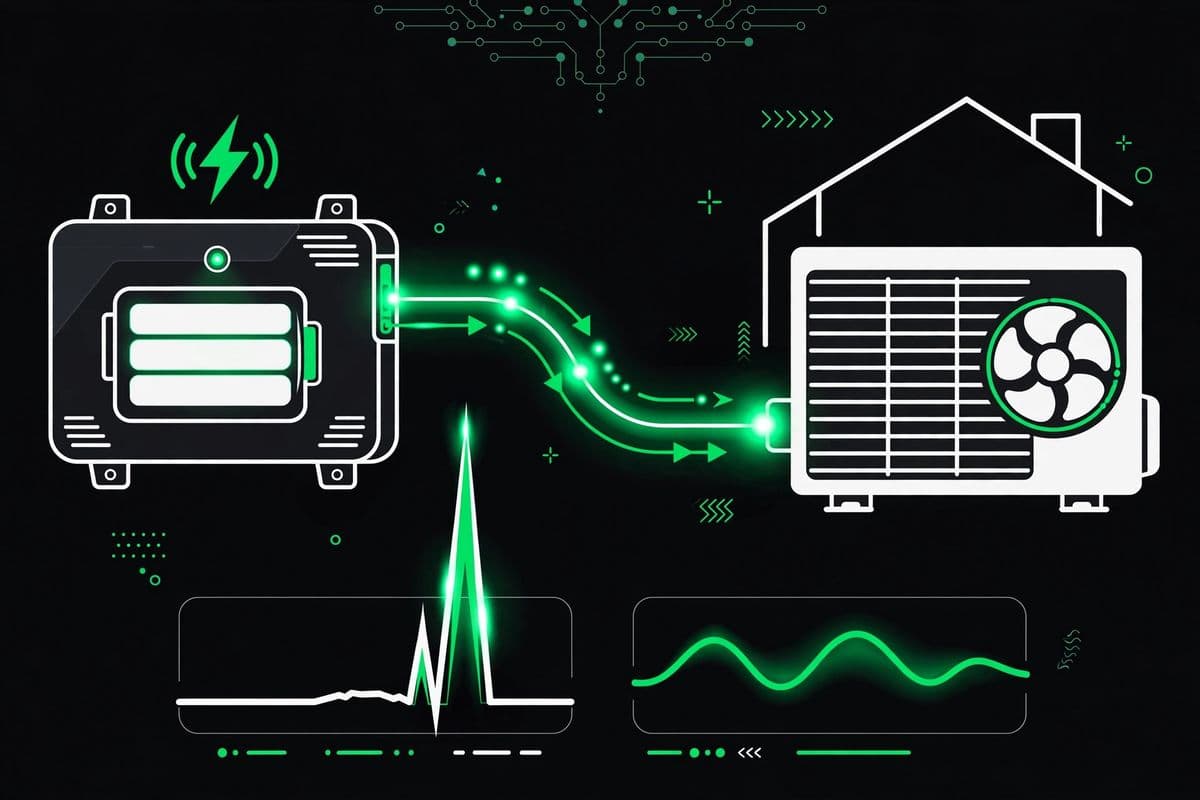
The second layer of the problem is that compressors do not start gently. A stationary motor rotor draws its highest current at the instant voltage is applied, before rotation builds the back voltage that limits current in normal running. That locked-rotor current is printed on the outdoor unit nameplate, and it is the number an installer checks before promising that a battery will run a given air conditioner. The home battery run air conditioner outage question therefore starts at the nameplate.
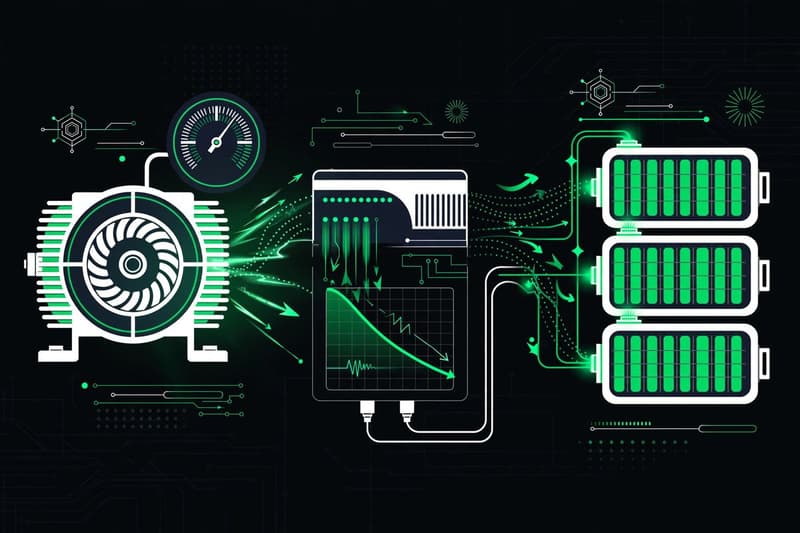
Locked-rotor amps and the one-second test
Locked-rotor amps, abbreviated LRA, state the current a motor draws with its rotor held stationary at rated voltage. For a compressor, the figure represents the worst case at the first instant of a start. The current falls rapidly as the rotor accelerates, typically within a fraction of a second to about a second, and then settles to the running current. Battery inverters carry a load-start rating for exactly this event, expressed in the same LRA units, for a stated duration. Tesla lists the Powerwall 3 load start capability as 185 LRA for one second in its Powerwall 3 specifications, alongside 13.5 kWh of nominal battery energy and up to 11.5 kW of continuous AC output per unit.
The comparison an owner can make at home is direct. Find the LRA figure on the outdoor condenser data plate, beside the compressor ratings. If that figure sits at or below the battery inverter load-start rating, the battery can usually start the compressor, subject to other loads running at the same moment. If the nameplate figure sits above the rating, one battery will usually fail to start the compressor, or will trip its protection, even when the battery is fully charged and the running load would fit comfortably inside the continuous power rating. The nameplate wins every argument about this point, because it describes the installed compressor rather than a typical compressor of the same tonnage.
Other loads running during the start make the test harder. A refrigerator compressor, a well pump, a pool pump or a second air conditioner starting at the same moment adds its own surge to the same one-second window. Installers therefore test the worst realistic combination of loads starting together. Load management helps here: a backup panel that sheds non-essential loads during an outage, or staggers motor starts, keeps the surge window clear for the compressor. For the sizing logic that governs how much energy a home needs overall, see our home battery sizing guide.
Home battery air conditioner running load and runtime
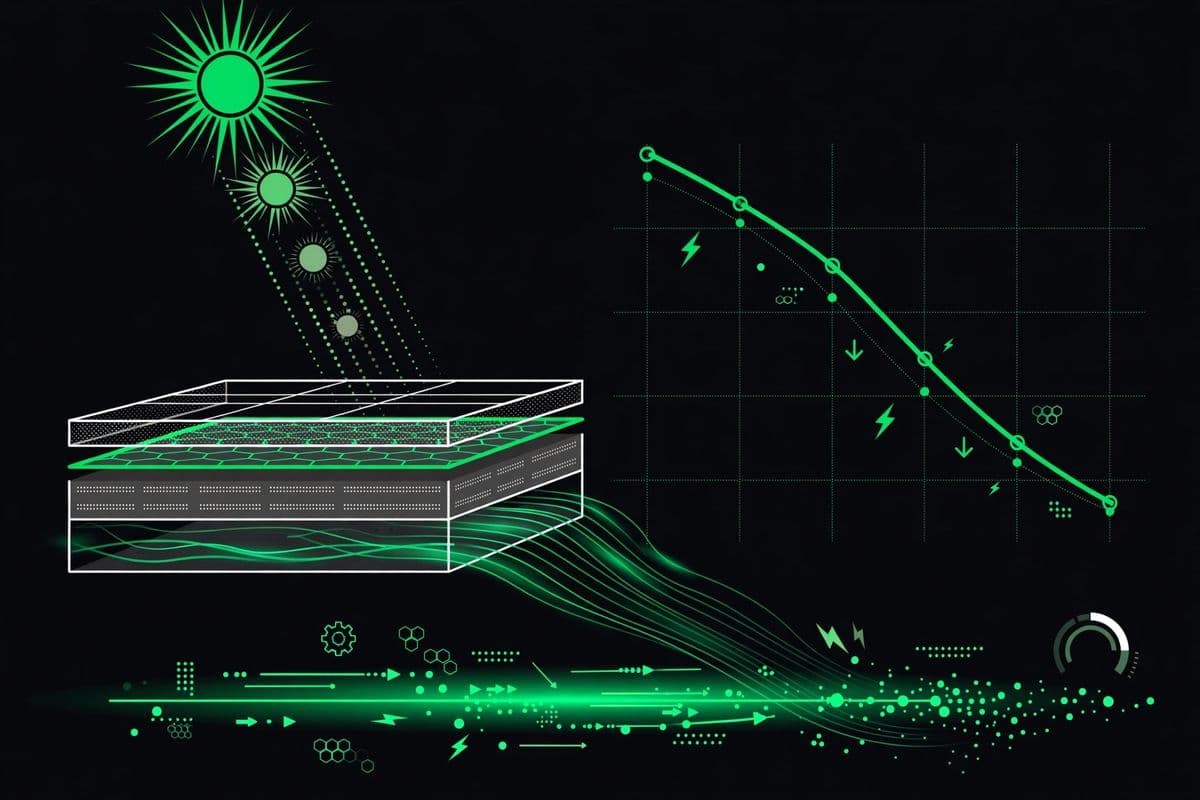
Once the compressor is running, the arithmetic changes to energy. A central air conditioner draws a steady running load that depends on tonnage, efficiency, outdoor temperature and duct condition. A smaller system drawing 3 kW of running power consumes 3 kWh per hour of continuous running, so a single 13.5 kWh battery holds about 4.2 hours of that load alone, before any other household load and before the reserve the installer holds back for essential circuits. A larger system drawing 5 kW consumes 5 kWh per hour, cutting the same battery to about 2.7 hours of cooling alone. Real compressors cycle on and off under thermostat control, so a battery that holds 4 hours of continuous running can stretch across a longer outage with the compressor cycling, and a battery that holds 2.7 hours can fall short on a hot afternoon when the compressor rarely rests.
Solar changes the runtime picture only when the sun is shining and the array is large enough to carry the running load while recharging the battery. A rooftop array producing 4 kW at midday can carry a 3 kW running load and add roughly 1 kW to the battery, extending cooling through the afternoon. After sunset, the battery carries the full load alone, and the runtime arithmetic above governs. Owners who expect a battery to run air conditioning all night from a single unit, without solar input and without cycling, are asking the energy rating to do work it was not sized for. Two batteries double the energy and raise the available starting capacity, which is why installers often recommend a second unit for whole-home backup in hot climates rather than for extra hours alone.
| Illustrative running load | Energy per hour | Hours from one 13.5 kWh battery, cooling only |
|---|---|---|
| 2 kW | 2 kWh | About 6.8 hours |
| 3 kW | 3 kWh | About 4.5 hours |
| 4 kW | 4 kWh | About 3.4 hours |
| 5 kW | 5 kWh | About 2.7 hours |
| 7 kW | 7 kWh | About 1.9 hours |
The table uses stated illustrative loads and the Tesla nominal energy figure, with no allowance for other household loads, inverter losses or a held reserve. Joule Post arithmetic: hours equal 13.5 kWh divided by the running load. An installer sizing a real system will derate the usable energy for the reserve setting, the depth of discharge the maker allows, and the loads that share the backup panel. The table still gives the right intuition: cooling is the largest single load in most homes during a summer outage, and it consumes stored energy at a pace that surprises owners who have only run lights and refrigeration from a battery before.
Soft starters and the compressor surge fix
A soft starter reduces the startup surge by ramping the voltage applied to the compressor motor over a short interval, instead of applying full voltage instantly. The compressor accelerates more gradually, the peak current falls, and the battery inverter sees a surge its load-start rating can absorb. Owners in the Tesla Motors Club forum thread on two Powerwalls and whole-home backup report the pattern repeatedly: a system that tripped on compressor starts before a soft starter, and started reliably after one was fitted, with one owner reporting a start current falling from above 90 amps to about 24 amps after fitting a soft starter. Those are owner reports from a forum thread, and the exact reduction depends on the compressor, the soft starter model and the installation.
Soft starters need a short learning period. Several models observe the first starts and adjust their ramp profile over repeated cycles, which means the device should be installed and exercised while grid power is available, not fitted for the first time during an outage. An HVAC technician should confirm compatibility with the specific compressor, because some variable-speed and inverter-driven compressors already ramp their own starts and gain little from an add-on device, while some makers restrict third-party starting equipment under warranty terms. The distinction between a soft starter and a hard start kit matters here. A hard start kit shortens the time a motor spends at locked-rotor current without lowering the peak current much. A soft starter lowers the peak. Only the second effect helps a battery inverter pass its one-second test.
Cost and scope stay modest compared with a second battery. A soft starter device plus HVAC labour typically costs far less than an additional battery unit, and it leaves the stored energy untouched. The trade-off is that it fixes the start and does nothing for runtime. A home that starts reliably with a soft starter can still drain its battery in two hours of continuous cooling. The two fixes answer different questions, and hot-climate homes with long outages often need both: a soft starter for the start, and enough stored energy, or solar recharge, for the runtime.
Powerwall 2, Powerwall 3 and stacked batteries
Older and newer batteries differ sharply on the starting test. The Powerwall 2 delivered 5 kW of continuous power with a lower surge tolerance, and many owners found that a single unit could not start a larger central air conditioner without a soft starter, and sometimes not even with one. The Powerwall 3 raised continuous output to 11.5 kW per unit and the load-start rating to 185 LRA, which covers the running load of most residential central systems and the starting surge of many of them. The energy rating stayed at 13.5 kWh per unit, so the newer unit starts more and stores the same. That split is the reason a Powerwall 3 upgrade can solve a starting problem while leaving a runtime problem untouched.
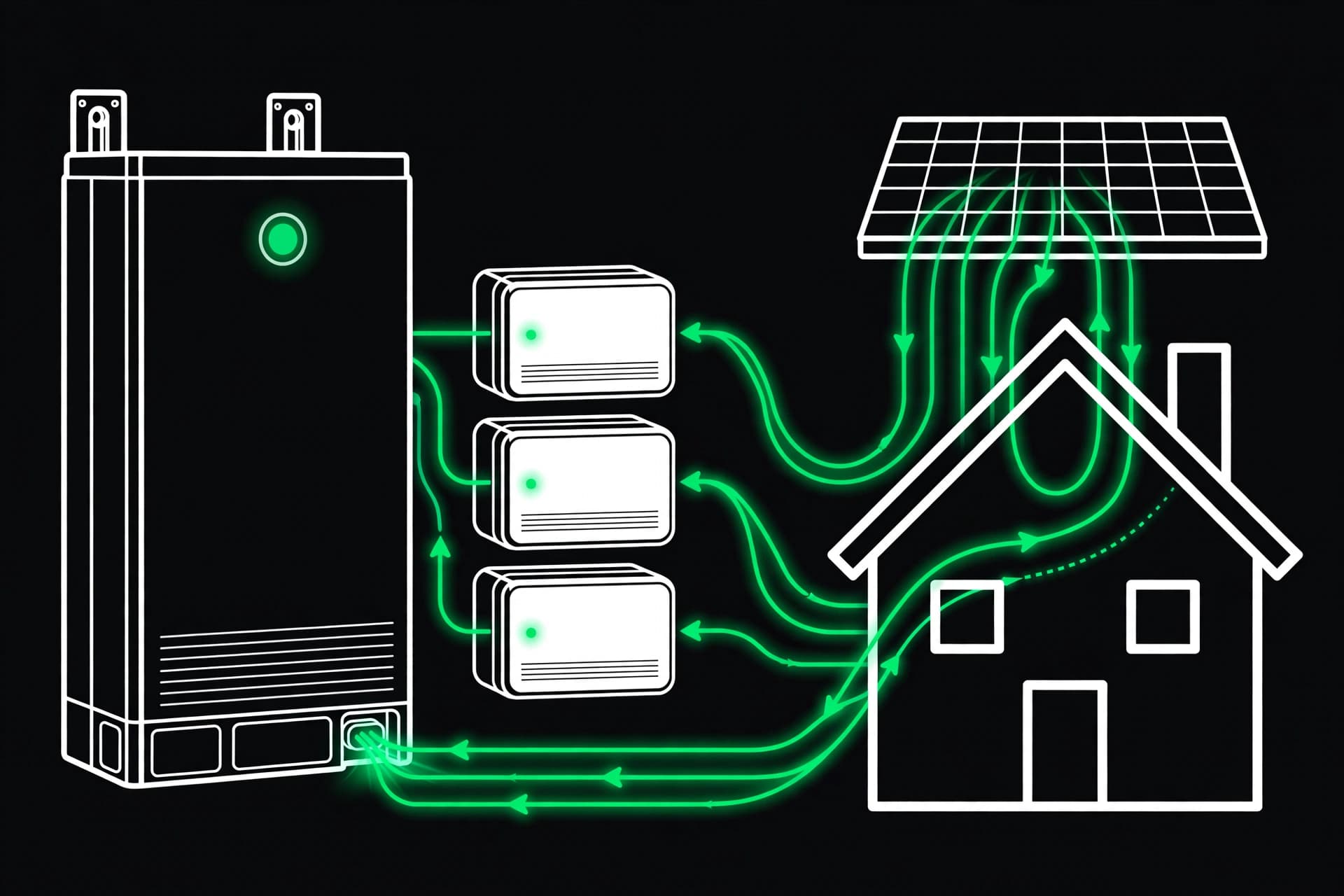
Stacking batteries scales both limits. Two Powerwall 3 units hold 27 kWh and share the starting surge, which covers compressors with nameplate ratings above a single unit limit, subject to the installer confirming the combined rating and the wiring. Tesla supports up to four Powerwall 3 units in one system, according to its specifications. Each additional unit adds the same 13.5 kWh, so runtime scales in direct proportion while the starting margin grows with each unit added. The practical limit for most homes is cost and wall space rather than electrical capacity, and installers will usually test the largest compressor first, then size the stack to the start, then check runtime against the outage the owner actually wants to ride through.
Other makers publish different load-start figures, and the comparison must stay on the same basis. Some makers quote a peak power in kilowatts for a stated number of seconds, others quote LRA, and a few quote neither and leave installers to test on site. A buyer comparing batteries for air conditioning backup should ask for the load-start rating in LRA or in amps for one second, at the installed voltage, and should ask the installer to record the air conditioner nameplate LRA in the proposal. A proposal that quotes only kilowatt-hours for a cooling backup job has answered the wrong question. For how grid-scale batteries handle the same power-versus-energy distinction at utility scale, see Battery Energy Storage Explained.
What the 185 LRA limit means for a larger compressor
A compressor nameplate above 185 LRA does not end the conversation. It changes the options. The owner can add a soft starter and retest, add a second battery, move the air conditioner to a load-managed circuit that starts it only when other large loads are off, or accept that the air conditioner stays off the backup panel and the battery covers everything else. Each option carries a different cost and a different failure mode. A soft starter can fail or be bypassed during service. A second battery adds runtime the owner may not need. Load management depends on controls working during the outage. Leaving the air conditioner off backup is the cheapest and most reliable option, and for a short outage in a mild climate it is often the right one.
Variable-speed systems change the calculation again. An inverter-driven compressor ramps its own speed and draws a far smaller startup surge than a fixed-speed compressor of the same tonnage, because the drive controls acceleration electronically. Owners replacing a fixed-speed system with a variable-speed system for efficiency reasons often gain battery compatibility as a side effect, without fitting any add-on device. The nameplate still governs, but the LRA figure on a variable-speed unit reflects a different starting profile, and the installer should confirm how the maker states it. Heat pumps in heating mode raise a parallel question in winter, since the same compressor starts against a heating load and the battery must also carry auxiliary heat strips if the system uses them. Auxiliary heat can draw 5 kW to 10 kW or more, which dwarfs the compressor load and should stay off the backup panel unless the battery stack was sized for it.
Testing beats theory. An installer can measure the actual startup current with a clamp meter during a simulated outage, with the battery carrying the backup panel and other loads in their outage state. That test, run before the owner relies on the system, catches the cases where the nameplate, the soft starter and the inverter rating interact in unexpected ways. A system that passes a simulated outage test on a mild day can still struggle on the hottest day of the year, when refrigerant pressures run higher and the compressor works harder, so a margin above the rating is worth keeping. The test result belongs in the handover paperwork, beside the nameplate figure and the soft starter model, so a later service visit does not undo a working combination.
Frequently asked questions
Can a battery backup start a central AC?
Often yes, when the compressor nameplate LRA sits at or below the battery inverter load-start rating and other large loads are not starting at the same moment. A nameplate above the rating, or several motors starting together, can trip the system even when the battery is fully charged.
Can a home battery run air conditioning during a blackout?
Yes, for a limited time. Runtime depends on the running load, the stored energy, solar recharge during daylight, and how often the compressor cycles. A single 13.5 kWh battery runs a 3 kW cooling load for about four and a half hours on its own, before other household loads are counted.
What is a soft starter for an air conditioner?
A soft starter ramps the voltage to the compressor motor over a short interval, lowering the peak startup current. It helps a battery inverter pass the one-second starting test. It does not add stored energy, and it should be fitted and exercised while grid power is available, with compatibility confirmed by an HVAC technician.
How do I find the LRA on my air conditioner?
Read the data plate on the outdoor condenser unit, beside the compressor ratings. The figure is labelled LRA. If the plate is weathered or inaccessible, an electrician or HVAC technician can read it, measure the startup current, or obtain it from the maker using the model and serial numbers.
Do I need two batteries to run air conditioning?
Not always. One modern battery with a high load-start rating can start many residential compressors, especially with a soft starter. Two batteries help when the compressor nameplate exceeds one unit rating, when several large motors share the backup panel, or when the owner wants cooling runtime beyond what one unit stores.
Sources: