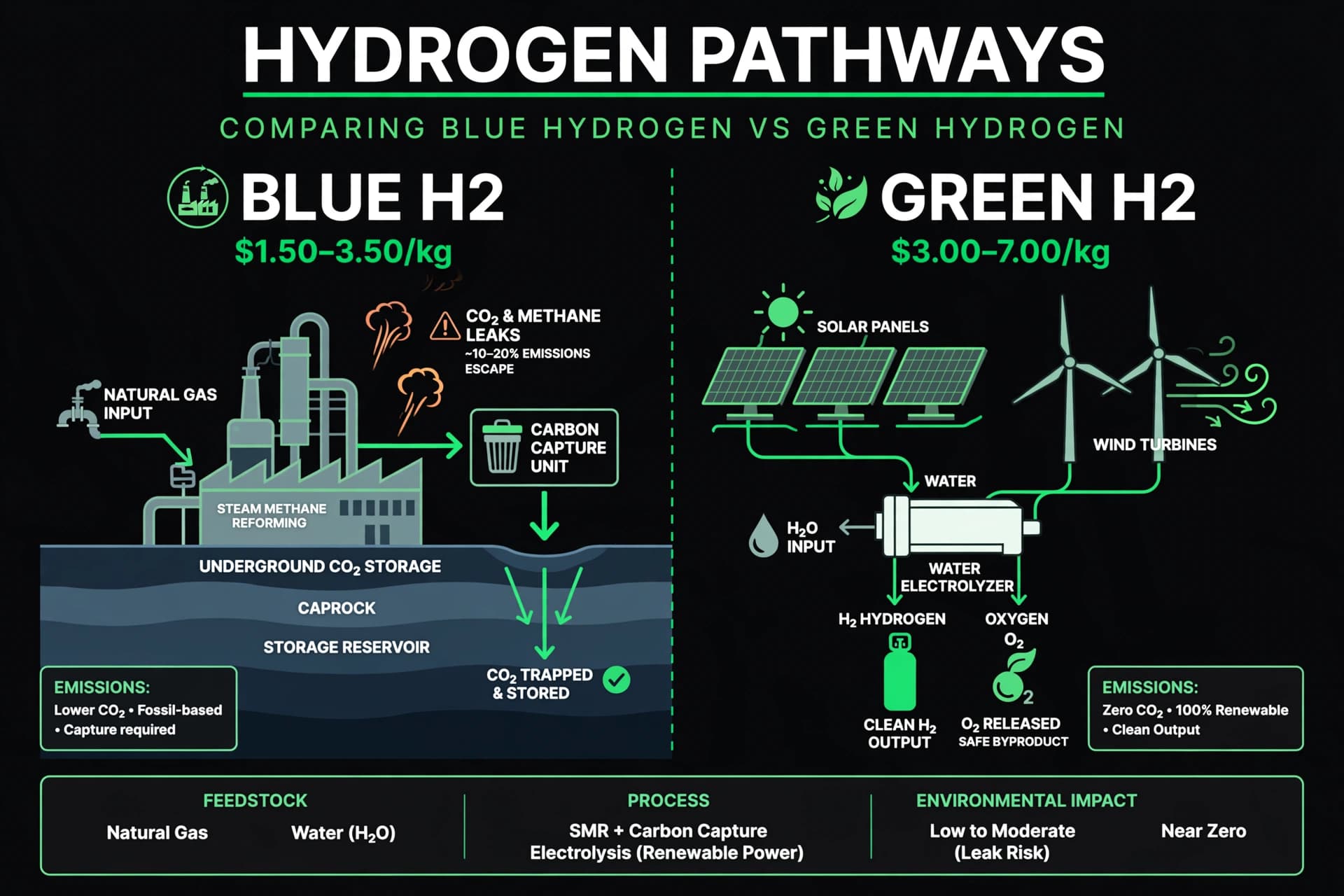
- Fuel-cell trucks undercut battery trucks by 45 to 55% on long-haul routes, according to a peer-reviewed study from ENEA and the University of Tuscia published in the International Journal of Hydrogen Energy.
- The crossover sits near 300 km a day: below it batteries win on efficiency and cost, above it the battery itself becomes the problem.
- Diesel remains the cheapest option outright, and hydrogen only reaches parity with diesel if green hydrogen falls to about USD 4 per kilogram.
Total cost of ownership (TCO): Everything a truck costs over its working life, purchase price plus fuel, maintenance and mid-life replacements such as a new battery pack. Levelised cost of transport (LCOT): That total cost divided by the freight moved, usually per tonne-kilometre, so trucks of different sizes can be compared fairly.
The crossover comes down to weight. A battery truck carries its fuel as mass, so every extra kilometre of range adds battery weight that eats into payload and adds purchase cost. A fuel-cell truck carries its energy as hydrogen, so extra range adds a slightly larger tank and more fuel, while the expensive part, the fuel cell, stays the same size. At 100 km a day the battery truck wins. At 700 km a day it loses by more than half.
The study, by researchers at ENEA and the University of Tuscia, compares five drivetrains across four weight classes from 3.5 to 44 tonnes and daily distances from 100 to 700 km: diesel, hydrogen combustion, battery electric, and two fuel-cell designs. It is the first comparison to put total cost of ownership and levelised cost of transport side by side for all five, and its conclusion is blunt. Diesel stays cheapest. Among zero-emission options, the winner depends on the route, and the dividing line is 300 km a day.
The 300 km crossover where hydrogen takes the lead
Fuel-cell trucks become competitive at daily mileages of 300 km and above, for vehicles up to 18 tonnes, the study finds. Depending on the vehicle category, the levelised cost of transport for a fuel-cell truck runs 45% to 55% lower than for a battery truck. On routes over 300 km with 3.5 to 18 tonne vehicles, hydrogen can cut costs by up to 55% against battery storage.
The gap grows with distance. At 100 km a day, battery trucks cost 14.4% more than fuel-cell trucks in the 18-tonne class and 4.9% more in the 44-tonne class. At 700 km a day, battery trucks cost more than 52% extra in both weight classes. The pattern is consistent: battery truck costs rise steeply with daily distance, while fuel-cell truck costs fall per unit of freight as distance grows, because the fixed cost of the vehicle spreads over more tonne-kilometres.
Battery trucks win only in a narrow corner. They beat fuel-cell trucks at very short ranges, around 100 km a day, and only when electricity is at its cheapest and hydrogen at its most expensive. Change either price and the advantage flips. A separate Finnish total-cost study reaches the same shape of answer from different data: batteries are the best option for small trucks on short routes under 200 km a day, while hydrogen suits long routes over 300 km a day and bigger trucks of 42 and 76 tonnes.
Batteries carry the weight penalty: 12 times the storage at 700 km
The reason is physical. The battery stack on a battery truck grows with the distance it must cover, and at 700 km a day it can be up to twelve times larger than the buffer battery in a constant-power fuel-cell truck, whatever the weight class. That battery must be bought twice in the truck’s life: once at purchase and again at a mid-life replacement, and the study points to those two purchases as the main reason battery costs rise with distance. Fuel-cell trucks face almost no mid-life intervention of that kind.
Payload is where the weight shows up in revenue. Battery trucks carry a lower payload than every other drivetrain at high daily mileage, and for the lightest class the effect is extreme: a 3.5-tonne battery truck has no payload left at all at 300 km a day, because the battery occupies the entire mass budget. The study excludes those zero-payload configurations from its cost charts, since they would produce infinite costs, and concludes that light commercial vehicles can hardly be decarbonised with batteries. Cargo-space utilisation for battery trucks runs from 27% at 100 km a day to 74% at 700 km, against 34% to 78% for the other drivetrains.
Variable-power fuel cells soften the problem from the hydrogen side. Letting the fuel cell follow the load instead of running at constant power cuts the buffer battery by 56.2% against a constant-power design, which is why variable-power trucks come out slightly cheaper than constant-power ones, especially in the lighter classes. For heavy trucks the gap between the two fuel-cell designs is small.
What $4 per kilogram of hydrogen would change
None of this makes hydrogen cheap today. The study estimates fuel-cell trucks reach parity with conventional powertrains if hydrogen is priced at USD 4 per kilogram, and hydrogen price is the dominant influence on the whole comparison. The International Council on Clean Transportation reached a similar number in its 2022 analysis of European long-haul trucks: fuel-cell trucks reach total-cost parity with diesel by 2030 if green hydrogen at the pump costs around EUR 4 per kilogram, with the break-even price ranging from EUR 3.5 per kilogram in Poland to EUR 5 per kilogram in the United Kingdom.
That price is a target for 2030. Green hydrogen must be made by electrolysis from renewable power, then compressed, stored and shipped, and every step adds cost. The Finnish study adds a second lever: hydrogen becomes more effective as fuel-cell costs fall toward a target of EUR 150 per kilowatt. Until hydrogen is both abundant and cheap, the fuel-cell truck carries a structural cost penalty that the battery truck does not, and the ENEA study is clear that diesel remains the cost-optimal option across most driving ranges and weight classes.
Maintenance points the other way. A review cited in the study finds maintenance costs lower for hydrogen trucks than for diesel trucks, and the same review found light and medium battery trucks started becoming cost-competitive with diesel around 2021, while heavy battery trucks are not expected to reach that point in the near future. The cost story is therefore two stories: hydrogen trucks cost more to buy and fuel, but less to keep running.
Efficiency still favours batteries by more than two to one
On pure energy use, batteries win by a wide margin. Transport and Environment puts the well-to-wheel figure at about 77% for a battery truck and about 30% for a fuel-cell truck: of every unit of renewable electricity generated, roughly three quarters reaches the wheels of a battery truck and under a third reaches the wheels of a fuel-cell truck, with the rest lost to electrolysis, compression and the fuel cell itself. A battery truck is therefore roughly two and a half times more energy-efficient than a fuel-cell truck. (Joule Post arithmetic from the Transport and Environment figures, 77 divided by 30.)
That efficiency gap is the strongest argument for batteries, and it is also the reason the cost result surprises people. A fuel-cell truck wastes more than twice the energy, yet costs less per tonne-kilometre on long routes, because the battery needed to cover those routes is so large and so expensive that its purchase and replacement outweigh the fuel savings. Energy efficiency decides the fuel bill. It does not decide the total cost, because the truck itself is part of the cost.
The two technologies also differ in what they demand from infrastructure. Battery trucks need high-power charging at depots and along routes, and a truck that charges for hours is a truck that is not earning. Fuel-cell trucks refuel in minutes at a hydrogen station, but the stations barely exist outside a few corridors. Neither infrastructure is ready at scale, and the study’s cost numbers assume the fuel is available at the stated price, which is itself a large assumption for hydrogen.
Where each truck wins: a fleet buyer’s map
The practical answer for a fleet operator falls out of the numbers without much ambiguity. Short urban and regional routes under 200 km a day, with depot charging overnight, belong to battery trucks: cheaper energy, simpler drivetrain, and a battery small enough to leave payload intact. Long-haul routes over 300 km a day, especially with heavy loads and tight schedules, belong to fuel-cell trucks, provided hydrogen is available near the route at a price close to USD 4 per kilogram. Between 200 and 300 km sits a contested middle where the winner depends on local electricity and hydrogen prices, and on whether the truck can charge during loading or driver breaks.
Light commercial vehicles deserve a separate answer. The study’s zero-payload finding for 3.5-tonne battery trucks at 300 km a day means a small electric van cannot do a long day’s work and still carry a load, which pushes light-duty decarbonisation toward hydrogen or toward rethinking the duty cycle itself, with relay depots or smaller service areas. Joule Post’s guide to how long EV batteries last covers the degradation data behind battery sizing, and the green ammonia guide explains how hydrogen itself could be shipped cheaply enough to reach the USD 4 price, since ammonia carries hydrogen across oceans for USD 2 to 3 per gigajoule.
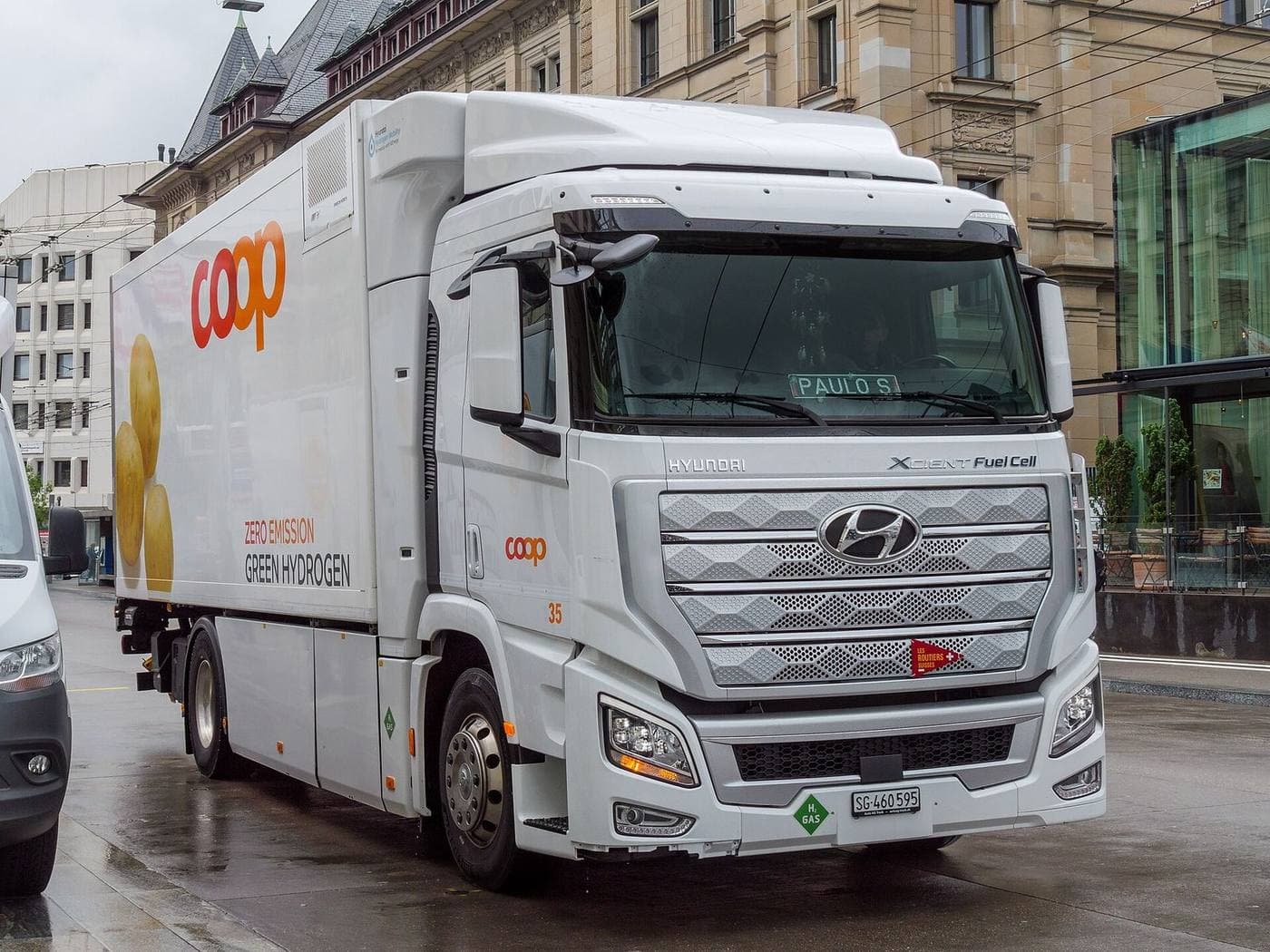
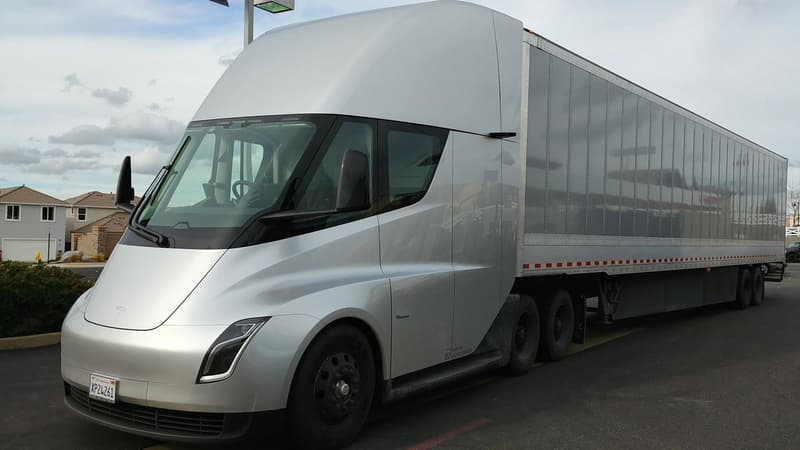
The market will not wait for a single winner. Battery trucks already dominate the vehicles on the road, with the Tesla Semi, Mercedes eActros 600 and Volvo FH Aero Electric in service, while hydrogen trucks from Hyundai and others run in smaller numbers on corridors where refuelling exists. The ENEA study suggests that split is roughly right: batteries for the short work, hydrogen for the long work, and diesel still doing most of the miles until one of the two closes its price gap. See how grid batteries work for why battery costs keep falling, which is the trend that could move the 300 km line.
| Metric | Battery truck | Fuel-cell truck |
|---|---|---|
| Well-to-wheel efficiency (Transport and Environment) | About 77% | About 30% |
| Best daily range | Under 200 km a day | Over 300 km a day |
| Levelised cost of transport vs rival | 45–55% higher than fuel-cell on long hauls | 45–55% lower than battery on long hauls |
| Cost premium at 700 km a day | More than 52% above fuel-cell (18 t and 44 t) | Baseline |
| Battery size at 700 km a day | Up to 12x the fuel-cell truck’s buffer battery | Small buffer battery only |
| Payload, 3.5 t class at 300 km a day | Zero (battery fills the mass budget) | Full payload retained |
| Parity price for hydrogen | Not applicable | About USD 4/kg (ENEA); about EUR 4/kg (ICCT) |
Frequently asked questions
Are hydrogen trucks better than electric trucks?
It depends on the route. Battery trucks are better under about 200 km a day, where their efficiency and lower energy cost dominate. Hydrogen trucks are better over about 300 km a day, where the battery needed for the distance becomes too heavy and too expensive. Diesel remains cheaper than both for now.
What does a hydrogen truck cost per kilometre?
The ENEA study reports relative costs rather than a single per-kilometre price, because the answer moves with hydrogen price, electricity price and daily distance. Its headline numbers are that fuel-cell trucks run 45 to 55% cheaper per tonne-kilometre than battery trucks on long hauls, and reach parity with diesel if hydrogen costs about USD 4 per kilogram.
Why are hydrogen trucks expensive?
Two reasons: the fuel and the fuel cell. Green hydrogen is costly to produce, compress and distribute, and the fuel-cell stack plus hydrogen storage make up most of the truck’s purchase price. Costs fall if hydrogen reaches about USD 4 per kilogram and fuel cells approach EUR 150 per kilowatt, the target in the Finnish total-cost study.
Do hydrogen trucks emit anything?
A fuel-cell truck emits only water vapour from its tailpipe. The climate benefit depends on how the hydrogen is made: only hydrogen produced from renewable electricity, green hydrogen, delivers the full emissions saving.
Sources
- Loreti et al., Technical assessment and economic analysis of zero-carbon freight road transportation vehicles, International Journal of Hydrogen Energy 212 (2026) 153707, ENEA and University of Tuscia, January 2026 (study PDF, DOI 10.1016/j.ijhydene.2026.153707)
- Fuel-cell hydrogen long-haul trucks in Europe: a total cost of ownership analysis, International Council on Clean Transportation, September 2022
- Total cost of ownership analysis for hydrogen and battery powertrains: a comparative study in Finnish heavy-duty transport, ScienceDirect, 2024
- Umicore on hydrogen and battery vehicle efficiency, Umicore, citing Transport and Environment lifecycle data
- Long-haul freight transport, hydrogen-powered trucks become more competitive than battery-powered ones: the ENEA study, HydroNews, 5 June 2026