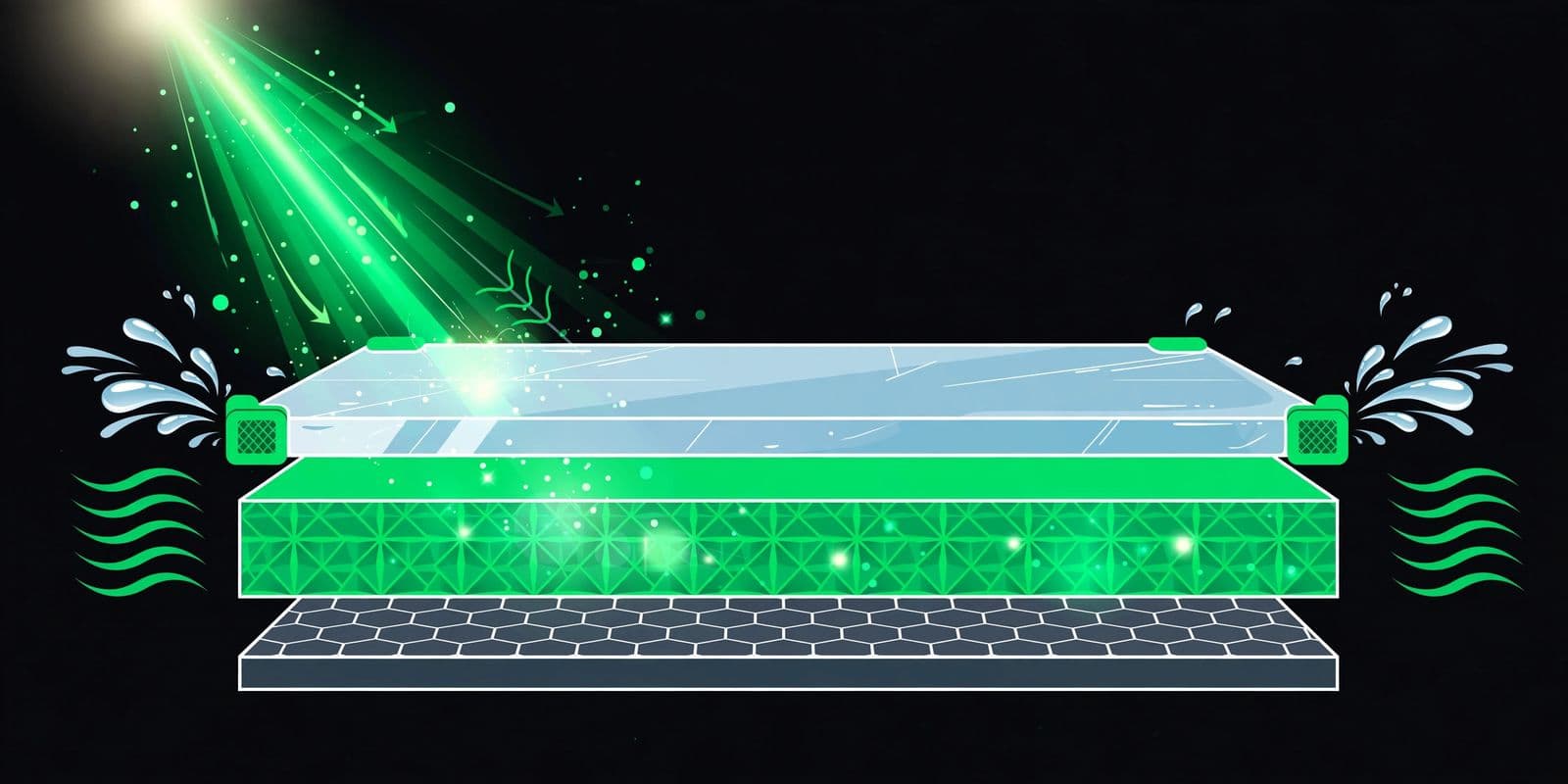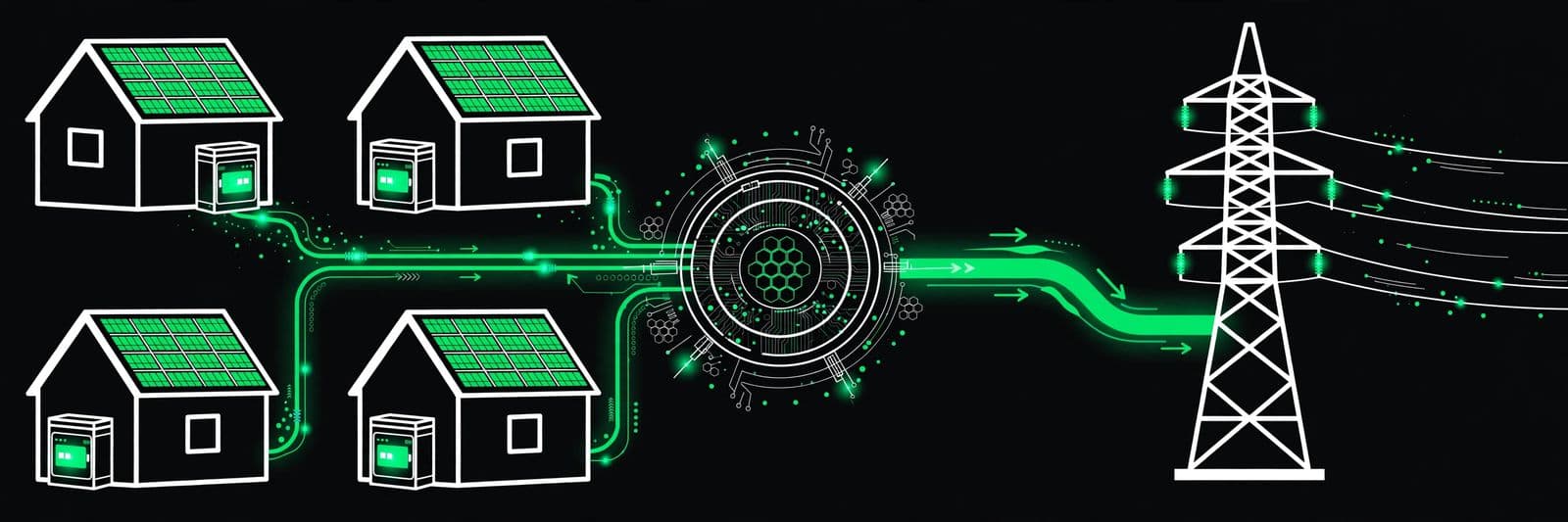
- FERC Order 2222 requires US grid operators to let aggregations of small solar, battery, and EV-charging resources sell into wholesale electricity markets.
- ISO New England opened DER aggregation registration on November 1, 2026, six years after the rule was issued.
- Homeowners never bid directly: a DER aggregator bundles their resources into a 100 kW minimum block and shares the payment.
FERC Order 2222: the 2020 federal rule that opened the organized electricity trade to bundles of small, customer-owned resources. Under it, household solar panels, storage units, EV chargers, and smart thermostats can earn money for grid services they could never offer on their own.
ISO New England opened registration for distributed energy resource aggregations on November 1, 2026, six years after FERC issued the rule that required it. The gap shows the hard part of FERC Order 2222: the rule itself is short, while rebuilding market software, tariffs, metering, and utility coordination across six grid operators takes years. California finished first, New York runs a partial program, New England has just gone live, and the three other operators phase in through 2030. For a homeowner with solar panels or a battery, the rule changes who can get paid for grid services.
Wholesale markets were built for power plants. A single rooftop array or home battery is too small to meet the minimum size and performance rules that grid operators set, and the cost of registering and metering one small resource would exceed any payment it could earn. Order 2222 answers that mismatch with aggregation: bundle dozens of small resources into one market participant, pay the bundle, and let the aggregator split the money. The aggregator is the direct participant, and the homeowner participates through a contract with it.
What FERC Order 2222 requires
The Federal Energy Regulatory Commission issued Order No. 2222 on September 17, 2020, and updated it with Order No. 2222-A on March 18, 2021 and Order No. 2222-B on June 17, 2021. The order covers distributed energy resources: battery storage, rooftop solar, smart thermostats, energy efficiency measures, thermal storage such as ice storage, and electric vehicles with their charging equipment. Each grid operator, a regional transmission organization or independent system operator, must write tariff rules letting aggregations participate directly in the distributed energy resources wholesale market for energy, capacity, and ancillary services.
Aggregations can be as small as 100 kW. Operators must set locational rules for where resources in one aggregation can sit, metering and telemetry rules for measuring what each resource did, and coordination rules between the grid operator, the aggregator, the distribution utility, and the state or local regulator. The distribution utility owns the wires the resources connect to, and FERC said the coordination rules should protect safety and reliability without creating barriers to entry. Resources can also keep participating in retail programs, such as net metering and demand response, alongside wholesale participation.
One region sits outside the rule. Order 2222 does not apply in Texas, because ERCOT, the Texas grid operator, is not within FERC jurisdiction. ERCOT runs its own pilot program for aggregated distributed resources.
Where each grid operator stands
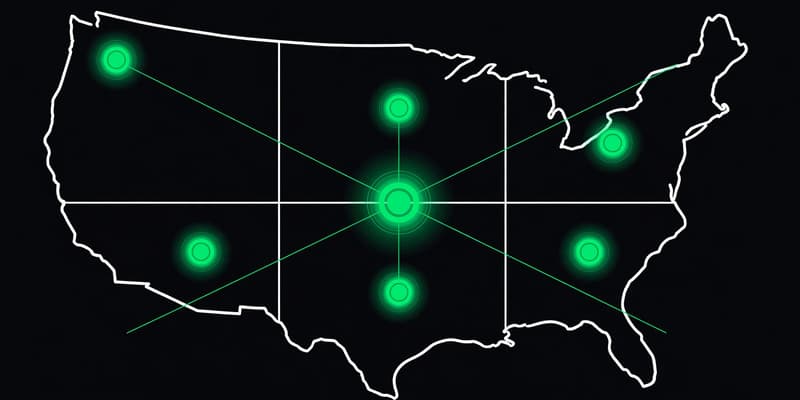
Six years after the order, the six operators sit at different points on the same road; the table records the status as of November 10, 2026.
| Grid operator | Status, November 10, 2026 | Key date |
|---|---|---|
| CAISO (California) | Live | Framework completed November 2024 |
| ISO New England | Live | ISO-NE DERA registration opened November 1, 2026 |
| NYISO (New York) | Partially live | Launched April 2024; full compliance December 31, 2026 |
| PJM (Mid-Atlantic and Midwest) | In progress | Capacity from February 1, 2027; full model February 1, 2028 |
| MISO (Central US) | Phased to 2030 | Enrollment June 1, 2029; markets January 1, 2030; capacity June 1, 2030 |
| SPP (Plains and South Central) | Phased to 2030 | Compliance filing advanced in 2026; implementation running toward 2030 |
| ERCOT (Texas) | Not covered | Outside FERC jurisdiction; separate pilot program |
New York shows why the dates kept moving. NYISO launched its DER participation model in April 2024, the first in the country, but FERC approved a 10 kW minimum size for an individual resource, a threshold that excludes most residential systems. FERC later extended NYISO’s full-compliance deadline to December 31, 2026, and on October 31, 2025 it accepted filings letting technically capable DERs provide operating reserves and regulation service. PJM, the largest operator, has been the slowest: capacity participation starts February 1, 2027 for the delivery year running June 1, 2028 to May 31, 2029, and the full model follows on February 1, 2028. A FERC concurrence records that PJM needs at least 24 months from approval of the major outstanding filings to build, test, and run the model.
Nine Powerwalls to clear the 100 kW bar
The 100 kW minimum turns a policy idea into a headcount. Joule Post arithmetic: a Tesla Powerwall 3 delivers 11.5 kW of continuous power and stores 13.5 kWh of energy, according to Tesla’s 2025 North America datasheet. Nine Powerwall 3 units at full continuous output deliver 103.5 kW, just over the minimum, so nine homes with one battery each form the smallest possible aggregation of that type. The energy math tells the same story from the other side: an aggregation holding 100 kW for one hour delivers 100 kWh, the stored energy of about seven and a half Powerwall 3 units.
The same arithmetic scales up. ISO New England’s rules say a single resource or aggregation of 5 MW or more at one node must participate as a standalone resource or through a more geographically limited aggregation. Joule Post arithmetic: 5 MW equals 5,000 kW, or fifty aggregations of the 100 kW minimum. The operator wants bundles big enough to manage and small enough to locate precisely. Solar-only aggregations face a steeper climb, since a rooftop array produces only while the sun shines, which is why batteries and controllable loads such as smart thermostats and EV chargers strengthen a bundle: they can respond when the operator calls, day or night.
What an aggregator does with your battery
Joining a wholesale market means signing with an aggregator, not with the grid operator. The aggregator registers the aggregation, proves it can meet the minimum size and performance rules, submits offers into the energy, capacity, and ancillary service markets, and settles the payment. Money flows from the market to the aggregator, then to each resource under its contract. FERC’s explainer stresses that the aggregator is the single point of contact with the grid operator.
ISO New England’s design shows how detailed the plumbing gets. It defines seven participation models, including settlement-only aggregations, demand-response aggregations, binary and continuous storage facilities, and an alternative technology regulation resource model. A settlement-only aggregation can inject and withdraw power in capacity and energy markets, while dispatchable models can also follow operator instructions in real time. Each model carries its own metering, location, and activation rules. Homeowners who want the fuller picture of what a battery earns in these programs should read our guide to whether a virtual power plant pays for a home battery and the Tesla Powerwall 3 expansion packs that add capacity to an existing system.
The limits owners should know before signing up
Wholesale participation adds an income stream; it does not replace the programs owners already use. FERC’s explainer notes that state, local, and utility programs such as solar net metering and demand response remain important and will likely continue, with Order 2222 adding market opportunities on top. The retail-wholesale payment split depends on the state and the utility, and an owner cannot collect twice for the same kilowatt-hour. The aggregator’s contract decides how market revenue is shared, what the aggregator keeps for its costs, and how often the battery cycles, which affects its lifespan.
Location rules are the second limit. An aggregation must sit within the locational boundaries the operator sets, usually a pricing node or a defined zone, so a neighbor two towns away may not be able to join the same bundle. Metering is the third: the operator needs to verify what each resource delivered, and the requirements can exclude older equipment that cannot report on schedule. Owners should ask an aggregator three questions before signing: which market products the aggregation sells into, how the revenue split works, and how many extra battery cycles the program expects each year. No operator publishes a standard earnings rate for a home battery. Time-of-use pricing still shapes most of a home battery’s daily value, as our guide to time-of-use rates and solar battery strategy explains.
What to do if you own solar or a battery
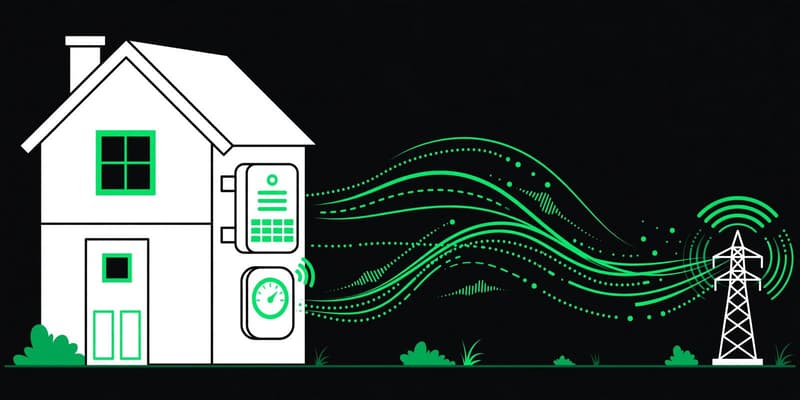
The first step is geography. Owners in California and New England live where registration is open now, and owners in New York can join a program already running while full compliance finishes at the end of 2026. Owners in PJM, MISO, and SPP territory wait for phased rollouts that reach into 2030, and owners in Texas follow the ERCOT pilot instead. A homeowner who does not know their operator can check its territory map, since boundaries follow utility service areas rather than state lines.
The second step is the aggregator conversation: ask which operators the company is registered with, which participation models it uses, and what happens to the contract if the owner sells the house. The third step is the equipment check: a battery with remote metering and a smart inverter clears the technical bar more easily than older hardware, and a controllable EV charger counts as a resource. Order 2222 will not pay a homeowner tomorrow in most of the country, but where the door is open, the homeowners who registered first are the ones whose batteries are already bidding.
Frequently asked questions
What is FERC Order No. 2222?
It is a rule the Federal Energy Regulatory Commission issued on September 17, 2020, with updates on March 18, 2021 and June 17, 2021, that requires the six grid operators under its jurisdiction to let aggregations of small distributed energy resources participate in wholesale electricity markets. A single rooftop array or home battery is too small to bid alone, so the rule lets an aggregator bundle many small resources into one market participant.
Why might FERC Order No. 2222 be important for you?
If you own rooftop solar, a home battery, a smart thermostat, or an EV charger, the rule can turn that equipment into a source of wholesale market payments. You participate indirectly, through a DER aggregator that bundles your resource with others, meets the 100 kW minimum, and shares the market compensation with you under a contract.
What does Order No. 2222 do?
It removes the barriers that kept small resources out of wholesale markets. It requires grid operators to accept aggregations as small as 100 kW, set locational, metering, and telemetry rules for them, and coordinate with distribution utilities and state regulators without creating barriers to entry. Resources can also keep participating in retail programs such as net metering.
Does Order 2222 apply in Texas?
No. The order does not apply in the ERCOT region because ERCOT is not within FERC jurisdiction. ERCOT runs its own pilot program for aggregated distributed energy resources.
Sources
- FERC Order No. 2222 Explainer: Facilitating Participation in Electricity Markets by Distributed Energy Resources, Federal Energy Regulatory Commission, covering the September 17, 2020 order and its 2021 updates
- FERC Order No. 2222: Distributed Energy Resource Aggregations Participation in Wholesale Markets, ISO New England, last updated November 4, 2026
- ISO NE Opens Wholesale Market to Smaller Distributed Energy Resources, EnerKnol, November 3, 2026
- NYISO launches first-in-nation DER integration program in move toward FERC Order 2222 compliance, Utility Dive, April 19, 2024
- FERC Grants NYISO Three Year Extension in Implementing Order 2222, JD Supra
- Commissioner Christie’s Concurrence on PJM’s Order No. 2222 Third Compliance and Section 205 Filings, Federal Energy Regulatory Commission
- FERC Order 2222 and DER Policy Implementation Reports, FERC2222.org, 2026 reports
- Field digest: FERC Order 2222, the go-live countdown, ebungo, September 21, 2026
- Powerwall 3 Datasheet, North America, Tesla, 2025