- The Justice Department asked a federal court on 20 October 2026 to send the New England Wind construction approval back to the Interior Department for reconsideration.
- New England Wind is the fourth project caught in this remand approach in recent weeks, after Revolution Wind, Maryland Offshore Wind and Atlantic Shores.
- Our calculation puts the three capacity-reported targets at 5,504 megawatts combined, with New England Wind alone accounting for 47.2 percent of that total.
The Justice Department filing, as reported by the Associated Press, argued that the plan had been approved despite major adverse impacts and that the approval did not adequately explain how it satisfied the factors in the Outer Continental Shelf Lands Act. The approval at issue was announced on 1 July 2024, according to the Justice Department memorandum quoted by Saving Seafood.
The request does not by itself cancel the approval. A remand returns a decision to the agency that made it so the agency can review it again and, potentially, reach a different decision. A project can sit in legal limbo for months. For background on the technology at stake, see how wind turbines work.
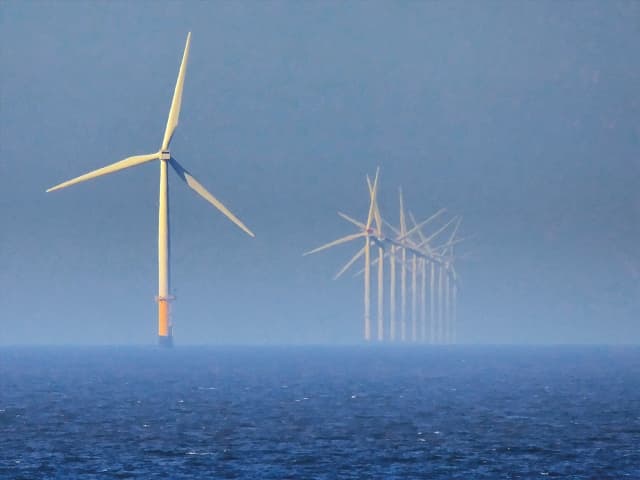
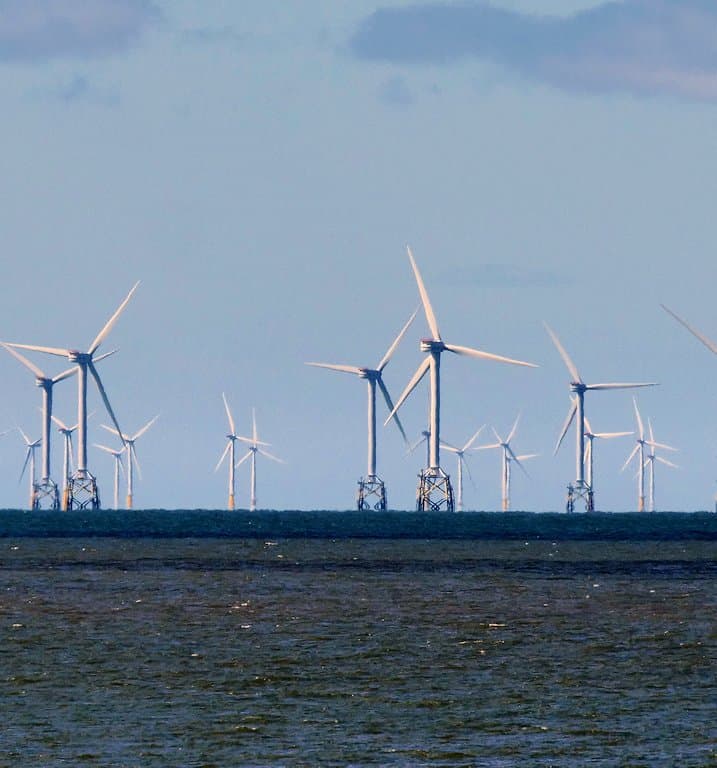
Avangrid New England Wind is planned in two phases off Massachusetts, about 20 nautical miles south of Martha’s Vineyard and about 24 nautical miles southwest of Nantucket. The approved plan covers up to 129 turbines with capacity of up to 2,600 megawatts, enough to power more than 900,000 homes a year, according to the project record described in AP reporting. Construction has not begun, and Avangrid, a US subsidiary of Iberdrola, declined to comment.
The approval was challenged by ACK for Whales, a group of Nantucket residents concerned about the effects of offshore wind development, in the US District Court for the District of Columbia. Interior said the filing followed a briefing schedule and was not a policy change announcement.
How the New England Wind permit remand fits the wider pattern
Canary Media described the filing as the latest step in a widening effort to reopen approvals already granted. The administration had already sought reconsideration of the permit for Revolution Wind, a 704 megawatt project off Rhode Island and Connecticut, and for Maryland Offshore Wind near Ocean City, Maryland. Canary Media put Maryland at 1.7 gigawatts, while Utility Dive reported 2.2 gigawatts, a gap that changes any total by 500 megawatts and should not be hidden behind a single total.
Atlantic Shores off New Jersey is the fourth target named in AP and TradingView reporting. AP reported that a judge granted the administration’s request to reconsider the Atlantic Shores permit in August 2026, and Canary Media reported that Interior confirmed on 30 September 2026 that it was reviewing those approvals. This article states no capacity figure for Atlantic Shores, because none was verified in the sources opened for this report.
Revolution Wind shows why the tactic has drawn sharp reactions. Utility Dive reported that it had completed offshore construction and had been delivering power to New England’s grid since March 2026, and Canary Media likewise described it as already generating power. A separate account carried by Saving Seafood said instead that it should complete commissioning by the end of this year. This article reports that disagreement rather than smoothing it over. Sources agree on capacity: about 700 megawatts, reported as 704 by Canary Media and 700 by Utility Dive.
What 5.5 GW of reopened approvals means for permitting
The table below is Joule Post’s own arithmetic from the sources opened for this article, using Utility Dive’s figures, with the total under Canary Media’s lower Maryland figure shown for comparison.
| Project | Location | Reported capacity | Status reported |
|---|---|---|---|
| New England Wind | Off Massachusetts | 2,600 MW | Approved July 2024; construction not begun |
| Maryland Offshore Wind | Off Maryland | 2,200 MW (Utility Dive); 1,700 MW (Canary Media) | Approved December 2024; construction not begun |
| Revolution Wind | Off Rhode Island and Connecticut | 704 MW (Canary Media); 700 MW (Utility Dive) | Construction complete; reported as delivering power since March 2026 |
| Total, three projects (Utility Dive figures) | 5,504 MW | ||
| Total, three projects (Canary Media Maryland figure) | 5,004 MW |
Three calculations follow, all Joule Post’s own. First, New England Wind at 2,600 megawatts is 47.2 percent of the 5,504 megawatt total, and 52.0 percent of the lower 5,004 megawatt total. Second, it is about 3.7 times the size of Revolution Wind at 704 megawatts. Third, dividing its stated output of more than 900,000 homes by 2,600 megawatts gives about 346 homes per megawatt, a rough check on claimed scale rather than a precise estimate, since actual homes powered will depend on wind conditions and availability.
Against a single-project benchmark, the scale is clear. New England Wind alone is larger than the other two capacity-reported targets combined if Maryland is counted at Canary Media’s 1.7 gigawatts, and nearly as large as those two combined even at Utility Dive’s higher Maryland figure. That is why this filing carries weight beyond one Massachusetts project: it puts the largest single block of capacity in this sequence back into an agency review whose outcome is not yet known.
The permitting bill at risk
The political consequence arrived within a day. Senator Sheldon Whitehouse, a Rhode Island Democrat and a sponsor of the Bipartisan American Affordability and Jobs Act, said in a statement on 21 October 2026: “This is how you blow up a permitting deal.” The quote was reported by both Utility Dive and AP. The bill, unveiled in September 2026, aims to speed up permitting reviews for energy and infrastructure projects, and a Senate deal on it had been reached in September but had not yet come to a vote.
Whitehouse’s warning points to a tension at the centre of the dispute. A permitting reform deal depends on developers trusting that an approval, once granted after years of review, will stand. An offshore wind permit reopened years after approval tests that trust directly. Tony Irish, senior counsel at Public Employees for Environmental Responsibility and a former Interior Department lawyer, told Canary Media that the approach could create uncertainty for already approved and operational projects of many kinds, including transmission lines. Pasha Feinberg, an offshore wind strategist at the Natural Resources Defense Council, told Canary Media that the tactic was part of a pattern intended to prevent the buildout of offshore wind. The administration has argued through its filings that the earlier approvals may have violated the Outer Continental Shelf Lands Act and must be reassessed.
What happens next for US offshore wind projects
Three questions will decide how far this sequence goes: what the courts do with the remand requests (the Maryland filing sought remand without vacatur, leaving the approval in place during review); what Interior does on reconsideration (reaffirm, modify conditions, or move to vacate, each facing fresh legal challenge); and whether Congress still passes permitting reform after a fight over existing approvals.
For households and developers, the practical effect is delay layered on delay. Projects that had cleared federal review must now budget for a second round of legal risk, priced into financing whether or not any approval is ultimately withdrawn. For readers weighing small-scale wind at home against utility-scale projects, see whether home wind turbines are worth it in 2026. A home turbine faces no federal approval of this kind, but it also cannot deliver power at anything like the scale of 2,600 megawatts.
The deeper point is about the durability of a permit itself. If an approval granted in 2024 can be sent back in 2026 because a new administration reads the same statute differently, then every future developer must treat the approval date as the start of a new risk period, not the end of one. Until that reading is tested in court, the offshore wind remand tactic gives opponents of any large project a second route to the result they failed to achieve the first time.
Sources: Canary Media on the remand tactic, Utility Dive on the revocation motions, AP reporting carried by Barchart, Saving Seafood on the fourth target and TradingView and Seeking Alpha on the reconsideration request. The $14.6 billion cost figure in the last of those is single-source and is not used here.