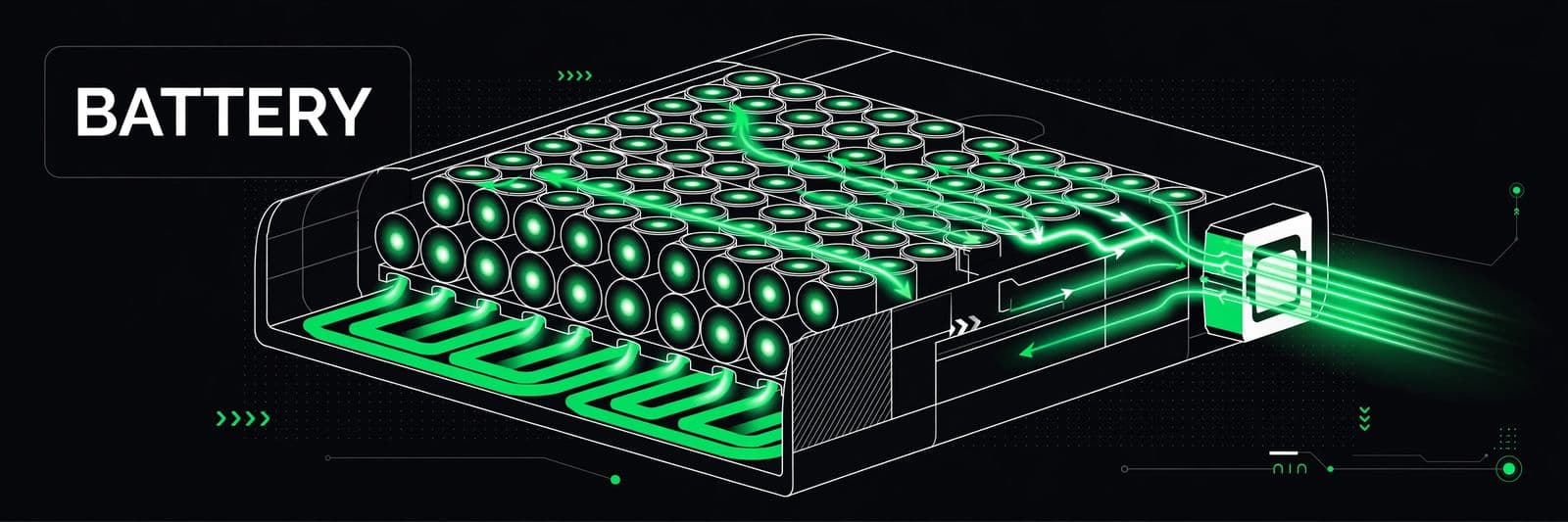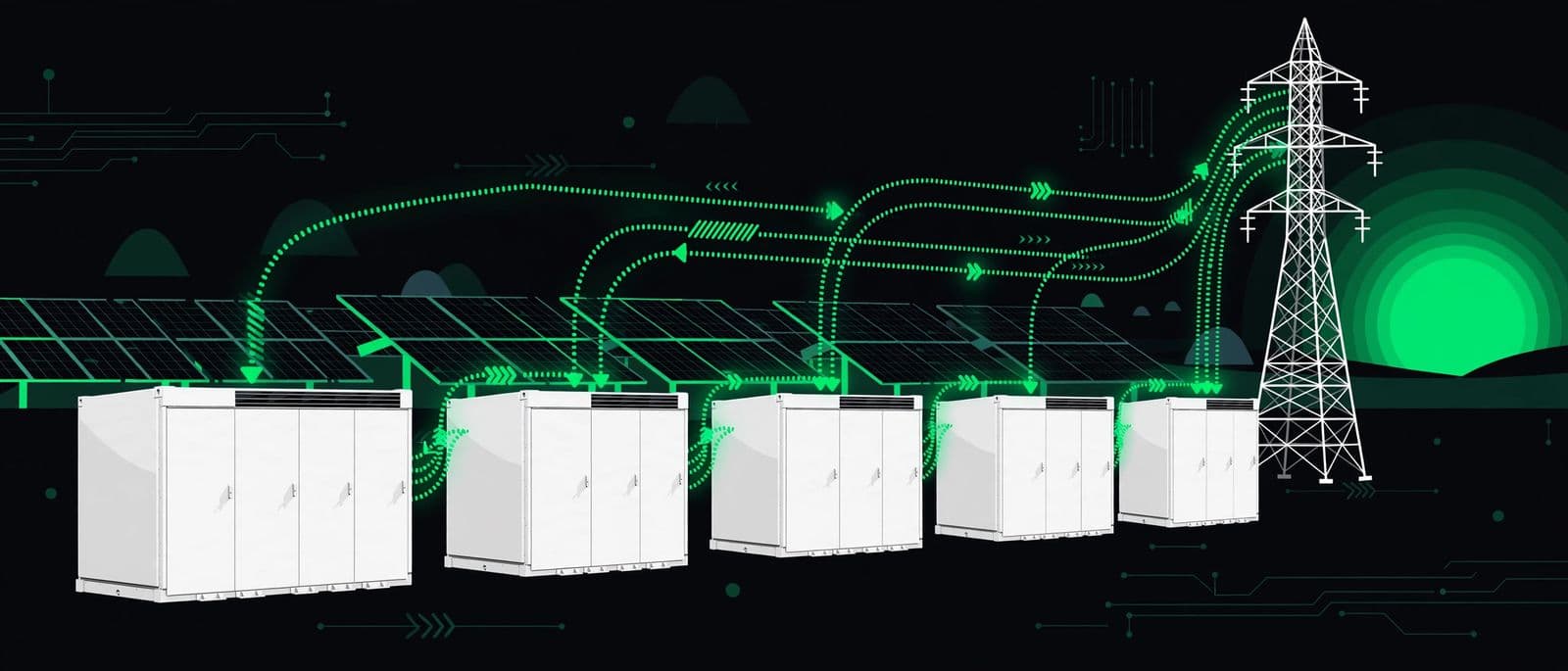
- A Tesla Megapack 3 stores 5 MWh in a single container-sized unit, up from 3.9 MWh in the Megapack 2 XL, with pricing estimated near $1.39 million per unit.
- Joule Post arithmetic puts the Megapack 3 at $278 per kWh of storage before installation, and 200 units at $278 million for a full 1 GWh fleet.
- Utilities deploy Megapack fleets to replace gas peaker plants and shift solar power into the evening peak, with 31.4 GWh of Tesla storage deployed in 2024 alone.
Tesla Megapack: A container-sized lithium iron phosphate battery system that holds electricity at grid scale. Utilities connect many units together so the stored energy can be released when demand peaks, which turns midday solar power into evening supply on the grid.
Contents
- What a Tesla Megapack Is
- Tesla Megapack Cost per kWh, Unit by Unit
- How Many Megapacks Make a Gigawatt-Hour
- Megapack vs Powerwall: 370 Home Batteries in One Box
- How Utilities Use Megapack Fleets to Replace Gas Peakers
- What the $278 per kWh Figure Means for Evening Solar
- Megapack 3 and Megablock: What Changed in 2026
- Safety, Warranty and the 15-Year Clock
- Frequently asked questions
The Tesla Megapack cost that matters to a utility is not the sticker on one container. It is the price of a pre-assembled system that arrives with its inverter, thermal management and trading software already installed, and the revenue that system earns by buying cheap midday solar and selling it back during the evening peak. That revenue depends on two numbers the headline price hides: the cost of installation, and the number of cycles the battery survives before its capacity fades.
Tesla launched the Megapack in July 2019 as a pre-assembled utility battery, and the product has since become the default building block for large storage projects in the United States, Australia and Taiwan. Each unit arrives with its battery modules, inverter, thermal management and controls already installed, so a site crew connects containers rather than assembling cells. Tesla reported 31.4 GWh of total energy storage deployments in 2024, up from 14.7 GWh in 2023 and 6.5 GWh in 2022, a growth curve driven almost entirely by Megapack fleets.
What a Tesla Megapack Is
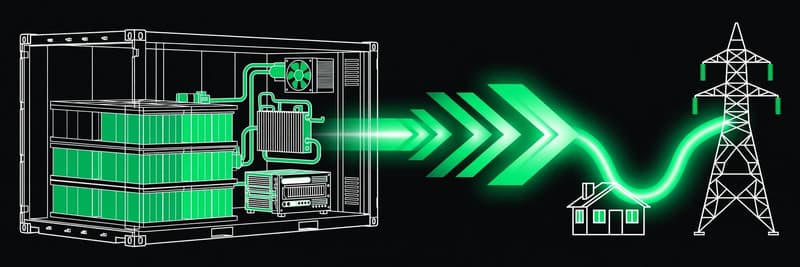
A Megapack is a lithium-ion battery the size of an intermodal shipping container, built for utilities rather than homes. Tesla describes it as pre-assembled, including “battery modules, bi-directional inverters, a thermal management system, an AC main breaker and controls.” The container arrives ready to connect, which cuts months off construction compared with building a battery hall cell by cell. A Megapack 2 XL measures about 8.8 metres long, 2.8 metres tall and 1.65 metres deep, and weighs 38,100 kg. The newer Megapack 3 keeps a similar footprint while holding more energy inside it.
The chemistry matters as much as the size. Next-generation Megapacks use prismatic lithium iron phosphate (LFP) cells, the same chemistry that now dominates utility storage because it tolerates thousands of cycles and carries a lower fire risk than nickel-based chemistries. Tesla sources LFP cells from CATL and from LG Energy Solution, which is building a $4.3 billion LFP supply line in Lansing, Michigan, to feed Megapack 3 production from 2027. The LFP choice also removes cobalt and nickel from the supply chain, which simplifies sourcing at the volumes utilities now buy.
Each Megapack runs on Tesla software. The company pairs the hardware with its Autobidder trading platform, which bids a battery fleet into wholesale energy and frequency markets, and Powerhub, which monitors the fleet. That software layer is part of the product: a utility buys storage capacity and a machine that decides, minute by minute, when to charge and when to discharge for the best return.
Tesla Megapack Cost per kWh, Unit by Unit
Tesla does not publish a single public list price for Megapack, and project prices vary with volume, delivery timing and site work. The figures below come from Tesla’s published specifications and configurator data, compiled in the Megapack specification record. They cover the unit only, before installation, taxes and balance-of-system costs, which is the comparison buyers actually use when they shortlist hardware.
| Model | Capacity | Rated power | Unit cost | Cost per kWh | Round-trip efficiency |
|---|---|---|---|---|---|
| Megapack (2019) | 2.6 MWh | 1 MW | $1.24 million | $477 | Not published |
| Megapack 2 | 3.854 MWh | 1.284 MW | $1.47 million | $381 | 92.0% |
| Megapack 2 XL | 3.916 MWh | 1.927 MW | $1.39 million | $355 | 85-90% |
| Megapack 3 (2026) | 5 MWh | Not yet published | About $1.39 million (estimate) | $278 | 91% |
The table shows a clear pattern. The cost per kWh fell from $477 on the original unit to $278 on the Megapack 3, a 42 percent drop across three generations, while capacity per container nearly doubled from 2.6 MWh to 5 MWh. The Megapack 3 price is an estimate at the same level as the 2 XL, and Tesla has not published a separate list price for it. Even so, the direction is unambiguous: each generation stores more energy in the same steel box, so the cost of each stored kilowatt-hour keeps falling while the cost of the box stays roughly flat.
Installation is a separate bill and a large one. Tesla says the Megapack 3 design cuts thermal-system connection points by 78 percent against the previous generation, and the Megablock configuration cuts installation costs by 40 percent. Those savings matter because site work, transformers, switchgear and grid connection can add 30 to 50 percent on top of the battery hardware. A buyer who compares only unit prices will underestimate the total project cost, and a buyer who ignores installation savings will overpay for the older design.
How Many Megapacks Make a Gigawatt-Hour
Utility storage is now measured in gigawatt-hours, so the unit count is the first question a project developer asks. The arithmetic is simple division, and Joule Post ran it from the sourced figures above. One gigawatt-hour equals 1,000 MWh. At 5 MWh per Megapack 3, a 1 GWh fleet needs exactly 200 units. At the estimated $1.39 million per unit, the hardware bill for that fleet is $278 million before installation, taxes and grid connection. The same gigawatt-hour built from Megapack 2 XL units would need about 255 units and cost about $355 million in hardware, so the Megapack 3 saves roughly $77 million per gigawatt-hour on units alone.
That scale is no longer theoretical. Taiwan’s Apollo project, which Joule Post covered as a 1 GWh Megapack deployment, needs 200 Megapack 3 units on the same arithmetic, or about 255 of the older 2 XL units. The project shows how quickly the unit math turns into a real site: 200 containers, each the size of a shipping container, form a battery plant that can absorb a gigawatt-hour of solar at midday and return it after sunset. Our report on the Taiwan Apollo 1 GWh project sets out the deployment in detail.
Duration is the second number that shapes a fleet. A Megapack 2 XL holds 3.916 MWh and discharges at 1.927 MW, so it runs for about 2.0 hours at full power. That two-hour duration fits the evening peak, when solar output falls and demand stays high for two to four hours. Tesla has not yet published the rated power of the Megapack 3, so its duration at full output cannot be calculated from public figures yet. A four-hour system, the standard for replacing gas peakers, is built by pairing units with a lower discharge rate or by adding more units, which is why project announcements quote both megawatts and megawatt-hours.
Megapack vs Powerwall: 370 Home Batteries in One Box
The Megapack and the Powerwall share a brand and a chemistry family, and they serve opposite ends of the same grid. A Powerwall 3 stores 13.5 kWh and backs up a single home. A Megapack 3 stores 5,000 kWh, which is 370 Powerwall 3 units in one container. A 1 GWh Megapack fleet equals about 74,074 Powerwall 3 units, a number that shows why utilities buy containers rather than home batteries for grid work.
The comparison also shows up in the price per kWh. A Powerwall 3 expansion pack costs $5,900 in hardware for 13.5 kWh, or about $437 per kWh, against $278 per kWh for a Megapack 3 unit. The home battery costs more per unit of storage because it carries its own inverter, installation and retail margin in a small package, while the Megapack spreads those costs across 5 MWh. Homeowners still buy Powerwalls because they value backup power and self-consumption, and our guide to Powerwall 3 expansion packs works through the home economics. Utilities buy Megapacks because the cost per kWh is lower and the fleet can earn money in wholesale markets a home battery cannot reach.
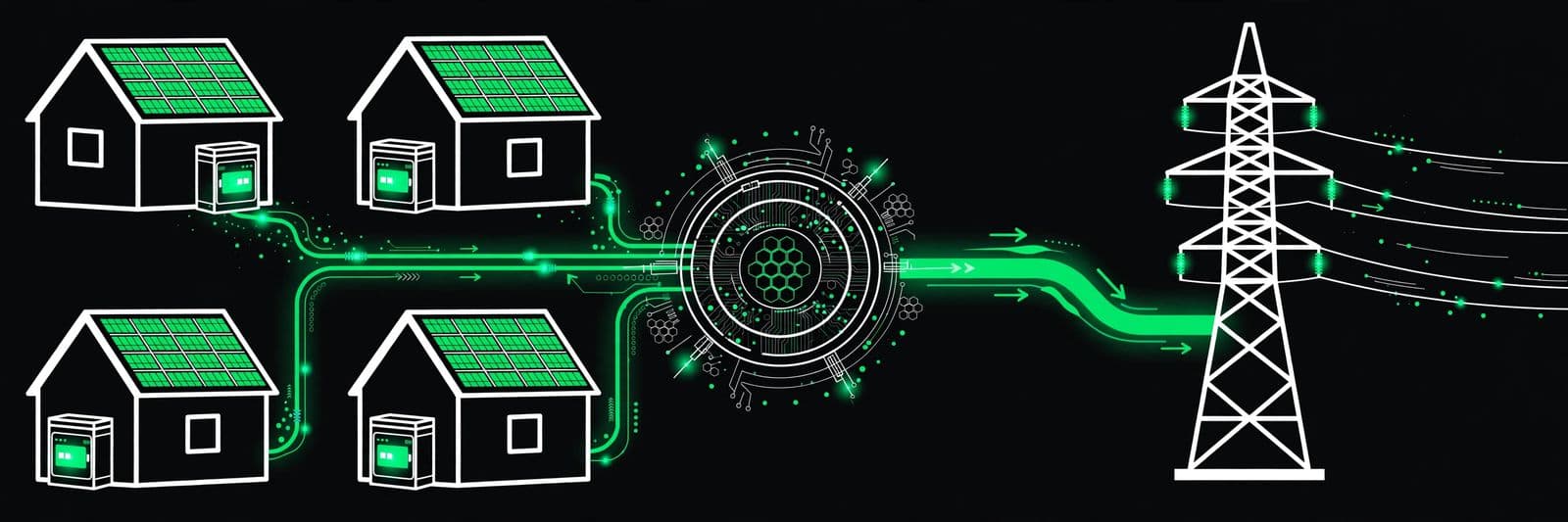
There is a middle ground where the two meet. Home batteries grouped into a virtual power plant can act like a small Megapack fleet, discharging together when the grid needs power. Our analysis of virtual power plants compares that model with a dedicated home battery, and our guide to home batteries without solar panels covers the case where the battery charges from the grid alone. The economics differ, and the Megapack remains the cheaper storage per kWh in every comparison.

How Utilities Use Megapack Fleets to Replace Gas Peakers
A gas peaker plant fires up for a few hundred hours a year, when demand outruns supply, and sits idle the rest of the time. That pattern makes peakers expensive per unit of energy delivered, and it makes them the first plants a battery fleet can replace. Megapacks do the same job by charging when power is cheap and discharging during the peak, with no fuel burn and no warm-up time. The battery responds in milliseconds, while a gas turbine needs minutes to reach full output.
The Ventura County project in California proved the model at scale. In December 2021, Strata Solar deployed a 100 MW, 400 MWh facility using 142 Megapacks, and the project replaced a natural-gas peaker plant. Pacific Gas and Electric runs a larger system at Moss Landing in Monterey County: 182.5 MW and 730 MWh across 256 Megapacks, one of the largest battery installations in the world. Both projects earn revenue from energy arbitrage, buying low and selling high, and from grid services such as frequency regulation, where the battery corrects small mismatches between supply and demand in real time.
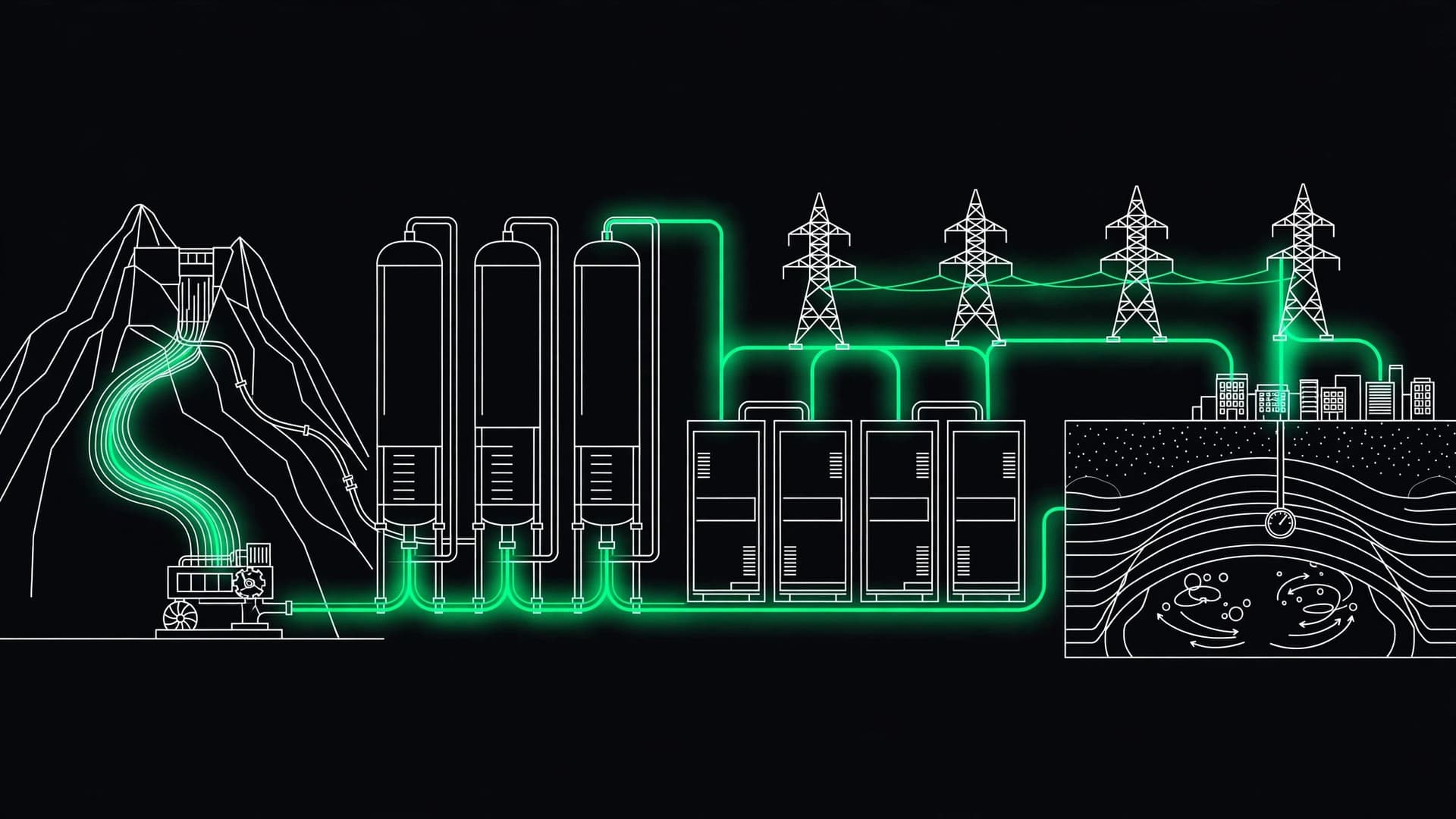
Time shifting is the second job, and it grows with every gigawatt of solar added to a grid. Solar panels produce most at midday, when demand is often low, and produce nothing after sunset, when demand peaks. A Megapack fleet charges at midday, when wholesale prices can fall to zero or below, and discharges in the evening, when prices spike. That shift turns solar from a daytime-only resource into a source that can cover the evening peak, which is the exact gap that gas peakers used to fill. Our explainer on battery energy storage sets out how the charge and discharge cycle works across a full day.
What the $278 per kWh Figure Means for Evening Solar
The $278 per kWh unit cost is only half the story. A battery earns its keep over thousands of cycles, so the cost per cycle matters more than the purchase price. The Megapack 3 is rated for more than 10,000 cycles. Dividing the $278 per kWh unit cost by 10,000 cycles gives about 2.8 US cents per kWh per cycle in hardware cost alone, before efficiency losses, maintenance and financing. At 91 percent round-trip efficiency, roughly 9 percent of the energy put in is lost as heat, so the delivered cost rises to about 3.1 US cents per kWh per cycle. That is the number a utility compares with the cost of running a gas peaker for the same evening hour, and it is low enough that batteries now win the comparison in markets with cheap midday solar.
The cycle math also explains the warranty structure. Each Megapack carries a 15-year warranty covering defects and energy retention, with a 10-year or 20-year performance guarantee available at extra cost. A battery cycled once a day reaches about 5,475 cycles in 15 years, well inside the 10,000-cycle rating, so the warranty covers the realistic duty cycle of a grid battery with room to spare. Tesla requires a maintenance agreement, with a minor annual service and a major service every ten years that replaces thermal-system pumps and fans and refills coolant. The annual service takes about an hour per unit, a small cost against a fleet of 200.
Scale changes the revenue side as well. Tesla deployed 31.4 GWh of storage in 2024, more than double the 14.7 GWh of 2023. That volume gives Tesla manufacturing scale in California, Shanghai and now Brookshire, Texas, where Megapack 3 production started on 6 August 2026 at a plant designed for 50 GWh a year. Larger factories cut the cost of each unit, which cuts the cost per kWh, which wins more projects, which fills more factories. The loop is the reason the $278 figure is a waypoint rather than a floor.
Megapack 3 and Megablock: What Changed in 2026
Tesla announced the Megapack 3 on 8 September 2025, and the first units rolled off the line at the new Brookshire, Texas Megafactory on 6 August 2026. The headline change is capacity: 5 MWh per unit against 3.9 MWh for the Megapack 2 XL, a 28 percent increase in the same ground footprint. Tesla achieved it with larger 2.8-litre LFP cells that pack more active material into each cabinet without growing the enclosure. The unit weighs 39 tonnes, slightly more than the 38.1 tonnes of the 2 XL, and holds 28 percent more energy.
The second change is installation. Tesla cut thermal-system connection points by 78 percent, which removes the most failure-prone part of the plumbing and shortens the time a crew spends on each unit. The company then bundled the concept further with Megablock, a factory-assembled block of up to four Megapack 3 units with transformer and switchgear pre-installed, delivering 20 MWh per block. Tesla says Megablock supports up to 248 MWh per acre and lets a 1 GWh site deploy in 20 days under suitable conditions, with installation costs 40 percent lower than the previous approach.
The factory behind the ramp matters as much as the product. The Brookshire plant went from groundbreaking to production in 16 months and is designed for 50 GWh a year dedicated to Megapack 3. Tesla also signed a $5 billion, 25 GWh Megapack deal with NatPower in Europe, which shows that the demand side is keeping pace with the new capacity. Data-centre operators are buying storage alongside utilities, which adds a second market to the order book.
Safety, Warranty and the 15-Year Clock
Battery fires are the risk utilities ask about first, and the Megapack record includes two that shaped the design. A Megapack ignited at the Victorian Big Battery in Australia in July 2021 after a coolant leak, and a second fire followed at the Moss Landing facility in California in September 2022, which led to a day-long shelter-in-place advisory. Both fires were contained without injuries, and Tesla applied the lessons to later units, including the coolant-system redesign in the Megapack 3. The LFP chemistry in current units is less prone to thermal runaway than the nickel-based cells used in early grid batteries, which is one reason utilities accepted the technology at scale.
The warranty clock runs 15 years on defects and energy retention, and Tesla requires a maintenance agreement for the life of the unit. That is shorter than the 20 to 30 year life of a gas peaker plant, and it is the main structural disadvantage of batteries against turbines. The counterweight is that a battery site can replace its units in place, one container at a time, without rebuilding the substation, the grid connection or the site. A peaker replacement is a new power plant. A Megapack replacement is a container swap, and the second generation of units will cost less per kWh than the first, because the cost curve in the table above keeps falling.
Frequently asked questions
How much does a Tesla Megapack cost?
A Megapack 3 costs an estimated $1.39 million per unit, or $278 per kWh of storage, before installation, taxes and site work. The Megapack 2 XL costs $1.39 million for 3.916 MWh, or about $355 per kWh. Project prices vary with volume and delivery terms, and installation typically adds 30 to 50 percent on top of the hardware.
How much energy does one Megapack 3 store?
One Megapack 3 stores 5 MWh, up from 3.916 MWh in the Megapack 2 XL and 2.6 MWh in the original Megapack. At 5 MWh per unit, 200 units make a 1 GWh fleet. Tesla has not yet published the rated power of the Megapack 3, so its duration at full output is not yet calculable from public figures.
How many Powerwalls equal one Megapack?
One Megapack 3 holds 5,000 kWh, and a Powerwall 3 holds 13.5 kWh, so one Megapack equals about 370 Powerwall 3 units. A 1 GWh Megapack fleet equals about 74,074 Powerwall 3 units. The Megapack costs less per kWh, about $278 against about $437 for a Powerwall 3 expansion pack, because it spreads inverter and installation costs across a much larger battery.
Can Megapacks replace gas peaker plants?
Yes, and utilities already do it. A 100 MW, 400 MWh Megapack facility in Ventura County, California, replaced a natural-gas peaker plant in December 2021. Megapacks charge on cheap midday solar and discharge during the evening peak, responding in milliseconds where a gas turbine needs minutes to reach full output.
How long does a Megapack last?
The Megapack 3 is rated for more than 10,000 cycles, and each unit carries a 15-year warranty on defects and energy retention, with 10-year or 20-year performance guarantees available at extra cost. A battery cycled once a day reaches about 5,475 cycles in 15 years, well inside the rating. Tesla requires a maintenance agreement, with a minor annual service and a major service every ten years.
Sources
- Tesla, “Introducing Megapack: Utility-Scale Energy Storage,” 29 July 2019
- Tesla, Megapack product page, accessed 9 November 2026
- Tesla Megapack specification and deployment record, Wikipedia, accessed 9 November 2026
- Electrek, “Tesla starts Megapack 3 production with 28% more energy per unit,” 6 August 2026
- Electrek, “US confirms Tesla (TSLA) is buyer in LG’s $4.3B LFP battery deal for Megapack 3,” 17 March 2026