- India solar installations reached a record 38.5 GW in the first nine months of 2026, up 40.3% on the same period of 2025, according to Mercom India Research.
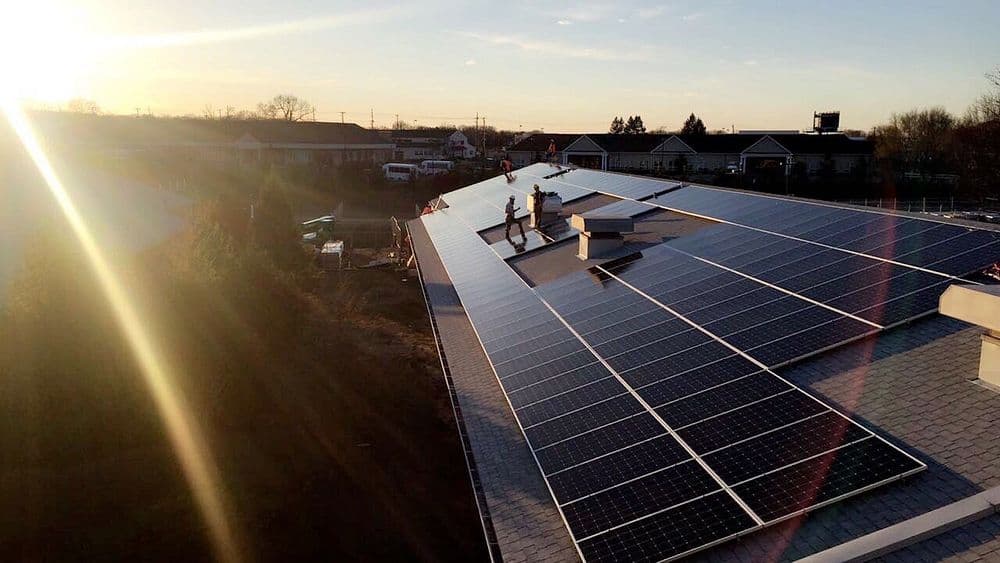
- Rooftop solar supplied 29.1% of 2026 additions so far, up from 18.5% a year earlier, and a record 42% of third-quarter additions.
- Large-scale installations slowed in the third quarter as cell shortages, transmission bottlenecks and unsigned power purchase agreements delayed commissioning.
India solar installations in 2026 are being built by a different mix of buyers than a year ago. Households and businesses buying their own power keep ordering even when utility-scale tenders stall, while big projects still supply the bulk of new capacity. Who profits from the build-out, and how resilient it is to the bottlenecks slowing those big projects, now depends on that mix. Mercom India Research published the figures on 12 November 2026 in its 9M and Q3 2026 India Solar Market Update Report.
Total additions of 38.5 GW in nine months already exceed everything India installed in the whole of 2025, Mercom Capital Group chief executive Raj Prabhu said. Large-scale solar contributed 27.3 GW, up 21% on the 22.5 GW of the first nine months of 2025. Solar supplied 77% of the 50 GW of new power capacity added in India during the period. Cumulative installed solar capacity reached 176.6 GW at the end of September 2026, equal to 31% of India’s total installed power capacity and 58% of its installed renewable energy capacity.
| India solar, first nine months | 2026 | 2025 | Change |
|---|---|---|---|
| Total solar additions | 38.5 GW | 27.4 GW | +40.3% |
| Large-scale additions | 27.3 GW | 22.5 GW | +21% |
| Rooftop share of additions | 29.1% | 18.5% | +10.6 points |
| Third-quarter rooftop additions | 4.7 GW | 2.1 GW | +122% |
| Cumulative solar capacity, end of September | 176.6 GW | n/a | n/a |
Figures from Mercom India Research, 12 November 2026. The 2025 nine-month total of 27.4 GW is Joule Post arithmetic from the reported 40.3% growth rate.
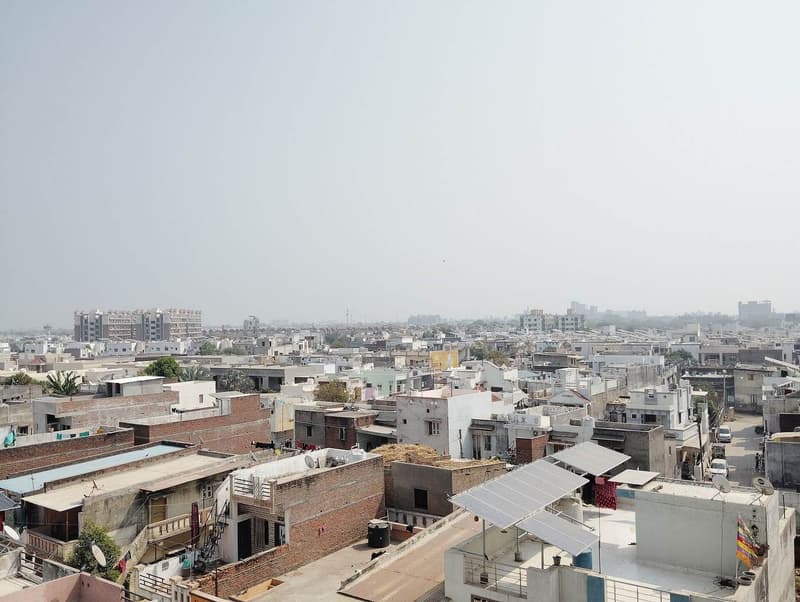
Rooftop solar supplied 42% of third-quarter additions
The third quarter showed the mix shift most clearly. India added nearly 11 GW of solar in the quarter, the fourth-highest quarterly total on record, with installations up 19% on a year earlier even as they fell 9.5% from the second quarter. Large-scale additions fell to 6.3 GW, down 24% quarter on quarter and 11% year on year. Rooftop installations moved the other way, climbing 22% from the second quarter to 4.7 GW and rising 122% from the 2.1 GW of the third quarter of 2025. Rooftop systems made up a record 42% of quarterly additions.
Mercom India managing director Priya Sanjay attributed the rooftop acceleration to the PM Surya Ghar programme, which subsidises residential rooftop systems and runs to a March 2027 deadline, alongside electricity bill savings that continue to drive commercial and industrial adoption. Rajasthan, Gujarat and Maharashtra led large-scale additions in the quarter with 28%, 25% and 14% of capacity respectively, and the top 10 states accounted for 98% of large-scale capacity commissioned in the quarter. Rajasthan, Gujarat and Karnataka hold the largest cumulative large-scale totals at 30%, 22% and 11%.
Generation is following the build-out. India generated about 56.9 billion units of solar electricity in the third quarter of 2026, up 48.6% on the 38.3 billion units of the same quarter of 2025, according to Central Electricity Authority data reported by Mercom India on 4 November 2026. Rajasthan and Gujarat produced 53.2% of that quarterly solar generation between them.
Two June and July deadlines pulled 2026 installations into the first half
The nine-month record rests on a first-half rush. Developers accelerated commissioning ahead of the 1 June 2026 implementation of Approved List of Models and Manufacturers (ALMM) List-II requirements for solar cells, and ahead of the phased reduction in interstate transmission system charge waivers that began in July. Both deadlines pulled capacity forward, and the third-quarter slowdown in large-scale installations shows the other side of that pull-forward.
ALMM List-II has also aggravated domestic solar cell shortages, Sanjay said, driving module prices higher through demand-supply imbalance rather than underlying component costs. “Unforeseen price increases are squeezing developer margins and disrupting financial projections. Concerns over module quality, bankability, and supplier availability could intensify demands for an extension.”
The tender pipeline points to a slower near term. Government agencies issued 9 GW of large-scale solar tenders in the third quarter, up 61% on the second quarter but down 51% on a year earlier. Auctions totalled 4 GW, down 10% quarter on quarter and up 64% year on year. Across the first nine months, 22.6 GW of large-scale tenders were announced, down 47% from 42.6 GW in the same period of 2025, and auctions totalled 13 GW, down 23% from 16.6 GW.
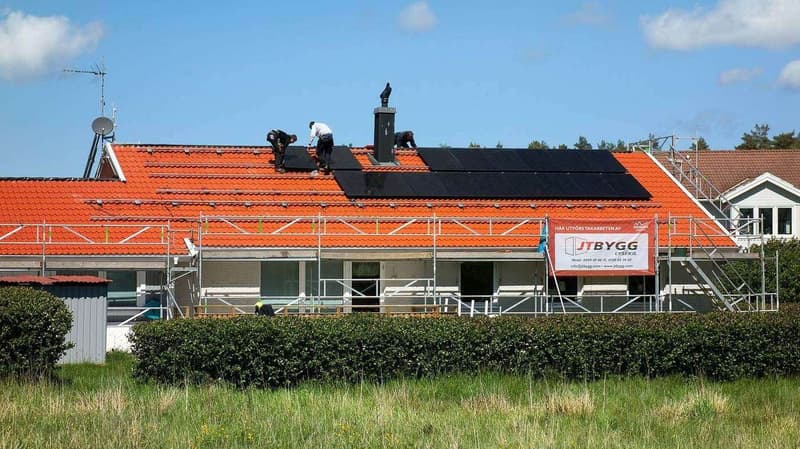
38.5 GW against a 733 GW world: India grows while global additions fall
India’s growth stands out against the global picture. The International Energy Agency’s Renewables 2026 report, published 6 November 2026, expects global renewable capacity additions to fall 11% in 2026 to 733 GW, ending 21 consecutive record years, largely because solar additions in China fell almost 55% in the first nine months of 2026 after the country moved to auctions. India, by contrast, grew 40.3% over the same nine months, and the IEA names India the world’s second-largest renewables growth market, with total renewable capacity set to more than double by 2031.
The comparison cuts both ways. India’s 38.5 GW in nine months is about 5% of the 733 GW the world will add in all of 2026, a small share for a country the IEA expects to drive the next wave of growth. The gap between India’s ambition and its delivery is now a grid problem as much as a build problem. Prabhu put it directly: “India has already added more solar capacity in the first nine months of 2026 than in all of 2025, but the Q3 slowdown in large-scale installations shows where growth is being held back. Demand remains strong across utility-scale, open access, and rooftop solar, but transmission bottlenecks, domestic cell availability, higher costs, and delays in land, connectivity, and power offtake are slowing commissioning. The size of the project pipeline is significant, but what matters now is how much of that capacity can actually be brought online and on schedule.”
Unsigned power purchase agreements and power supply agreements have tied up developers’ working capital, Sanjay noted, while rising module costs threaten tariff competitiveness. Uncertainty over renewable energy targets beyond 2030 complicates investment planning and financing. The same report that documents a record nine months also documents a market where the next gigawatt is harder to connect than the last one was to build. For readers tracking the build-out, the explainer on how solar panels work covers the technology behind the capacity figures, and our coverage of India’s 92 GWh storage funding covers the batteries meant to absorb it. The COP31 rooftop solar pledge and our utility-scale solar cost data put the Indian figures in a wider cost and policy context.
Sources
- India’s Solar Capacity Rises 21% YoY in 9M Despite Cell Shortages, Mercom India, 12 November 2026
- India’s Solar Power Generation Rises 48.6% YoY to 56.9 BU in Q3 2026, Mercom India, 4 November 2026
- Renewables 2026, International Energy Agency, 6 November 2026