- A hydrogen-ready boiler is a standard gas condensing boiler with a burner and controls designed for a later swap to hydrogen. It burns natural gas today and cuts no carbon until the gas network changes.
- Manufacturers say conversion takes under an hour and swaps two or three parts, but no UK street has a date for conversion. The government shelved its town trial in May 2024 and calls hydrogen unproven for home heating.
- A 20% hydrogen blend in the gas grid would cut carbon dioxide by about 7%, while a heat pump delivers two to four units of heat per unit of electricity. The label is an option on a future that may never arrive.
Hydrogen-ready boiler: a gas condensing boiler built so its burner, flame monitoring and controls can be swapped for hydrogen-burning parts later. It runs on natural gas, or on a gas blend with up to 20% hydrogen, until the local gas network converts to pure hydrogen, a step no UK government decision has yet approved.
On this page
- What a hydrogen-ready boiler is
- How a hydrogen boiler conversion works
- What a 20% blend limit means for a boiler bought in 2026
- The UK government has not decided to send homes hydrogen
- Hydrogen boiler efficiency against a heat pump
- What the label costs and what it does not buy
- Should you buy one? A decision checklist
- Frequently asked questions
A hydrogen-ready boiler carries a promise that sounds like insurance. Buy one now, the sales pitch runs, and when the gas grid switches to hydrogen your heating switches with it. The hardware behind the promise is real. Viessmann and Worcester Bosch have both built boilers that run on natural gas today and can be converted to pure hydrogen by swapping the burner assembly and a small set of parts. What the pitch leaves out is the second half of the deal. A boiler can only burn hydrogen if the pipe in the street delivers it, and that decision belongs to government and the gas networks, with no date attached. The label certifies the appliance. It says nothing about the fuel arriving.
That gap between appliance and network shapes every choice in this guide. A hydrogen-ready boiler is a sensible purchase only if you understand it as a standard condensing boiler with a conversion option attached, priced and warranted like any other boiler, and if you are comfortable that the option may expire unused. The sections below set out what the label means in engineering terms, what a conversion involves, what a hydrogen blend can and cannot do for emissions, where UK policy actually stands, and how the numbers compare with a heat pump.
What a hydrogen-ready boiler is
The phrase has no legal definition in the UK. It is a manufacturer description for a gas condensing boiler designed from the start to accept hydrogen-burning parts later. The boiler that sits on your wall today is, in every practical respect, an ordinary condensing boiler. It burns natural gas, heats water through the same heat exchanger, and needs the same annual service by a Gas Safe registered engineer. The difference sits inside the casing, in parts built to tolerate a different fuel when the day comes.
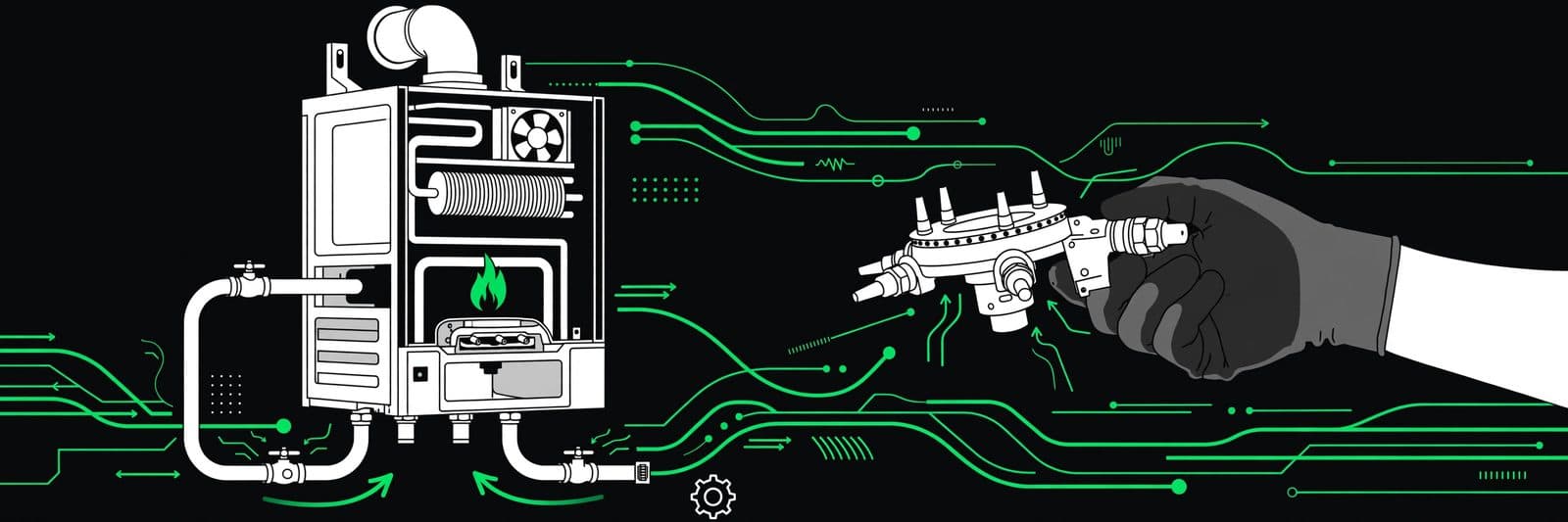
Hydrogen burns differently from methane, the main component of natural gas. Its flame travels faster, it produces far more water vapour as it burns, and it carries less energy in each cubic metre of gas. Those three facts drive the engineering changes. Viessmann says the main modifications on its 100% hydrogen-ready prototypes are the burner, plus new combustion, flame monitoring and control systems, built on its proven series-produced condensing boilers. Worcester Bosch lists the same problem areas for its prototype: burners that hold a stable flame against hydrogen’s higher flame speed, gas-air ratio control, extra condensate handling, and materials checks. At the low pressures used in small domestic boilers, most materials already used for natural gas are suitable for hydrogen, so the changes stay small.
Two distinct products hide under the one label, and buyers should know which one they are looking at. Some boilers are sold as hydrogen-blend ready, meaning they tolerate a share of hydrogen mixed into natural gas. Viessmann says about 150,000 of its Vitodens 300 and Vitodens 200 condensing boilers delivered in 2020 can use at least 20% hydrogen in natural gas, and can convert a 30% admixture into heat. Others are full hydrogen-ready prototypes, built to run on natural gas now and pure hydrogen after conversion. Worcester Bosch’s Greenstar 8000 Hydrogen-Ready, developed under the government’s Hy4Heat programme, is the second kind. It runs on natural gas, including blends of up to 20% hydrogen, and can also run on 100% hydrogen after conversion. Ask a salesperson which of the two a given model is, and ask for the answer in writing, because a blend-ready boiler and a full hydrogen-ready boiler are different promises. A hydrogen blend boiler is the first kind, a standard condensing boiler rated to tolerate a share of hydrogen in the gas, while a full hydrogen-ready boiler is the second kind, built for a burner swap to pure hydrogen.
The label is also distinct from the fuel itself. Hydrogen for home heating would need to be low-carbon hydrogen, produced from renewable electricity or from natural gas with carbon capture, to cut emissions at all. The colour labels used for hydrogen describe how it was made, and grey hydrogen made from unabated natural gas would cut nothing. Our guide to grey, blue and green hydrogen sets out what each colour means and why only green and blue hydrogen carry a climate case.
How a hydrogen boiler conversion works
Conversion day, as the manufacturers describe it, is a short job. Viessmann says that when the gas supply changes over, only the burner assembly needs to be replaced, using a retrofit kit it is developing, and a specialist installer can carry out the change in a few simple steps in a short time. Worcester Bosch puts the same job at under an hour, changing two or three components. The prototype boilers were built as direct like-for-like replacements for existing natural gas boilers, in the same footprint, so the installer needs no new skills beyond the conversion training the Hy4Heat programme developed.
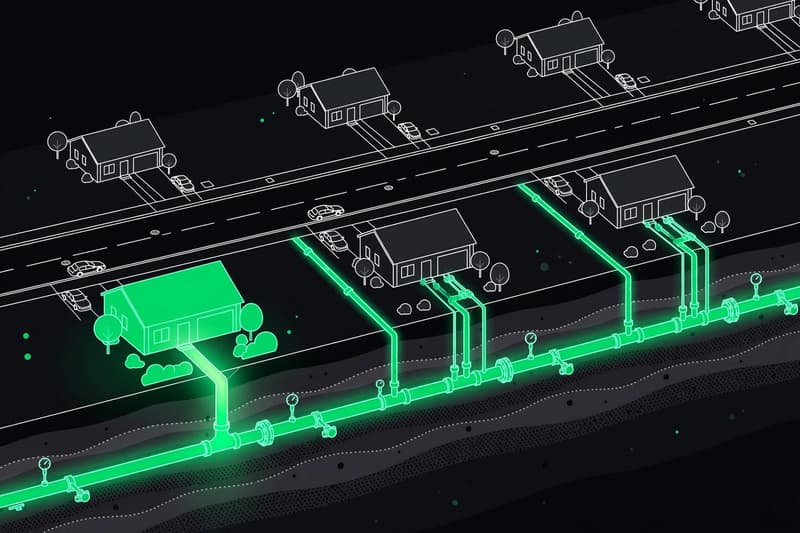
That simplicity is genuine, and it is also narrow. Conversion changes the appliance. It does not change the pipework in the street, the meters, the pressure regulators, or the supply contract, and it cannot happen one house at a time. A gas network converts street by street or not at all, because a single pipe cannot carry natural gas to one house and hydrogen to the next. Every boiler on a converted stretch must switch on the same day, and every home needs a visit from an engineer. The Hy4Heat programme, launched in 2017, spent years testing exactly this choreography, including a demonstration street at Spadeadam in Northumberland and a Hydrogen House in Gateshead, and its prototypes won the Best Heating Innovation award at the 2021 Green Home Awards. The engineering works. The logistics are the hard part, and they belong to the network operator, not the boiler owner. A gas boiler hydrogen switch is therefore a network event before it is a household event, and it happens on a date the operator sets.
Safety testing has moved further than most buyers realise. The Health and Safety Executive has completed its assessment of safety evidence provided by gas networks and the Department for Energy Security and Net Zero for 100% hydrogen heating, according to the department’s own overview, and it assessed the site-specific safety evidence for the H100 Fife trial separately. That clears a technical hurdle. It does not create a supply of hydrogen, a converted network, or a date.
What a 20% blend limit means for a boiler bought in 2026
The nearest thing to hydrogen heating that exists today is blending, mixing a share of hydrogen into the natural gas grid. Most regulators and industry groups recognise 20% hydrogen by volume as the upper safe limit for existing pipelines without significant upgrades, according to a 2025 peer-reviewed review of hydrogen blending published in the journal Clean Energy and Sustainability. Conventional boilers tolerate blends of 16% with no impact on their efficiency, a Romanian study cited in the same review found. A boiler bought in 2026 will therefore handle any blend the grid is likely to carry in its lifetime. That is useful, and it is also the ceiling of what blending delivers.
The carbon arithmetic of blending disappoints. Hydrogen carries less energy per cubic metre than methane, so a 20% share by volume is a much smaller share by energy. At a 20% blend, carbon dioxide emissions fall by about 7%, the review found, citing the work of Franco and Rocca. A 30% blend cuts emissions by about 11%. The review’s conclusion is blunt: a blend below 30% hydrogen brings minimal environmental benefit while requiring no substantial investment. Blending is cheap precisely because it changes so little, and it changes so little because the fuel in the pipe stays mostly methane.
| Hydrogen in the gas supply | What your boiler does | Carbon dioxide cut | What has to change |
|---|---|---|---|
| 0%, natural gas today | Burns gas as normal | None | Nothing |
| Up to 20% blend | Standard condensing boilers keep working; Viessmann models from 2020 are rated for 20%, and a 30% admixture | About 7% | Hydrogen injection into the network; no boiler change |
| 100% hydrogen | Only a converted hydrogen-ready boiler works | Close to 100% at the point of use, if the hydrogen is green | Whole local network converted, burner swapped on conversion day |
Our own reporting on whether gas pipelines can carry hydrogen reaches the same conclusion from the network side: a 20% blend needs no major upgrade, yet it cuts carbon dioxide by only about 7%, and full hydrogen service needs new compressors, converted steel and years of work. A buyer who treats a 20% blend as a decarbonisation plan is mistaking a stepping stone for a destination.
The blend arithmetic also sets the value of the hydrogen-ready label. If blending is the only hydrogen a home ever sees, the label adds nothing, because ordinary condensing boilers already handle blends up to 20%. The label only pays off in the 100% hydrogen case, which needs the network conversion that has no date. Hold that thought while reading the policy timeline below, because the timeline is the reason the label’s value is an open question rather than a certainty.
The UK government has not decided to send homes hydrogen
The policy record reads as a slow retreat from an early ambition. The UK launched the Hy4Heat programme in 2017 to test whether households could move from methane to hydrogen, and the original plan called for a village trial by 2025 and a town trial by 2030. Both village trials collapsed. The Whitby trial in Cheshire was abandoned in July 2023 after strong local opposition, and the Redcar trial was cancelled in December 2023 after Northern Gas Networks could not secure enough low-carbon hydrogen to heat about 2,000 homes and businesses. In May 2024 the government shelved the hydrogen town trial until after a decision in 2026 on whether hydrogen has any role in large-scale residential heating.
Two decisions in 2024 then removed the two props holding up the hydrogen-ready market. In March 2024, in its response to the Improving Boiler Standards and Efficiency consultation, the government said it would only require domestic gas boilers to be hydrogen-ready if a 2026 decision found hydrogen had a substantive role in heat decarbonisation, and then only from 2030. The proposed rule that every new gas boiler sold from 2026 be hydrogen-ready was dropped as disproportionate before that decision had been made. There is no mandate today, and none can arrive before 2030 at the earliest.
The January 2026 Warm Homes Plan, published on 21 January 2026 and corrected on 18 March 2026, set the current direction. It concentrates on proven electric technologies, aims for over 450,000 heat pump installations a year by 2030, and commits £2.7 billion (pounds sterling) to the Boiler Upgrade Scheme through 2029/30. On hydrogen it says the government will consult in due course on whether hydrogen should have any role in heating homes, and the department’s own hydrogen heating overview states the position plainly: “As hydrogen is not yet a proven technology for home heating, a role would come later and likely be limited.” Gas supplies 85.8% of domestic heating in England, according to the plan, so the scale of any future conversion would be enormous. Nothing in the plan sets a date for it.
One live trial remains. H100 Fife, in Levenmouth, Scotland, will supply hydrogen to around 300 opted-in homes through a new network laid parallel with the existing natural gas network, with green hydrogen produced by an electrolyser powered by an offshore wind turbine. Construction is underway, and the trial is funded by network operator SGN with contributions from its gas network partners and the Scottish Government, plus funds approved by Ofgem. Three hundred homes is the entire live evidence base for hydrogen-to-homes in the UK. It is a neighbourhood trial, not a rollout, and its results feed into a consultation that has no published date.
The 2026 decision itself is now the next milestone, and it arrives in a different political climate from the one that launched Hy4Heat. A former energy minister, Lord Callanan, told Sky News that large-scale hydrogen heating could not practically be achieved for the vast majority of homes, and that the vast majority of home heating decarbonisation would be electrification. The government’s own overview agrees that heat pumps and heat networks will be the primary means of decarbonisation. A buyer in 2026 should treat the hydrogen-ready label as a bet on a consultation outcome, not as a step in a funded programme.
Hydrogen boiler efficiency against a heat pump
A hydrogen boiler and a heat pump answer the same question with different physics. A condensing boiler, whether it burns gas or hydrogen, turns about nine tenths of the fuel’s energy into heat; new boilers in the UK are required to be condensing models at 90% efficiency or better. A heat pump moves heat rather than making it, so it delivers two to four units of heat for each unit of electricity it consumes. Our comparison of the two options for home heating, Is Hydrogen Home Heating Realistic?, put the gap at roughly five to one once the energy lost making and moving hydrogen is counted: heat pumps deliver 200 to 400% of input energy as heat, against 60 to 70% for hydrogen after transport and conversion.
The gap matters because it decides the running cost, and running cost decides whether hydrogen heating is affordable even if the network converts. Green hydrogen is expensive energy. Our survey of green hydrogen prices by country found prices as low as US$2.25 per kilogram in China in 2026, and higher elsewhere, with the cost of the electricity to make it dominating the final price. A boiler that needs about five times the energy of a heat pump to deliver the same warmth, fed by a fuel that costs more per unit of energy than grid electricity, produces a heating bill that only a large subsidy could tame. No such subsidy exists for hydrogen home heating, while heat pumps carry a £7,500 grant (pounds sterling) under the Boiler Upgrade Scheme. The government reported 151,136 voucher applications under the scheme from May 2022 to August 2026, with 98% of them for air-to-water heat pumps.
| Hydrogen-ready boiler, on hydrogen | Air source heat pump | |
|---|---|---|
| Heat from each unit of energy in | About 0.9 units, in line with a modern condensing boiler at 90% efficiency or better | 2 to 4 units |
| Fuel | Hydrogen, if the local network ever converts | Electricity, available now |
| Carbon cut today | None while it burns natural gas | Immediate, and the grid keeps getting cleaner |
| Upfront support in England | No grant for the boiler | £7,500 grant under the Boiler Upgrade Scheme (pounds sterling) |
| Status in 2026 | Prototypes and trials; no domestic hydrogen network | Installed at scale now |
None of this makes a hydrogen-ready boiler a bad boiler. On natural gas it performs exactly like the condensing boiler it is, at the same efficiency and with the same radiators and controls. The comparison only bites if the buyer is paying extra for the hydrogen option, or delaying a heat pump while waiting for hydrogen. The next section takes up both cases.
What the label costs and what it does not buy
Manufacturers have not published a separate retail price for hydrogen-ready models, and the honest statement is that the label usually costs little or nothing extra at the point of sale. Worcester Bosch describes its hydrogen-ready prototype as a direct like-for-like replacement for an existing natural gas boiler, in the same footprint and at the same performance. Viessmann’s hydrogen-ready boilers are built on its series-produced condensing boilers, with the conversion parts added later. When a hydrogen-ready model costs the same as the standard model beside it, the label is a free option, and taking a free option is reasonable. When a seller charges a premium for it, ask what the premium buys, because the answer is a conversion kit with no published price and a network conversion with no date.
The conversion itself is the one cost manufacturers do describe. Viessmann says a cost-effective retrofit kit is being developed for the burner swap, and Worcester Bosch says the swap changes two or three components in under an hour. Neither company has published a retail price for the kit or the labour. A buyer should also budget for the possibility that conversion never happens and the kit is never needed, which is the most likely outcome under current policy. The label does not buy a fuel supply, a conversion date, a guaranteed kit price, or a warranty extension. Check the warranty terms before buying, because the hydrogen conversion, if it ever happens, is a modification, and modifications can interact with warranty cover in ways a standard service does not.
The label also does not buy compliance with future building rules. The government’s March 2024 response made clear that a hydrogen-ready requirement would follow only a 2026 decision in hydrogen’s favour, and the department has said gas boilers will not meet the Future Homes Standard for new homes in England. A hydrogen-ready boiler in an existing home faces no such rule, and the Warm Homes Plan sets no end date for gas boiler installations in existing homes. The 2035 phase-out date that still appears in headlines was an ambition set in 2021, never law. The risk to a buyer is not a ban. It is buying an option on a future that policy has moved away from, while a funded alternative sits on the shelf.
Should you buy one? A decision checklist
Start with the boiler you have. The Energy Saving Trust puts the average lifespan of a boiler at 10 to 15 years, so a boiler bought in 2026 will normally still be working in 2036 and may run to 2041. That is the window in which the hydrogen option must pay off. If the network in your street has no conversion plan, and no UK street does, the label’s value inside that window is close to zero. Compare that with a heat pump, which starts cutting emissions and bills the day it is installed, with a £7,500 grant (pounds sterling) behind it.
Use this checklist before signing:
- Is your boiler actually failing? If it is under 10 years old and reliable, repair usually beats replacement. If it is over 12 to 15 years old, inefficient and breaking down, replacement is worth pricing.
- Is the hydrogen-ready model the same price as the standard model? If yes, take the option; it costs nothing. If a premium is charged, ask for the premium in writing and weigh it against a conversion that has no date.
- Which kind is it? Confirm whether the model is blend-ready only, or full hydrogen-ready with a conversion path to 100% hydrogen, and get the answer in writing.
- Does your home suit a heat pump? Get a heat pump quote alongside the boiler quote. The Boiler Upgrade Scheme grant of £7,500 (pounds sterling) applies to air and ground source heat pumps in England and Wales, and the Warm Homes Plan added £2,500 (pounds sterling) for air-to-air models. A home with good insulation and space for an outdoor unit is often a heat pump home.
- What is the warranty? Check the length, what it covers, and whether a future hydrogen conversion affects it.
- Are you being sold a deadline? There is no law stopping you replacing a gas boiler in an existing home, and no hydrogen-ready mandate. A seller who claims a ban is coming, or that hydrogen is arriving in a few years, is selling urgency the policy record does not support.
The straight answer for most households is unglamorous. If you need a new boiler now, buy a good condensing boiler, hydrogen-ready if it costs no more, and do not pay a premium for the label. If your home suits a heat pump, price that first, because it is the option with a grant, a fuel supply and a policy behind it. Waiting for hydrogen means keeping an old boiler running while the government decides whether hydrogen has any role in home heating at all, and the decision it has already signalled points the other way.
Frequently asked questions
Are hydrogen-ready boilers available to buy in the UK?
Hydrogen-ready boilers exist as prototypes and trial appliances rather than as a mass-market product. Worcester Bosch built the Greenstar 8000 Hydrogen-Ready under the Hy4Heat programme, and Viessmann has 100% hydrogen-ready prototypes running at its Allendorf research centre, with a first practical deployment in Kaisersesch in early 2023. Some manufacturers sell condensing boilers rated for hydrogen blends of up to 20%, which is a narrower claim. Ask any seller whether the model on offer is blend-ready or full hydrogen-ready, and whether a conversion kit is actually available to order today.
Can a hydrogen-ready combi boiler run on hydrogen now?
No. A combi boiler, which heats water on demand without a separate cylinder, is the most common boiler type in UK homes, and a hydrogen-ready combi works exactly like a standard combi until the gas supply changes. It burns natural gas today because no domestic hydrogen supply exists. Conversion to hydrogen needs the local gas network to switch over first, and that switch has no date. The conversion itself is short, a burner swap of two or three parts in under an hour, but it can only happen after the network converts.
What is the best hydrogen-ready boiler?
No independent ranking of hydrogen-ready boilers exists, because the label is not a performance standard and no mass-market models have been tested side by side on hydrogen. Worcester Bosch, Viessmann and Baxi all built prototypes under Hy4Heat, and Baxi said it would run live trials of its hydrogen boilers in the UK. Judge any boiler on the things that can be measured today: condensing efficiency, warranty length, parts availability and installer support. The hydrogen-ready label adds a future conversion option; it says nothing about how well the boiler heats your home on natural gas this winter.
Will my street ever get hydrogen?
Probably not, on the current evidence. The UK government shelved its hydrogen town trial in May 2024, both village trials were cancelled, and the only live trial, H100 Fife, covers around 300 opted-in homes. The government says it will consult in due course on whether hydrogen should have any role in heating homes, and that any role would come later and likely be limited. Heat pumps and heat networks are the primary means of decarbonisation in official policy. A street conversion would also need every home on that stretch to switch on the same day, which is a logistical project no network operator has been funded to run.
Should I wait for hydrogen before replacing my boiler?
No. A boiler lasts 10 to 15 years on average, according to the Energy Saving Trust, so waiting leaves you heating with an ageing, inefficient appliance for no clear benefit. The government has made no decision to send hydrogen to homes, has dropped the plan to require hydrogen-ready boilers, and is funding heat pumps instead, with a £7,500 grant (pounds sterling) under the Boiler Upgrade Scheme. If your boiler is failing, replace it now with the best option for your home, and treat a hydrogen-ready label as a free extra rather than a reason to wait.
Sources
- Viessmann, “Breakthrough for climate-friendly heating with hydrogen”, Viessmann, 2022. 100% hydrogen-ready prototypes, 150,000 Vitodens boilers delivered in 2020 rated for 20% hydrogen, burner-assembly retrofit kit, first deployment in Kaisersesch in early 2023.
- Worcester Bosch, “Making essential steps towards a hydrogen fuelled future”, Worcester Bosch, 14 January 2020. 100% hydrogen prototype boiler, runs on natural gas until conversion.
- Bosch Thermotechnology, “HyLife: Hydrogen-Ready Wall-Mounted Gas Boilers”, Bosch, 2019. Greenstar 8000 Hydrogen-Ready under Hy4Heat, conversion by changing a minimum number of components in under an hour, blends up to 20% hydrogen and 100% hydrogen after conversion.
- CIBSE Journal, “Fuel for thought: prototype hydrogen gas boilers”, CIBSE Journal, 2020. Worcester Bosch and Baxi prototypes, Hy4Heat trials, commercial rollout awaiting a government decision.
- Department for Energy Security and Net Zero, “Hydrogen heating: overview”, GOV.UK, 2026. Heat pumps and heat networks as the primary means of decarbonisation, hydrogen not yet proven for home heating, H100 Fife trial of around 300 homes, HSE safety assessment completed.
- Department for Energy Security and Net Zero, “Warm Homes Plan”, GOV.UK, published 21 January 2026, corrected 18 March 2026. Over 450,000 heat pump installations a year by 2030, £2.7 billion for the Boiler Upgrade Scheme, gas at 85.8% of domestic heating in England.
- Department for Energy Security and Net Zero, “Improving boiler standards and efficiency”, GOV.UK, government response, March 2024. Hydrogen-ready mandate only if a 2026 decision finds hydrogen has a substantive role in heat, and then only from 2030.
- The Chemical Engineer, “UK’s Redcar ‘hydrogen village’ trial cancelled due to insufficient feedstock supply”, The Chemical Engineer, 15 December 2023. Redcar trial cancelled, around 2,000 homes and businesses, Whitby trial abandoned after local opposition.
- The Chemical Engineer, “UK shelves hydrogen town trial”, The Chemical Engineer, 9 May 2024. Town trial postponed until after the 2026 decision, H100 Fife neighbourhood trial continuing.
- Alnawafleh et al., “Hydrogen Blending as a Transitional Solution for Decarbonizing the Jordanian Electricity Generation Sector”, Clean Energy and Sustainability (MDPI), 4 November 2025. 20% blend as the upper safe limit, 7% carbon dioxide cut at 20% hydrogen, 11% at 30%, conventional boilers tolerating 16% blends with no efficiency impact.
- Energy Saving Trust, “Tips to improve the EPC rating of your home”, Energy Saving Trust. Average boiler lifespan of 10 to 15 years.
- Planning Portal, “Boilers and heating: sustainability”, Planning Portal. New boilers required to be condensing models at 90% efficiency or better.
- pv magazine, “Heat pump grant survives, new loans for solar and battery storage in UK Budget”, pv magazine, 29 October 2026. Boiler Upgrade Scheme grants of £7,500, 151,136 voucher applications from May 2022 to August 2026, 98% for air-to-water heat pumps.